Non-Stick Pan Not Working on Induction? Check the Base First
Induction heats only a magnetic base. Run a 10-second magnet test, fix the free causes, then swap to a pan made for induction if it fails.
By Jamilur Rahman Updated November 5, 2026 · 6 min read
- Time
- 10 min
- Cost
- $20-$50
- Difficulty
- Easy
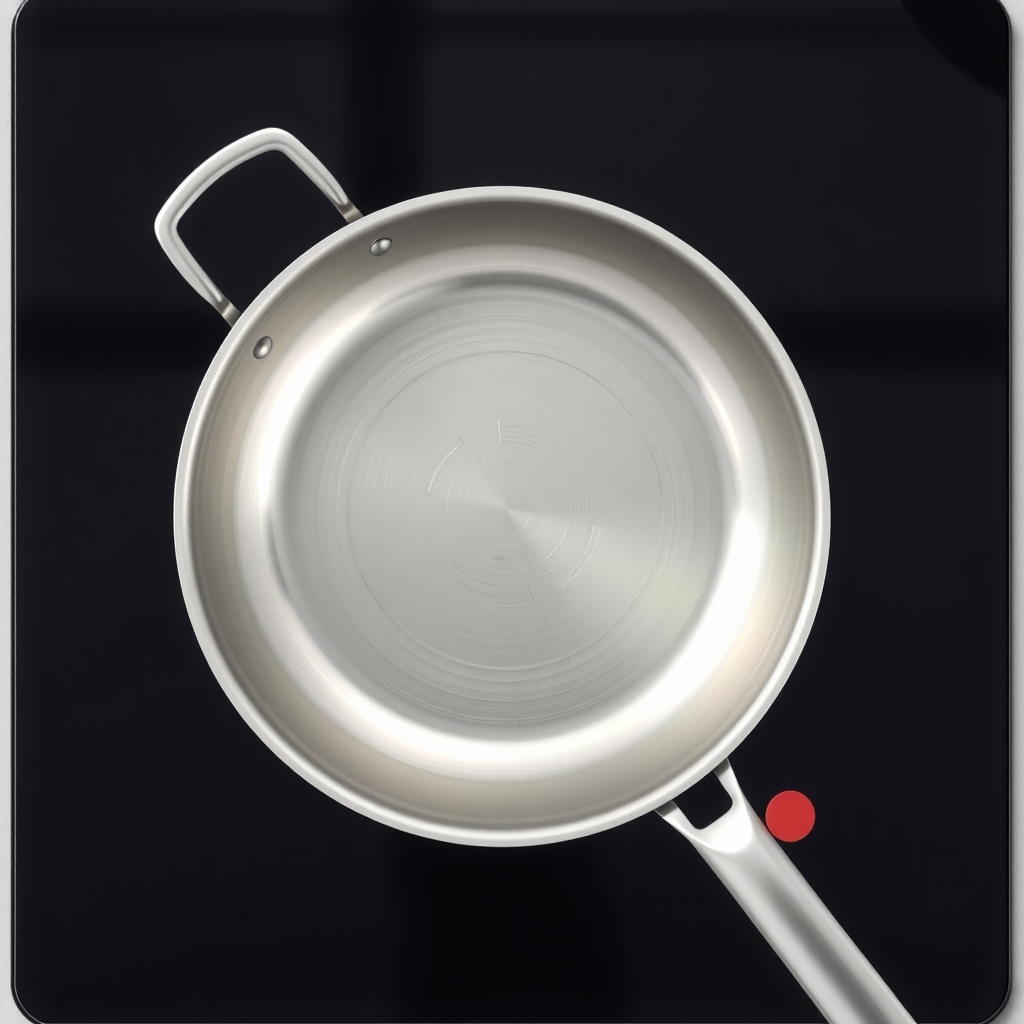
In this guide
Quick answer
A non stick pan not working on induction almost always has a base the cooktop cannot detect, because induction only heats metal that a magnet sticks to. Do the magnet test below, and check the pan size and position, since those are the only free fixes. If the magnet slides off, no setting will help, and the lasting fix is a non-stick pan built with an induction base.
Free fix vs. permanent fix
Magnet test, size check and re-centering
- Hold a magnet to the outside of the base and see if it grabs
- Center the pan on the burner ring and match the pan to the zone size
- Look for a warped base that rocks on a flat surface
- Check your manual for the minimum pan size the cooktop detects
How long it lasts: Only works if the pan is already induction-ready but is too small, off-center or warped. A pan that fails the magnet test cannot be fixed for free.
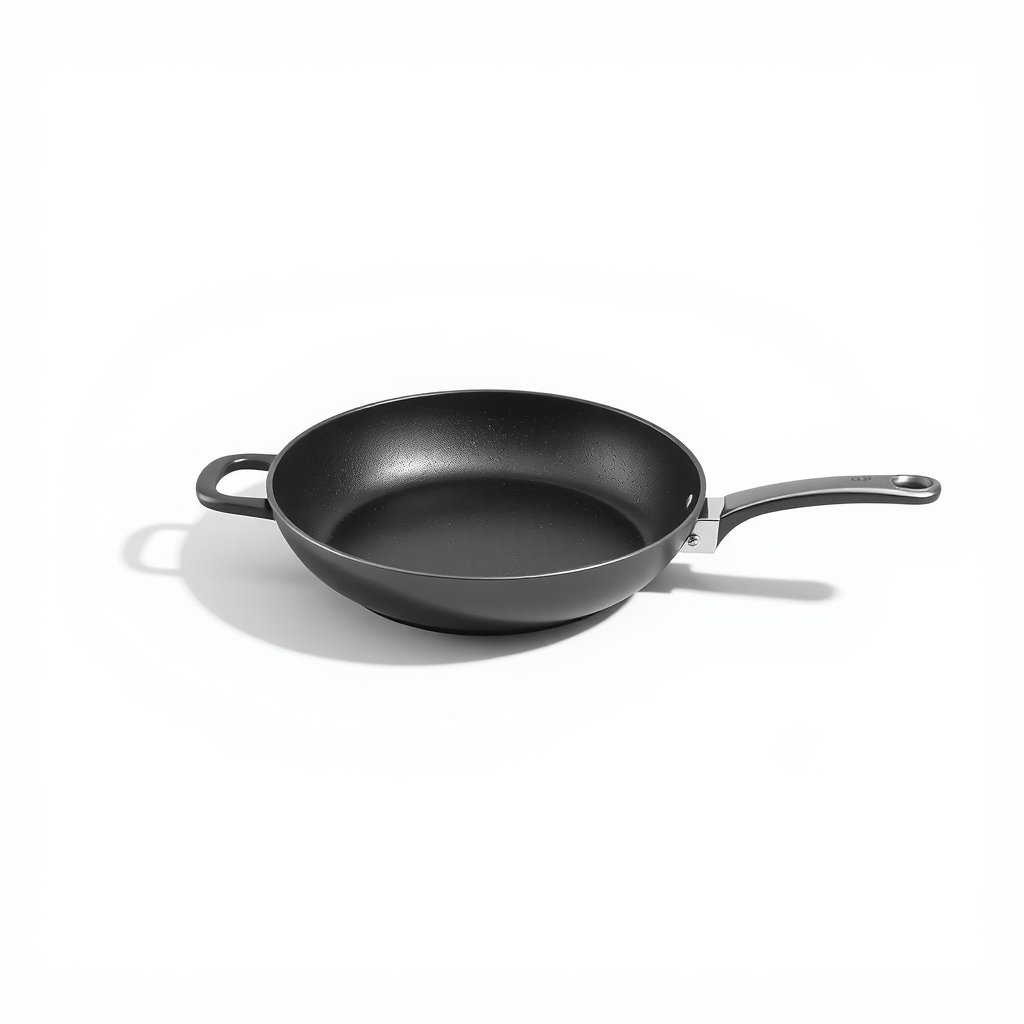
A non-stick frying pan made for induction
Induction works by creating heat in a magnetic base. An induction-ready pan has a steel or iron layer built into the base, so the cooktop detects it and heats it evenly, and the non-stick coating stays where it belongs on the inside.
What to get: Induction-ready non-stick frying pan
How long it lasts: Years of daily use if you keep the heat at medium and use soft utensils.
As an Amazon Associate I earn from qualifying purchases.
What you'll need
-
Small magnet
A fridge magnet works for the base test
You have it -
Cooktop manual or burner markings
Tells you the smallest pan the burner will detect
You have it -
Silicone or wooden spatula
Protects the coating on your new pan
You have it - Our pick Illustration
Induction-ready non-stick frying pan
Pick the diameter that matches your burner
- Illustration
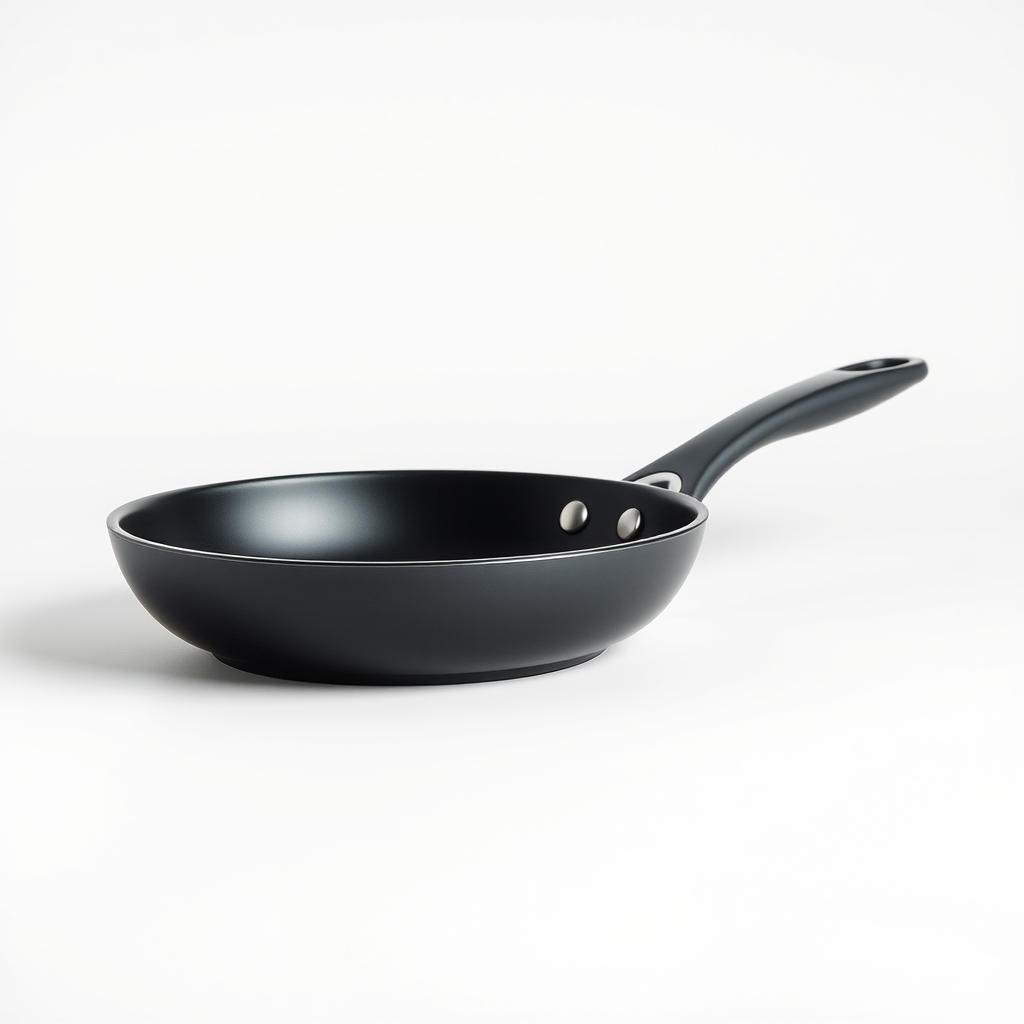
Small induction-ready non-stick skillet
For eggs and single servings
Why it happens
The base is not magnetic
Most basic non-stick pans are plain aluminum. Aluminum is not magnetic, so an induction cooktop sees nothing to heat and either stays cold or shows a no-pan message.
The pan is too small for the burner
Induction cooktops need a minimum amount of magnetic metal over the coil. A small egg pan on a large zone may not be detected, or it may switch on and off.
A warped or rounded base
Non-stick pans that were heated empty on high often warp. A base that rocks loses contact with the glass, and the cooktop may cut out or heat unevenly.
Weak magnetic layer
Some pans have a thin disc that only just passes the test. You get buzzing, slow heating or hot spots because the magnetic layer is small or thin.
Try this first (free)
Do these in order, starting with the simplest.
-
1. Run the magnet test
Tool used: Small magnetHold a magnet against the outside of the base. If it snaps on firmly, the pan can work on induction. If it barely sticks or slides off, the pan is not made for induction.
-
2. Check for the induction mark
Flip the pan over and look for a coil-shaped symbol or the word induction. Makers print it on pans that are meant for induction, but the magnet test is still the final word.
-
3. Match the pan to the zone
Tool used: Cooktop manual or burner markingsRead the burner markings or the manual for the smallest pan the cooktop will detect. Put the pan right in the middle of the ring, and use a burner no larger than the pan base.
-
4. Check the base is flat
Set the pan on a counter and press the edge. If it rocks, the base has warped. Warped pans lose contact with the glass and are best retired.
-
5. Use medium heat on the new pan
Tool used: Silicone or wooden spatulaInduction heats fast. Start on medium, never preheat an empty non-stick pan on high, and use silicone or wood utensils so the coating lasts.
When free fixes aren't enough
If the magnet does not stick, there is no free fix. Settings, a different burner or a new cooktop plug will not make an aluminum base heat. A pan with a built-in magnetic layer is the part that is missing. The same goes for a warped base: once it rocks, it stops heating evenly. Buying the right pan also saves you from adapter disks, which are slow and leave you with uneven heat.
Buy the fix
Still stuck after the free fixes? These are the products we would look at.
| Pick | Product | Fixes | Who it's for | Buy |
|---|---|---|---|---|
| Best pick | Induction-ready non-stick frying pan | a pan that the induction cooktop will not detect | Anyone whose current non-stick pan fails the magnet test and who cooks eggs, fish or pancakes daily. | Check price |
| Budget pick | Small induction-ready non-stick skillet | a failed pan for eggs and one-person meals | Single cooks and anyone who wants a cheap first induction pan to try. | Check price |
Induction-ready non-stick frying pan
Fixes: a pan that the induction cooktop will not detect
Look for: Listed as induction compatible, with a magnetic stainless steel or iron base; A thick, flat base that does not rock; A PFOA-free non-stick coating, rated for medium heat; A diameter that matches your burner, usually 10 or 12 inches.
- Who it's for
- Anyone whose current non-stick pan fails the magnet test and who cooks eggs, fish or pancakes daily.
- Honest downside
- Your pan already passes the magnet test and just needs re-centering. Also skip it if you want to sear at very high heat. Use stainless steel or cast iron for that.
Small induction-ready non-stick skillet
Fixes: a failed pan for eggs and one-person meals
Look for: Induction compatible, with a magnetic base; A flat base wide enough for your smallest burner; A comfortable, oven-safe or heat-resistant handle.
- Who it's for
- Single cooks and anyone who wants a cheap first induction pan to try.
- Honest downside
- You cook for a family, since a small pan is cramped. Also skip it if your only free burner is a large zone, where a small base may not be detected.
As an Amazon Associate I earn from qualifying purchases. We don't show prices because they change, so use the button to see today's price.
How we picked: How we picked: this page is based on induction cooktop manuals, cookware care guides, and the problems and fixes owners report in reviews. We do not test products by hand.
What to look for on the label
- Induction compatible: the listing should say so in words. A line like works on all stovetops is not proof, so check for the word induction.
- Base: look for a bonded or clad steel layer, not a thin sticker.
- Size: match the base width to your burner, not the rim width.
- Oven safe: check the handle's rated temperature if you finish dishes in the oven.
What to skip
Induction interface disks and trying a higher power level
A metal interface disk sits between the pan and the glass and can make an aluminum pan heat, but it heats slowly and unevenly, and many induction makers do not recommend it. Turning the power up does nothing if the cooktop cannot detect the pan. If you are fighting the pan, change the pan.
Frequently asked questions
How do I know if a non-stick pan will work on induction?
Why does my induction cooktop say no pan with a pan on it?
Can I use an aluminum non-stick pan on induction with an adapter?
Why does my induction pan buzz?
Related problems
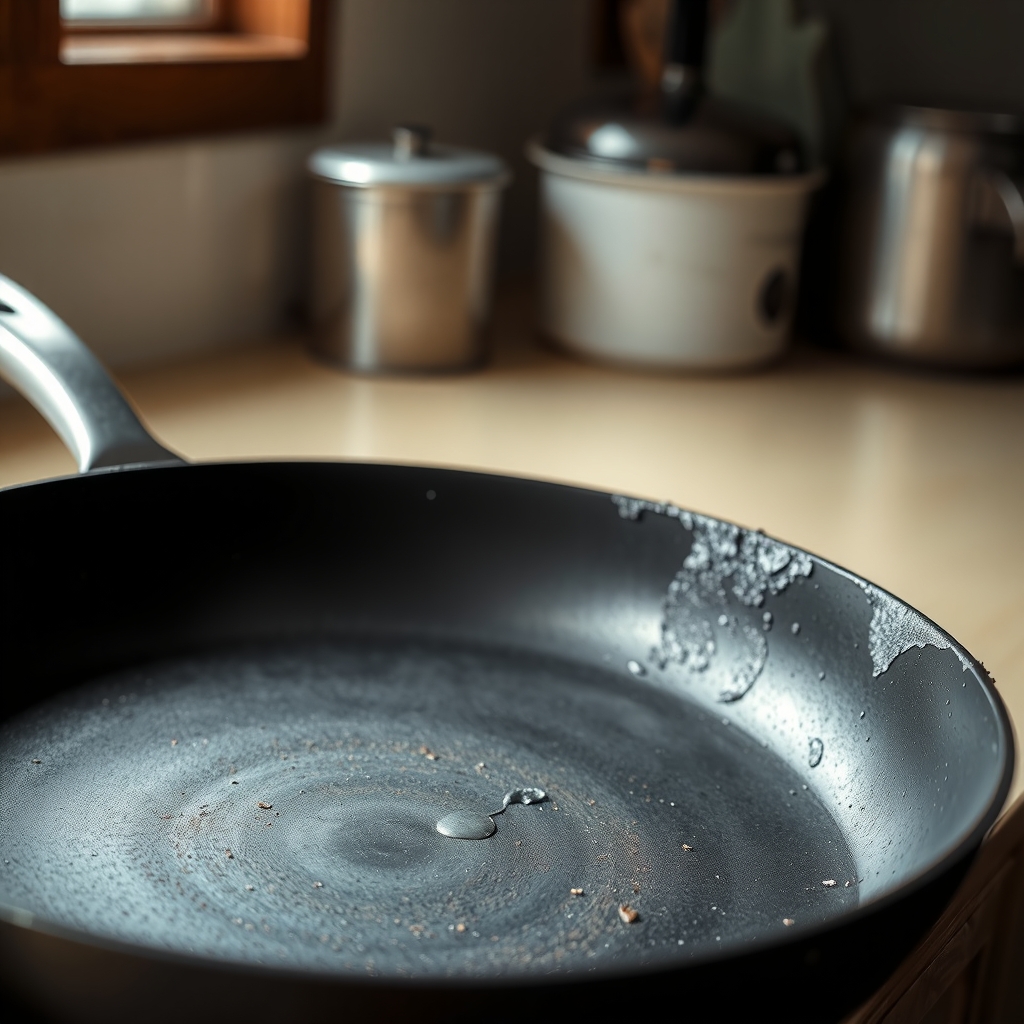 Free fix inside
Kitchen · Non Stick Pan
Non Stick Pan Peeling? Don't Patch It: Safer Pans to Buy Instead
Read the fix Free fix inside
Kitchen · Non Stick Pan
Non Stick Pan Sticking? Strip the Cooking-Spray Film, Then Re-Test
Read the fix Free fix inside
Kitchen · Non Stick Pan
How to Avoid Scratching a Non Stick Pan: Utensils and Pan Protectors
Read the fix Free fix inside
Kitchen · Cast Iron Pan
Cast Iron Pan Too Heavy? Lighter Skillets That Still Sear Well
Read the fixAs an Amazon Associate I earn from qualifying purchases. Affiliate disclosure