Keep a Dog Crate Warm in Winter: A Cover and a Safe Pad
A wire crate loses heat through its open sides and a cold floor. Move it, drape it, then fit a proper cover and a safe pad.
By Jamilur Rahman Updated November 5, 2026 · 6 min read
- Time
- 20 min
- Cost
- $20-$50
- Difficulty
- Easy
In this guide
Quick answer
To keep a dog crate warm in winter, move it away from drafts and bare floors, add a thick bed, and cover the top and sides so the crate holds your dog's body heat. A fitted crate cover does that neatly, with vent panels so air still flows. Leave the front or one side open, and never put a heater or heating pad inside.
Free fix vs. permanent fix
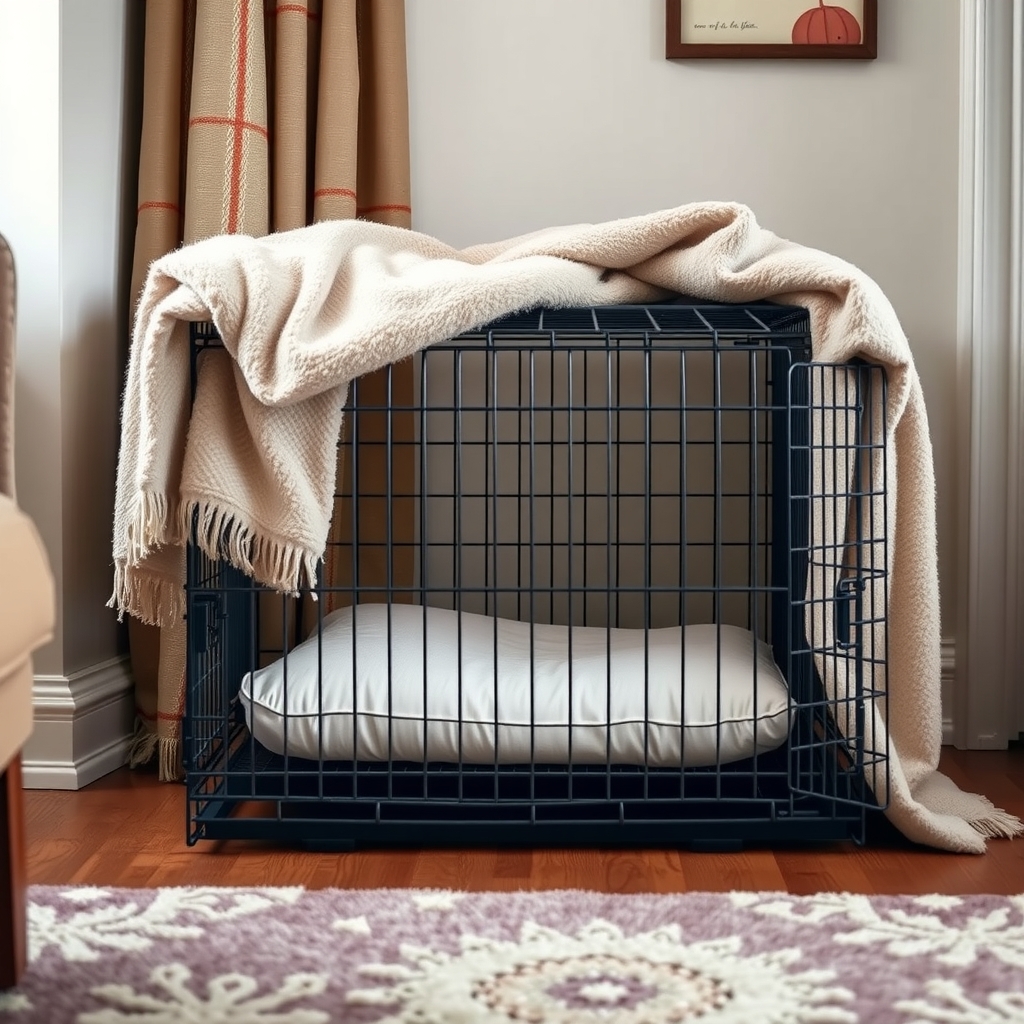
Move it and drape a blanket
- Put the crate against an inside wall, away from doors and windows
- Set it on a rug or foam mat
- Drape a thick blanket over the top and two or three sides
- Leave the front or one side open for air and a view
How long it lasts: A night or two. Blankets slip, bunch up and can be pulled through the bars and chewed.
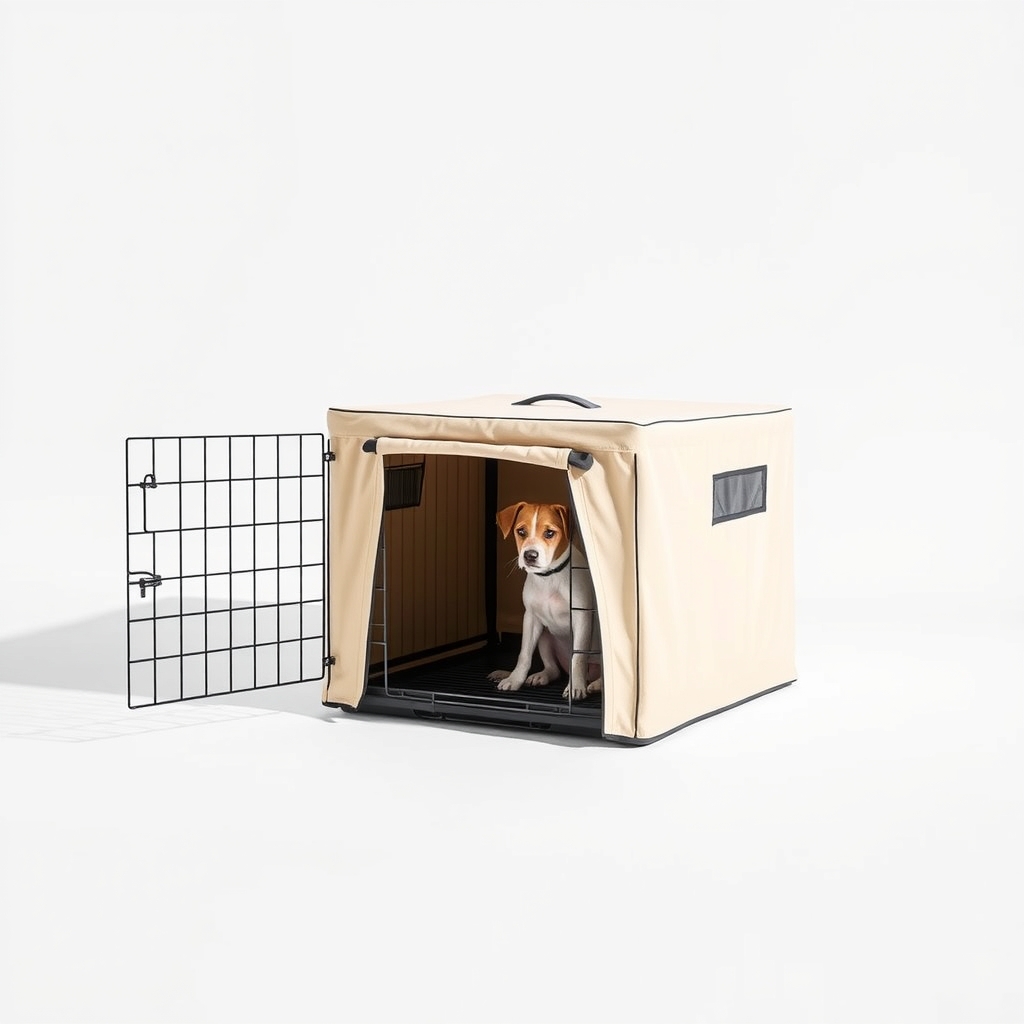
A fitted insulated crate cover
A fitted cover is cut to your crate size, so it does not slip or leave gaps. Insulated fabric holds the warmth your dog gives off, vent panels keep fresh air moving and a roll-up door flap lets you open a side. It is a tidier and safer version of the blanket trick.
What to get: Fitted insulated dog crate cover
How long it lasts: All winter. It stays in place, holds heat and goes in the washing machine.
As an Amazon Associate I earn from qualifying purchases.
What you'll need
-
Tape measure
Measure the crate length, width and height before you buy a cover
You have it -
Rug or foam floor mat
Lifts the crate off a cold floor
You have it -
Thick blanket or quilt
A first-night fix while you wait for a cover
You have it - Our pick Illustration
Fitted insulated crate cover
Sized to your crate, with vent panels and a door flap
- Illustration
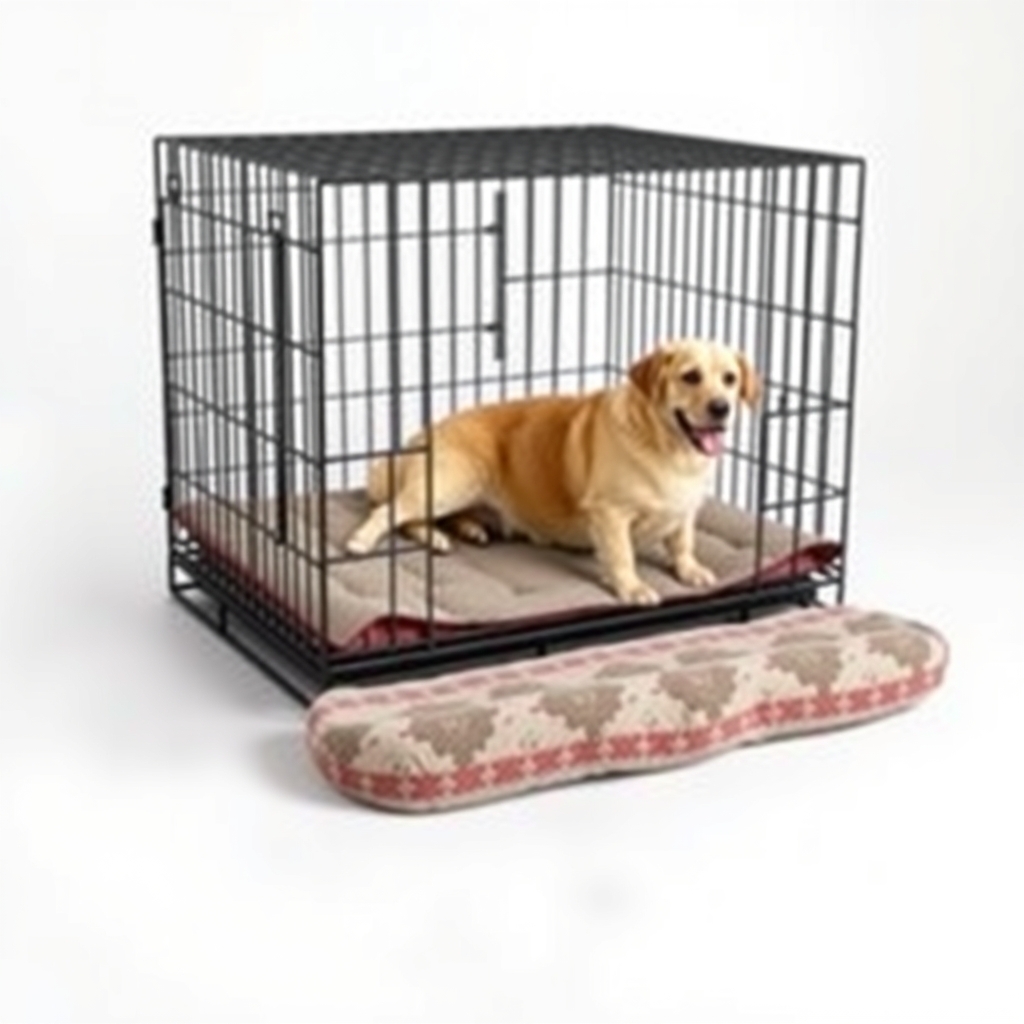
Self-warming crate pad
Cut to the crate floor to hold your dog's heat
Why it happens
Open wire sides
A wire crate is mostly air. The heat your dog makes escapes through every gap.
A cold floor under the crate
Tile, concrete or a bare basement floor draws heat out of the crate from below.
A drafty spot
A crate near an outside door, a window or a floor vent sits in moving cold air.
A crate that is too big
Extra empty space is extra air to warm. Your dog only needs room to stand, turn around and lie down.
Try this first (free)
Do these in order, starting with the simplest.
-
1. Pick a warmer spot
Move the crate to an inside wall in a room that stays warm. Keep it away from outside doors, windows and floor vents. Do not put it right against a radiator or heater, which can overheat your dog.
-
2. Check the crate size
Tool used: Tape measureYour dog should be able to stand, turn around and lie down, with little extra. If the crate has a divider panel, use it to shrink the space so body heat fills it.
-
3. Lift it off the floor
Tool used: Rug or foam floor matSet the crate on a rug or interlocking foam mat. This cuts the heat lost through the floor.
-
4. Drape a blanket
Tool used: Thick blanket or quiltCover the top and two or three sides with a thick blanket or quilt, with the front open. Clip or weigh down the edges so your dog cannot pull fabric in through the bars.
-
5. Swap in a fitted cover and a safe pad
Tool used: Fitted insulated crate coverA cover made for your crate size holds the heat better than a loose blanket. Add a flat, snug pad on the floor. Remove anything your dog tries to chew or shred.
IllustrationCheck price on AmazonTool for this step
Fitted insulated crate cover · Sized to your crate, with vent panels and a door flap
-
6. Check on your dog
Feel your dog's ears and paws and watch for shivering or tight curling. A dog that pants or seems restless is too warm, so open a side.
When free fixes aren't enough
A draped blanket is a good first step, but it slips, leaves gaps and can be pulled through the bars. If the crate sits in a cool room all winter, a fitted cover is the stronger answer: it matches the crate, holds heat and has ventilation flaps. Add a pad made for crates on the floor. Skip covers and loose blankets for dogs that chew fabric and use a tough, flat bed instead. A crate is not a shelter. If it sits in a garage, on a porch or outdoors in freezing weather, bring your dog inside.
Buy the fix
Still stuck after the free fixes? These are the products we would look at.
| Pick | Product | Fixes | Who it's for | Buy |
|---|---|---|---|---|
| Best pick | Fitted insulated dog crate cover | heat loss through the open wire sides | Dogs in wire crates in a cool room. | Check price |
| Upgrade pick | Self-warming dog crate pad | a cold crate floor | Dogs that sleep on a bare plastic crate tray. | Check price |
Fitted insulated dog crate cover
Fixes: heat loss through the open wire sides
Look for: Sized for your crate, so match the listed crate length; Thick, insulated fabric with ventilation panels; A roll-up or zip door flap so the front can open; Machine-washable.
- Who it's for
- Dogs in wire crates in a cool room.
- Honest downside
- Your dog chews or pulls at fabric through the bars. Make sure nothing is within its reach inside the crate.
Self-warming dog crate pad
Fixes: a cold crate floor
Look for: Cut to your crate size; A reflective layer that returns body heat; A non-slip underside and washable cover.
- Who it's for
- Dogs that sleep on a bare plastic crate tray.
- Honest downside
- Your dog shreds bedding. Fix the chewing first, and use a flat, tough mat.
As an Amazon Associate I earn from qualifying purchases. We don't show prices because they change, so use the button to see today's price.
How we picked: How we picked: this page is based on veterinary and trainer advice on crate comfort, product instructions from crate cover makers and what dog owners report in reviews. We do not test products by hand.
Too cold or too warm? What to watch for
- Too cold: shivering, tight curling, cold ears and paws, whining or reluctance to settle.
- Too warm: panting, restlessness, stretching out away from the bedding, hot ears. Open a side or remove a layer.
- Just right: your dog settles, stretches out and sleeps calmly.
What to skip
Heat lamps, space heaters and heating pads in or near the crate
Never put a heating pad, heat lamp or space heater in or against a crate. A dog cannot move away from heat it cannot escape, and cords are easy to chew. Use insulation and a pad that holds your dog's own body heat.
Frequently asked questions
What can I put in a dog crate to keep it warm?
Is it safe to cover a dog crate with a blanket?
How cold is too cold for a dog crate?
How do I keep a dog crate warm in a garage or outside?
Related problems
 Free fix inside
Pets · Dog Bed
Keep a Dog Bed Warm in Winter: Heated vs. Self-Warming Pads
Read the fix Free fix inside
Pets · Dog Crate
Keep a Dog Crate Cool in Summer: What Helps and What Backfires
Read the fix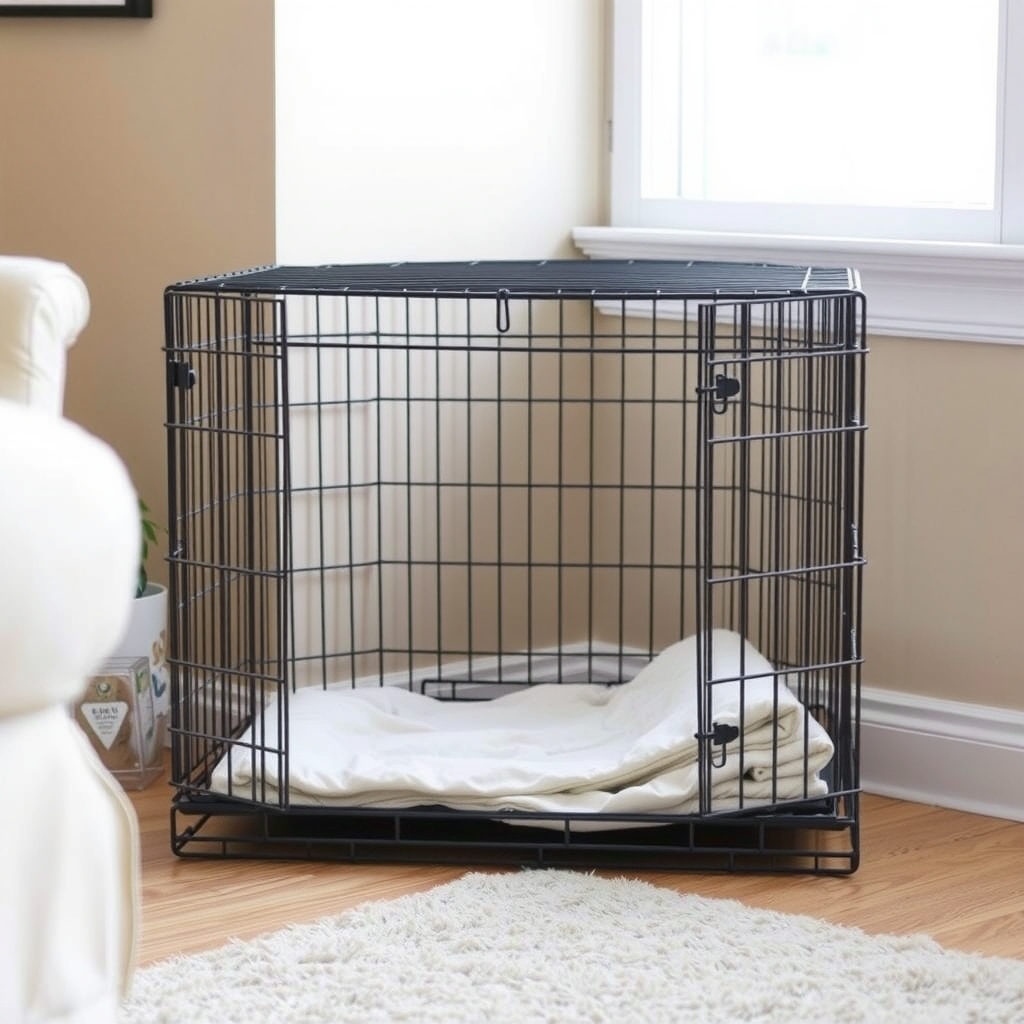 Free fix inside
Pets · Dog Crate
Dog Crate Too Big? A Divider Panel Fixes It Without a New Crate
Read the fix Free fix inside
Pets · Dog Crate
Dog Crate Smells Bad? Clean It Right and Add a Washable Pad
Read the fixAs an Amazon Associate I earn from qualifying purchases. Affiliate disclosure