Keep a Dog Bed Warm in Winter: Heated vs. Self-Warming Pads
A cold floor steals your dog's warmth. Lift and layer the bed for free, then choose a self-warming pad or a heated one.
By Jamilur Rahman Updated November 5, 2026 · 6 min read
- Time
- 15 min
- Cost
- $20-$50
- Difficulty
- Easy

In this guide
Quick answer
To keep a dog bed warm in winter, get it off the cold floor and out of drafts, then add a blanket layer. For a bed that holds the warmth all night, a self-warming pad reflects your dog's own body heat, with no cord and no plug. Choose a heated pad only for a dog that needs extra heat and will not chew the cord.
Free fix vs. permanent fix
Lift, move and layer
- Move the bed away from windows, doors and bare floors
- Put it on a rug, foam mat or raised frame
- Layer a fleece or old blanket on top
- Warm a blanket in the dryer for a few minutes before bed
How long it lasts: Mild nights. In a cold room a plain blanket stops holding warmth, and the floor keeps pulling heat out.
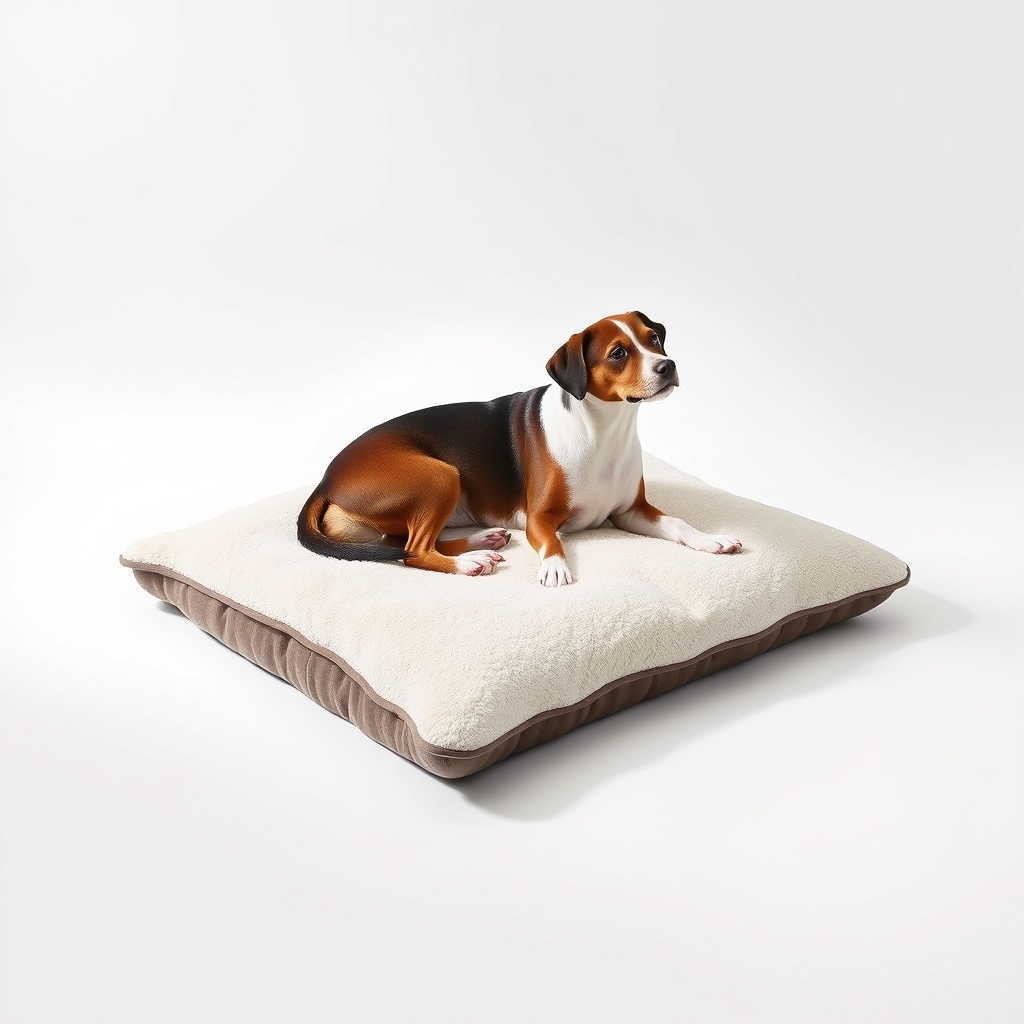
A self-warming dog bed pad
A self-warming pad has a reflective layer under soft fleece, or a thick fill that holds body heat. There is no cord to chew and no switch to forget. It is a good default for most healthy dogs, and a heated pad is the step up for dogs that need more.
What to get: Self-warming dog bed pad
How long it lasts: All winter, with no power needed. It reflects your dog's heat back; it does not make heat of its own.
As an Amazon Associate I earn from qualifying purchases.
What you'll need
-
Old blankets or fleece
Layer one on top so your dog can burrow
You have it -
Rug or foam mat
Lifts the bed off cold tile or wood
You have it - Our pick Illustration
Self-warming dog bed pad
Goes under or inside the bed and reflects body heat
- Illustration
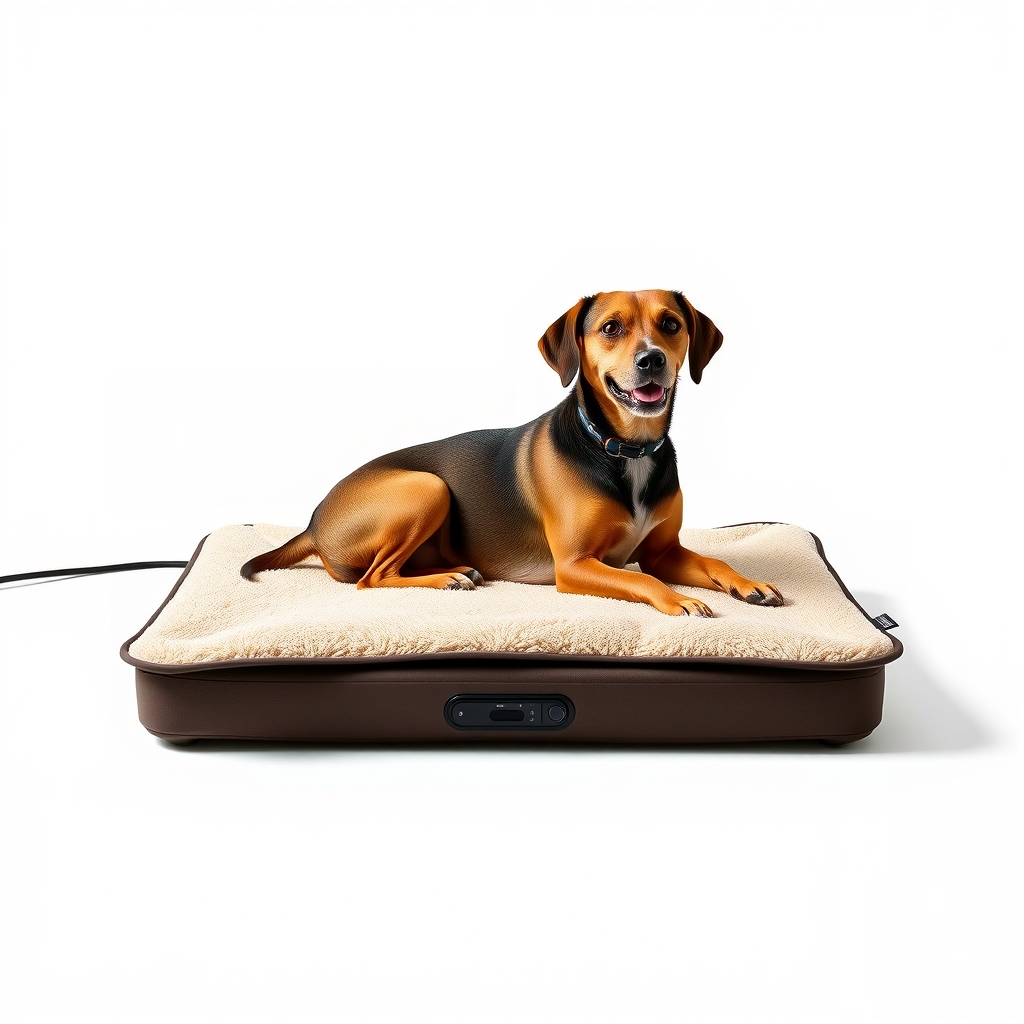
Pet-rated heated pad
Only for dogs that need extra heat and will not chew the cord
Why it happens
A cold floor
Tile, concrete and hardwood pull heat out of a dog lying on them. This is the biggest source of cold in most homes.
Drafts at floor level
Cold air sinks and flows along the floor from door gaps and window sills. A bed in that path never warms up.
A thin or flattened bed
Padding compresses over time. A worn bed has little insulation between your dog and the floor.
A dog that loses heat fast
Small, short-coated, thin, very young and senior dogs lose heat quickly. Arthritic dogs often feel the cold more, too.
Try this first (free)
Do these in order, starting with the simplest.
-
1. Move the bed to the warmest spot
Pick a spot on an interior wall, away from windows, outside doors and floor vents that blow cold air. A corner feels safe and holds heat well.
-
2. Get it off the floor
Tool used: Rug or foam matPut the bed on a rug or foam mat, or use a raised cot with a blanket. Even a folded towel under the bed breaks contact with cold tile.
-
3. Add a layer on top
Tool used: Old blankets or fleeceA fleece blanket or an old sweatshirt gives your dog something to burrow into. Wash it weekly so it stays fluffy and clean.
-
4. Warm a blanket before bed
Tumble a blanket in the dryer on low for a few minutes. Test it on your wrist. It should feel pleasantly warm, never hot. It helps for a short while, not all night.
-
5. Add a self-warming pad
Tool used: Self-warming dog bed padSlip a pad under your dog's blanket or inside the bed. It needs a few minutes of body contact to start working, and it holds the heat your dog makes.
IllustrationCheck price on AmazonTool for this step
Self-warming dog bed pad · Goes under or inside the bed and reflects body heat
When free fixes aren't enough
If your dog still shivers, curls into a tight ball or keeps leaving the bed to find warm spots by a vent or on the sofa, layers alone are not holding enough heat. A self-warming pad adds insulation and reflects your dog's own warmth. For a senior, small or short-coated dog in a cold room, a pet-rated heated pad with a chew-resistant cord and a built-in thermostat is the step up. Never use a human heating pad or electric blanket. If your dog shivers in a warm room, seems weak or loses interest in food, see your vet.
Buy the fix
Still stuck after the free fixes? These are the products we would look at.
| Pick | Product | Fixes | Who it's for | Buy |
|---|---|---|---|---|
| Best pick | Self-warming dog bed pad | a cold bed that never warms up | Most healthy dogs that sleep indoors, and owners who do not want a cord in the house. | Check price |
| Upgrade pick | Pet-rated heated dog pad | cold that body heat alone cannot beat | Senior or arthritic dogs, small or short-coated dogs, and dogs recovering from illness with your vet's okay. | Check price |
Self-warming dog bed pad
Fixes: a cold bed that never warms up
Look for: A reflective or thermal core that holds body heat; A machine-washable cover; A non-slip bottom, so it stays put on hard floors; A size that fits your dog stretched out.
- Who it's for
- Most healthy dogs that sleep indoors, and owners who do not want a cord in the house.
- Honest downside
- Your dog sleeps outdoors in freezing weather, where body heat alone is not enough, or chews fabric and could swallow the filling.
Pet-rated heated dog pad
Fixes: cold that body heat alone cannot beat
Look for: Made for pets, with a stated safe surface temperature; A chew-resistant, covered cord; A thermostat or low-voltage design; A washable cover and a safety certification.
- Who it's for
- Senior or arthritic dogs, small or short-coated dogs, and dogs recovering from illness with your vet's okay.
- Honest downside
- Your dog is a puppy, chews cords, cannot move off the pad, or has poor feeling in its skin. Skip heat for those dogs.
As an Amazon Associate I earn from qualifying purchases. We don't show prices because they change, so use the button to see today's price.
How we picked: How we picked: this page is based on veterinary advice on keeping dogs warm, product instructions from pet bed and heated pad makers and what dog owners report in reviews. We do not test products by hand.
Dog bed that keeps them warm: self-warming or heated?
- Self-warming pad: no cord, no power, safe for most dogs and chewers on a covered pad. It reflects body heat, so the dog has to lie on it for a few minutes.
- Heated pad: actively warms, so it suits senior, arthritic, small and short-coated dogs. It needs a safe cord and a dog that will not chew it.
- Plain thick bed plus blanket: a fine start for a healthy dog in a warm house.
Signs your dog is too cold
Watch for shivering, a tightly curled position, tucked paws, slow movement and seeking out warm spots. If your dog stays cold or seems unwell even in a warm bed, call your vet.
What to skip
Human heating pads, electric blankets and hot water bottles
Human heating pads and electric blankets are not made for pets and can overheat or be chewed. Hot water bottles can leak or cool fast and may burn skin. Use a pet-rated product, or an insulated pad that needs no power.
Frequently asked questions
Are heated dog beds safe?
Do self-warming dog beds really work?
How cold is too cold for a dog indoors?
What can I put in a dog bed to make it warmer?
Related problems
 Free fix inside
Pets · Dog Crate
Keep a Dog Crate Warm in Winter: A Cover and a Safe Pad
Read the fix Free fix inside
Pets · Dog Bed
Dog Bed Sliding on Wood Floors? A Grip Pad Fixes It
Read the fix Free fix inside
Pets · Dog Bed
Dog Bed Smells After Washing? Why the Funk Survives the Cycle
Read the fix Free fix inside
Pets · Dog Bed
Dog Bed Not Chewable: Beds That Survive Heavy Chewers
Read the fixAs an Amazon Associate I earn from qualifying purchases. Affiliate disclosure