Cat Scratching Post Falling Apart? Re-Wrap It Instead of Replacing
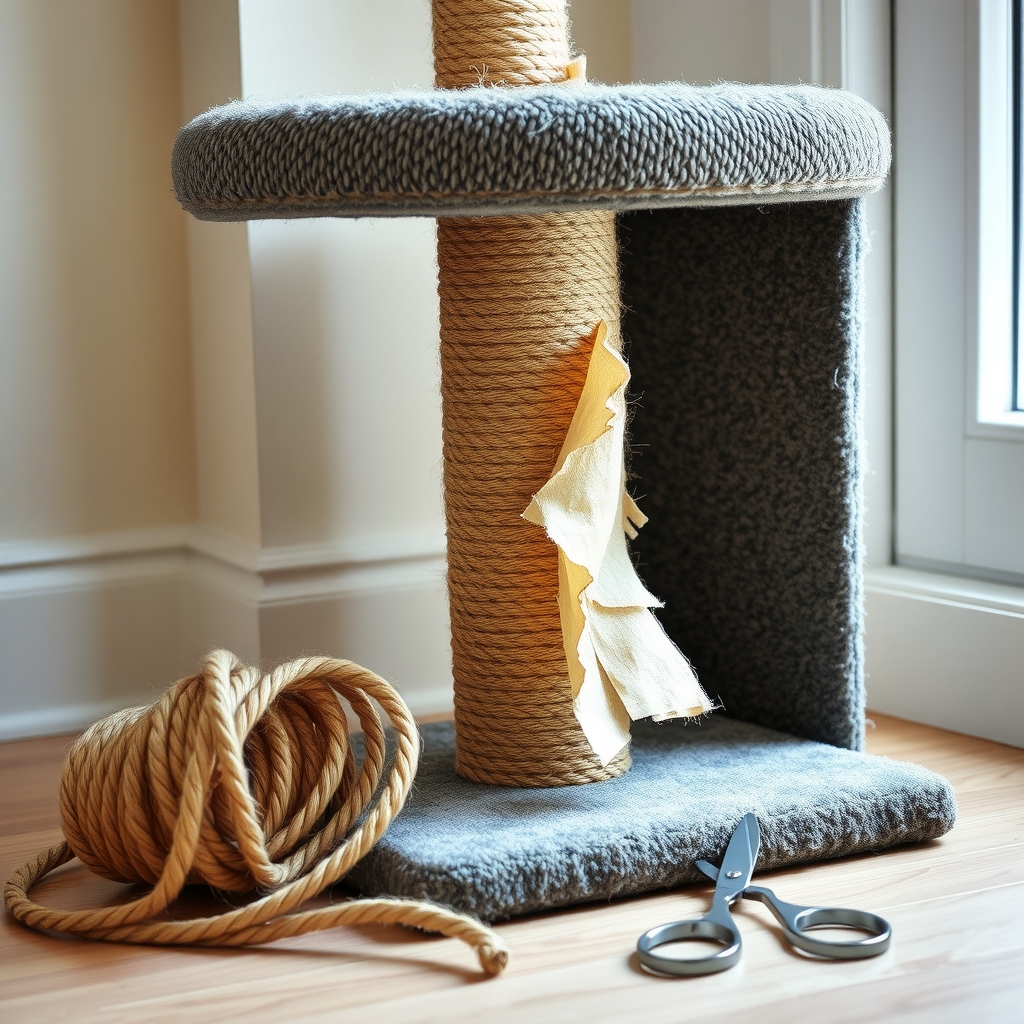
A shredded post is not a dead post. Strip the old cover, check the core and re-wrap it in sisal rope for a fraction of the price of a new one.
By Jamilur Rahman Updated November 5, 2026 · 6 min read
- Time
- 1 hour plus glue drying
- Cost
- Under $20
- Difficulty
- Easy
In this guide
Quick answer
To fix a cat scratching post that is falling apart, strip off the shredded cover, tighten the base and check the core, then re-wrap the post with sisal rope. Sisal is tough, cats like it and it costs far less than a new post. The free fix is to re-glue or re-staple what is left, but that rarely lasts through the next round of scratching.
Free fix vs. permanent fix
Tighten, re-glue and re-staple
- Tighten the bolt that holds the post to the base
- Press loose carpet down with non-toxic glue
- Trim hanging threads so claws do not snag
- Pull out loose staples with pliers
How long it lasts: A few weeks to a couple of months. The old cover is already worn, so it shreds again.
A sisal rope re-wrap
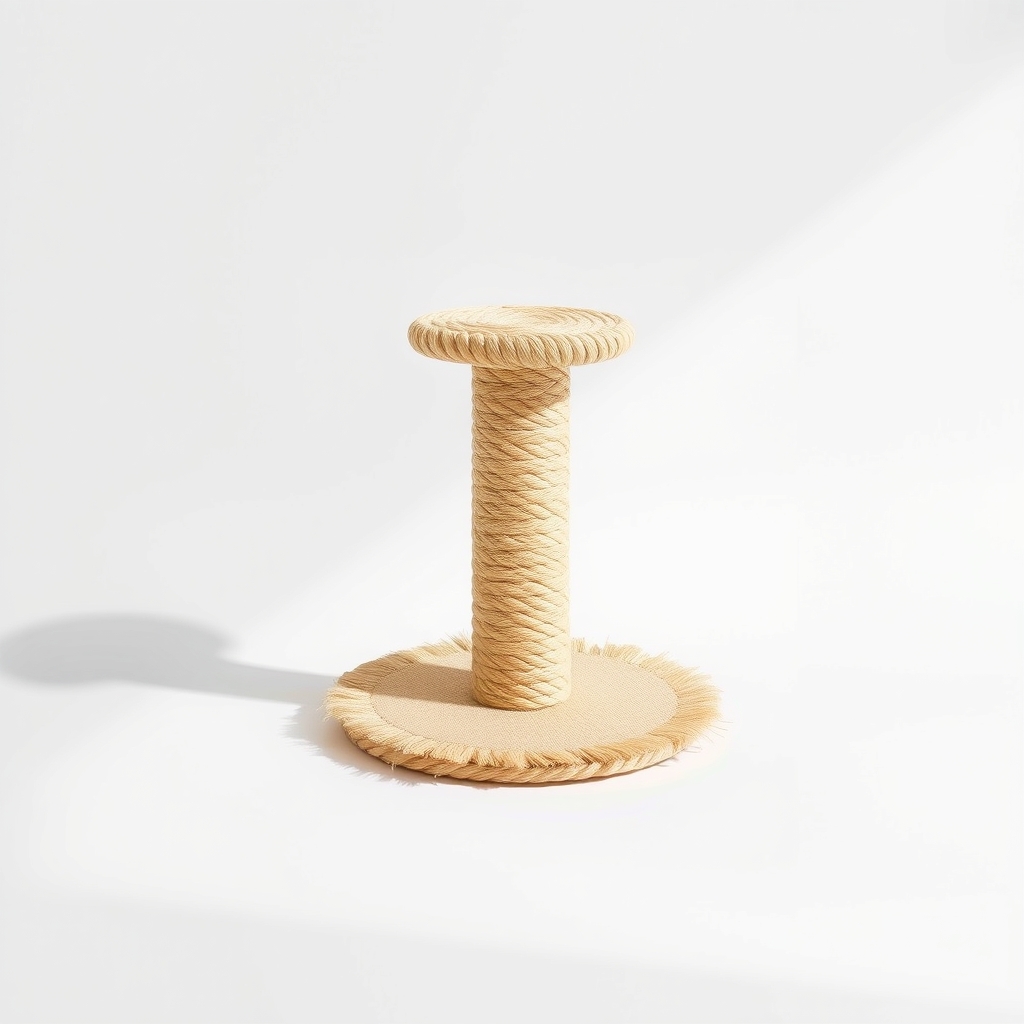
Sisal is a natural fiber that claws can dig into, and a rope wrap gives your cat many turns to shred before it wears out. When the rope is finally worn, you wind on more. The post and base stay in use, and your cat keeps the post it already likes.
What to get: Natural sisal rope for scratching posts
How long it lasts: Often a year or more, depending on how hard your cat scratches.
As an Amazon Associate I earn from qualifying purchases.
What you'll need
-
Scissors
Cut away the old cover and trim the rope
You have it -
Pliers or staple remover
Pull out old staples and tacks
You have it -
Tape measure
To work out how much rope you need
You have it - Illustration
Non-toxic glue
White craft glue or hot glue sticks; cats chew
- Our pick Illustration
Natural sisal rope
Plain, undyed rope in a thickness your cat can grip
Why it happens
Claws shredded the cover
Carpet and fabric are not made for claws. The cover frays, hangs off in strips and finally exposes the core.
Glue and staples gave out
Many posts use a thin cover held by glue and a few staples. They let go with use, and the cover slides down the post.
A loose base
If the bolt or peg holding the post to the base is loose, the post wobbles. Cats avoid a post that moves, so a wobbly one gets used less and then gets replaced.
A weak core
Cardboard tubes crush and thin wood splits. If the core is soft or cracked, no cover will save it.
Try this first (free)
Do these in order, starting with the simplest.
-
Check the core and the base
Press on the post and push it sideways. If the core is solid and the base is steady, the post is worth saving. If the core is crushed or cracked, or the post will not stay upright, replace it.
-
Strip the old cover
Tool used: Pliers or staple removerCut the cover off along one seam and pull out the remaining staples with pliers. Peel away old glue so the surface is smooth.
-
Tighten the base
Turn the post or the bolt underneath until the base is firm. If there is play, add a dab of non-toxic glue to the peg and let it dry first.
-
Work out how much rope you need
Tool used: Tape measureMultiply the post's circumference by its height divided by the rope's thickness. A post 3 inches wide and 30 inches tall, wrapped in 3/8 inch rope, needs about 63 feet. Buy 10 percent extra.
-
Glue and wind the rope
Tool used: Natural sisal ropeGlue the end of the rope at the bottom of the post. Wind it up tightly, pushing each turn against the last so no gap shows. Add glue every few turns. Finish under the top and tuck or glue the end so no loose strands remain.
IllustrationCheck price on AmazonTool for this step
Natural sisal rope · Plain, undyed rope in a thickness your cat can grip
-
Let it cure, then put it back
Wait 24 hours for the glue to dry fully. Put the post back in the same spot so your cat finds it where it was.
When free fixes aren't enough
If the carpet is shredded, no glue will bring it back, and a fresh surface is the fix that lasts. Re-wrapping beats replacing the post whenever the base and core are sound. Replace the post if the core is crushed or cracked, or if the base cannot be tightened, since a post that tips over can scare a cat off for good. A very tall or wide post needs a lot of rope, so work out the length before you buy.
Buy the fix
Still stuck after the free fixes? These are the products we would look at.
Natural sisal rope for scratching posts
Fixes: a shredded cover on a post whose core and base are still sound
Look for: Natural, undyed sisal with no oily or chemical smell; Thick enough to last; 3/8 inch is a common size; Enough length for your post, plus 10 percent; Twisted, firm rope that does not unravel when cut.
- Who it's for
- Anyone whose cat likes the post but has chewed through its cover.
- Honest downside
- The core is crushed or the base cannot be tightened. Buy a new post instead.
As an Amazon Associate I earn from qualifying purchases. We don't show prices because they change, so use the button to see today's price.
How we picked: How we picked: this page is based on cat behavior guides on scratching, post repair advice from pet care sources, and the problems and fixes people report in reviews of sisal rope. We do not test products by hand.
The rope math, step by step
- Measure around the post to get its circumference. For a round post, the width times 3.14 is close.
- Measure the height you want to cover.
- Divide the height by the rope's thickness. That is the number of turns.
- Multiply the turns by the circumference. That is the rope length. Add 10 percent.
What to skip
Carpet covers and scented or dyed wraps
Carpet is the problem on many posts. Cats learn that carpet is for scratching, which can make your rugs look inviting. Choose sisal instead. Also skip any glue not labeled non-toxic, and any rope treated with dyes or oils, since cats chew and lick.
Frequently asked questions
How do I fix a cat scratcher post that is wobbly?
How do I repair a cat scratching post with carpet?
How much sisal rope do I need?
Will my cat use the post again after I re-wrap it?
Related problems
 Free fix inside
Pets · Cat Scratching
Cat Scratching Furniture? Why Your Post Isn't Working (and What Is)
Read the fix Free fix inside
Pets · Cat Scratching
Cat Scratching Post That Isn't Ugly: 5 Stylish Posts Cats Use
Read the fix Free fix inside
Pets · Cat Scratch Repair
Cat Scratching the Door Frame? Repair It and Stop a Repeat
Read the fix Free fix inside
Pets · Cat Scratch Repair
Cat-Scratched Wood Furniture: Hide the Marks in an Afternoon
Read the fixAs an Amazon Associate I earn from qualifying purchases. Affiliate disclosure