Lawn Turning Yellow? Thirst, Pets or Hunger: How to Tell
Yellow grass is usually thirsty, burned by pet urine or hungry. Check the watering and the pattern first, then feed a hungry lawn with an iron fertilizer.
By Jamilur Rahman Updated November 5, 2026 · 7 min read
- Time
- 1 hour
- Cost
- $20-$50
- Difficulty
- Easy
In this guide
Quick answer
Why is your lawn turning yellow? It is usually thirst, pet urine or hunger. Water deeply, mow high with a sharp blade and read the pattern of the yellow first. If the whole lawn is pale and the watering is right, it is short of nutrients, and a fertilizer with iron feeds it and brings the green back. A soil test shows what is missing.
Free fix vs. permanent fix
Water deeply, mow high and read the pattern
- Water deeply once or twice a week instead of a little every day
- Mow at the top of your grass type's range with a sharp blade
- Rinse pet spots with plenty of water
- Match the yellow to its cause with the guide below
How long it lasts: Permanently, for thirst and mowing problems. It does nothing for a lawn that is short of nitrogen or iron.
A lawn fertilizer with iron
If the whole lawn is pale and the watering is right, the grass is hungry. Fertilizer feeds it and the iron restores dark green color quickly. It does not fix drought, pet spots or grubs, which is why the free checks come first.
What to get: Granular lawn fertilizer with iron
How long it lasts: Iron brings back the green within days, and the nitrogen keeps feeding the lawn for weeks. Feed again on the schedule on the bag.
As an Amazon Associate I earn from qualifying purchases.
What you'll need
-
Screwdriver and an empty straight-sided can
To check soil moisture and measure sprinkler water
You have it - Illustration
Soil test kit
Shows pH and the main nutrients
- Our pick Illustration
Lawn fertilizer with iron
Pick one made for your grass type
- Illustration
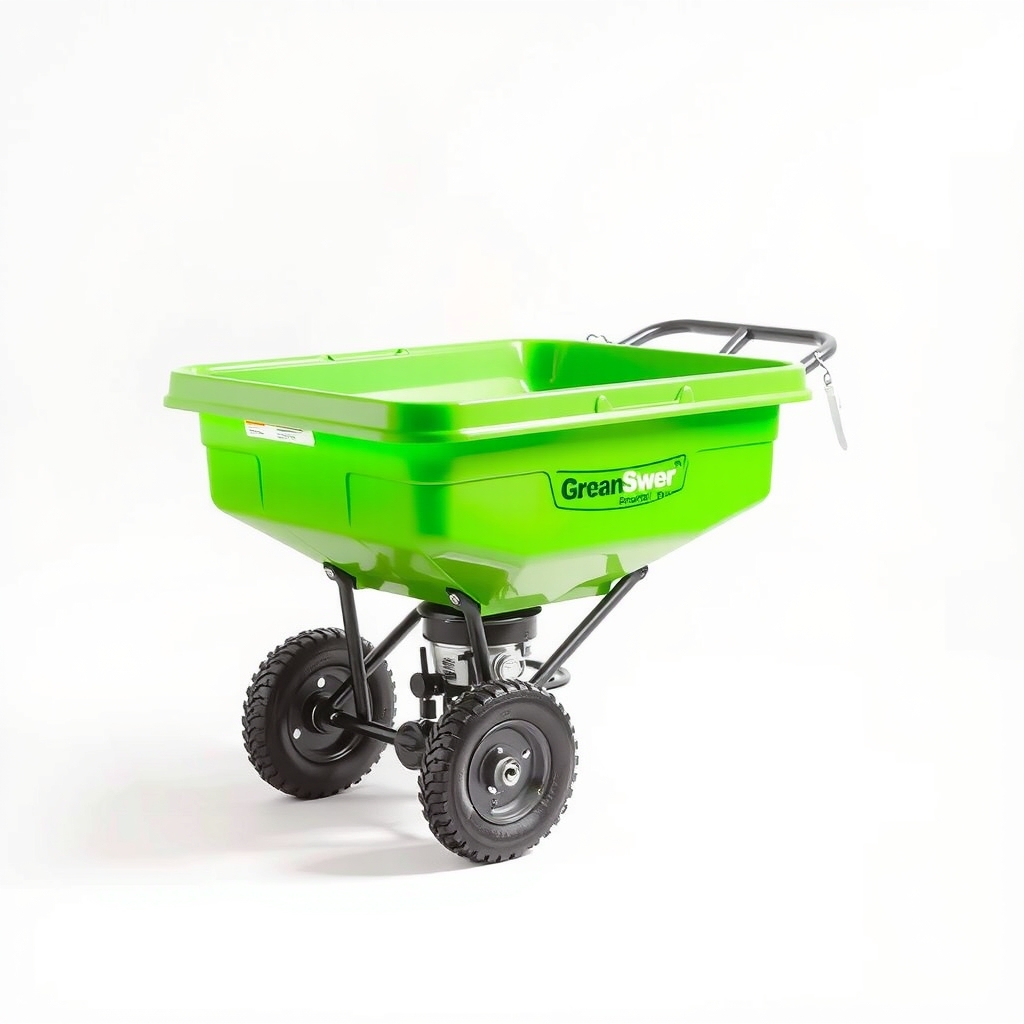
Broadcast spreader
Spreads evenly, so you avoid stripes and burn marks
Why it happens
Thirst or heat stress
Dry grass turns tan or yellow, and your footprints stay pressed in because the blades no longer spring back. Cool-season grasses often go dormant in a hot, dry spell.
Pet urine
Urine is rich in nitrogen. A concentrated dose burns the center of a spot, and the edge around it grows darker and faster.
Hunger
Low nitrogen makes the whole lawn a pale yellow-green. Low iron turns new growth yellow while the veins stay green, most often in alkaline, soggy or compacted soil.
Too much water or compact soil
Soggy, packed ground starves roots of air, so the grass cannot take up food, even if there is plenty in the soil.
Grubs, disease or a dull blade
Irregular patches that peel up like carpet point to grubs. A dull mower blade shreds the tips and leaves a tan-yellow cast across the lawn.
Try this first (free)
Do these in order, starting with the simplest.
-
Check how much water the lawn really gets
Tool used: Screwdriver and an empty straight-sided canPush a screwdriver into the soil. If it is hard to push in beyond an inch or two, the soil is dry or compacted. Put an empty can on the lawn, run the sprinkler and time how long it takes to collect an inch. Most lawns need about an inch of water a week in the growing season, rain included.
-
Match the yellow to its cause
Use the guide below. Round spots with a dark rim are pets. A pale lawn all over is hunger. Patches that lift like carpet are grubs. Yellow that only shows in low spots is drainage.
-
Rinse pet spots and keep the dog off for a while
Soak urine spots with plenty of water to dilute them. Reseed bare patches once the soil has been watered a few times.
-
Mow high with a sharp blade
Keep cool-season grass at about 3 to 4 inches and never cut more than a third of the height at once. Sharpen the blade once a season so it cuts the grass instead of tearing it.
-
Test the soil
Tool used: Soil test kitTake a few samples from the top few inches across the lawn and test them for pH and nutrients. If the pH is off, the lawn cannot use the fertilizer you give it. A county extension soil-testing service gives the most detailed result.
IllustrationCheck price on AmazonTool for this step
Soil test kit · Shows pH and the main nutrients
-
Feed the lawn with an iron fertilizer
Tool used: Lawn fertilizer with ironApply at the rate on the bag, on a day that is not hot or dry, then water it in. Sweep any granules off the driveway and path, since iron can leave rust stains on concrete.
IllustrationCheck price on AmazonTool for this step
Lawn fertilizer with iron · Pick one made for your grass type
When free fixes aren't enough
If you water well and mow right and the whole lawn is still pale, it needs food, and iron gives a fast color boost while the nitrogen drives growth. If new fertilizer does not green the grass within a couple of weeks, the soil test usually explains why: the pH may be off, or the ground may be compacted and need aerating. If patches lift like carpet, treat for grubs. If yellow patches spread in rings in humid weather, it may be a fungus. Never double the dose, since too much fertilizer burns the grass.
Buy the fix
Still stuck after the free fixes? These are the products we would look at.
| Pick | Product | Fixes | Who it's for | Buy |
|---|---|---|---|---|
| Best pick | Granular lawn fertilizer with iron | a pale, hungry lawn short of nitrogen or iron | Lawns that are pale all over, with watering and mowing already sorted. | Check price |
| Budget pick | Soil test kit | guessing what the lawn needs | Anyone whose lawn did not respond to fertilizer before. | Check price |
| Upgrade pick | Broadcast lawn spreader | stripes and burn marks from uneven spreading | People with more than a small patch of lawn who plan to feed it every year. | Check price |
Granular lawn fertilizer with iron
Fixes: a pale, hungry lawn short of nitrogen or iron
Look for: Iron (Fe) listed on the label, alongside nitrogen; Slow-release nitrogen for steadier feeding; Made for your grass type, cool-season or warm-season; A coverage area and spreader setting printed on the bag.
- Who it's for
- Lawns that are pale all over, with watering and mowing already sorted.
- Honest downside
- The yellow is from drought, pet urine or grubs. Feeding a thirsty or damaged lawn can make it worse. Do not use it in a heat wave.
Soil test kit
Fixes: guessing what the lawn needs
Look for: A pH reading and the main nutrients; Clear color charts or a digital reading; Enough tests to check several spots.
- Who it's for
- Anyone whose lawn did not respond to fertilizer before.
- Honest downside
- You can use a county extension soil-testing service. It costs a little more but gives a more complete result.
Broadcast lawn spreader
Fixes: stripes and burn marks from uneven spreading
Look for: Adjustable rate settings; A coated hopper that resists rust; Tires that roll easily on grass.
- Who it's for
- People with more than a small patch of lawn who plan to feed it every year.
- Honest downside
- Your lawn is tiny. A handheld spreader costs less and does the job.
As an Amazon Associate I earn from qualifying purchases. We don't show prices because they change, so use the button to see today's price.
How we picked: How we picked: this page is based on lawn care guides from university extension services, fertilizer bag instructions, and what homeowners report in reviews. We do not test products by hand.
What the yellow is telling you
- Round spots with a dark green ring: pet urine.
- Tan or yellow all over, footprints that stay: thirst or heat stress.
- Pale, thin yellow-green across the lawn: low nitrogen.
- New growth yellow with green veins: low iron, often with high pH or soggy soil.
- Patches that lift like a rug: grubs eating the roots.
- Yellow in low, wet spots: poor drainage or compaction.
What to skip
Doubling the fertilizer and watering a little every day
Extra fertilizer burns roots and makes yellow patches worse. A light sprinkle every day keeps roots near the surface, so the grass struggles in the first dry week. Water deeply and less often, and feed once on the schedule.
Frequently asked questions
Why is my lawn not green even though I water it?
Why is my lawn not responding to fertilizer?
Why is my lawn not growing?
Will yellow grass turn green again?
Related problems
 Free fix inside
Outdoor & Garage · Lawn
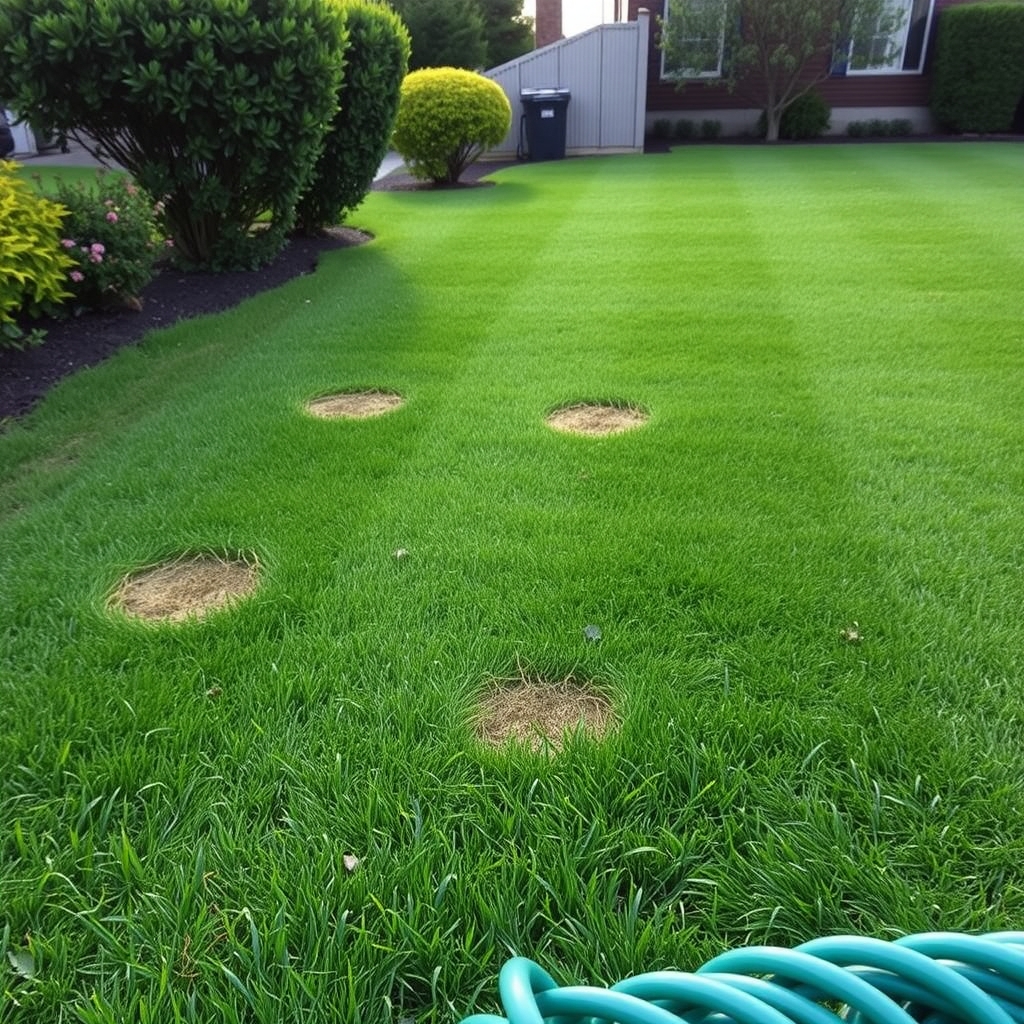
Why Your Lawn Has Brown Patches: Match the Fix to the Pattern
Read the fix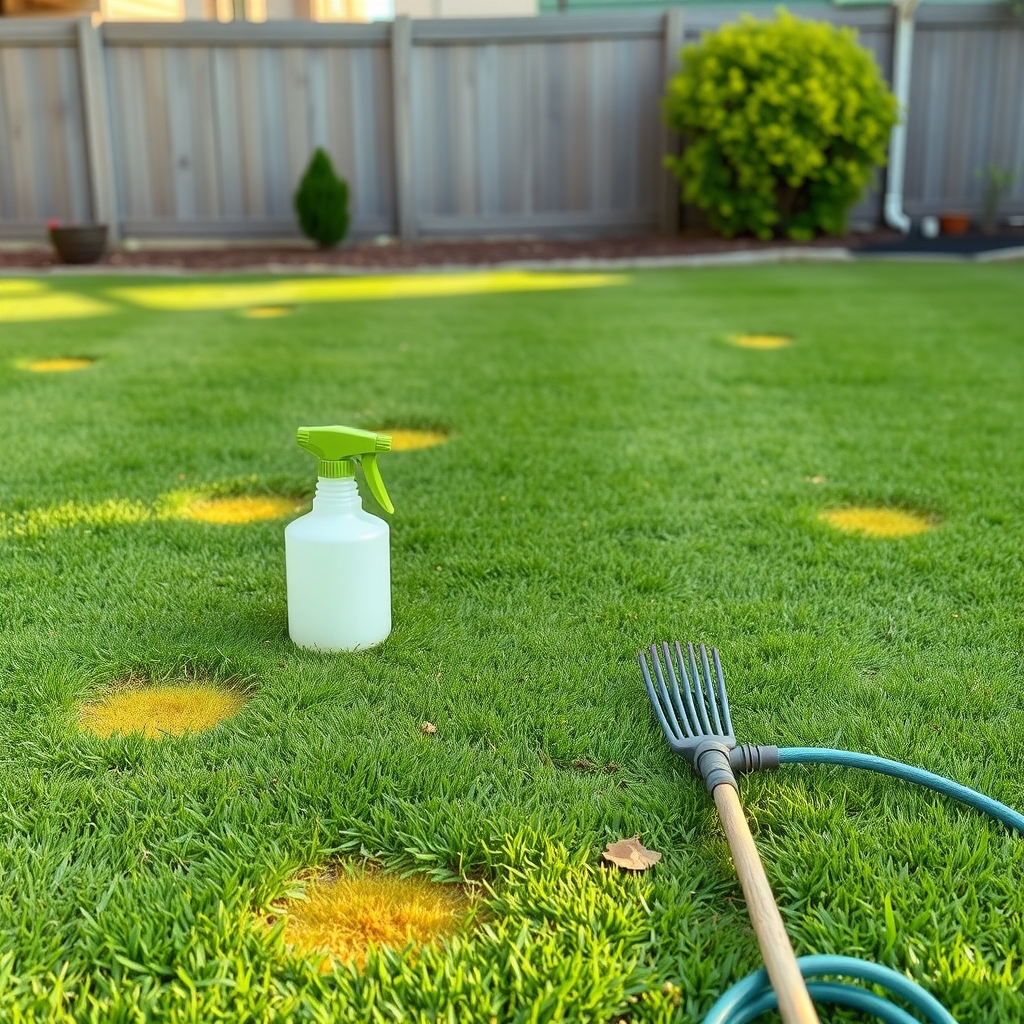 Free fix inside
Outdoor & Garage · Lawn
Lawn Smells Like Dog Pee? Neutralize It, Don't Mask It
Read the fix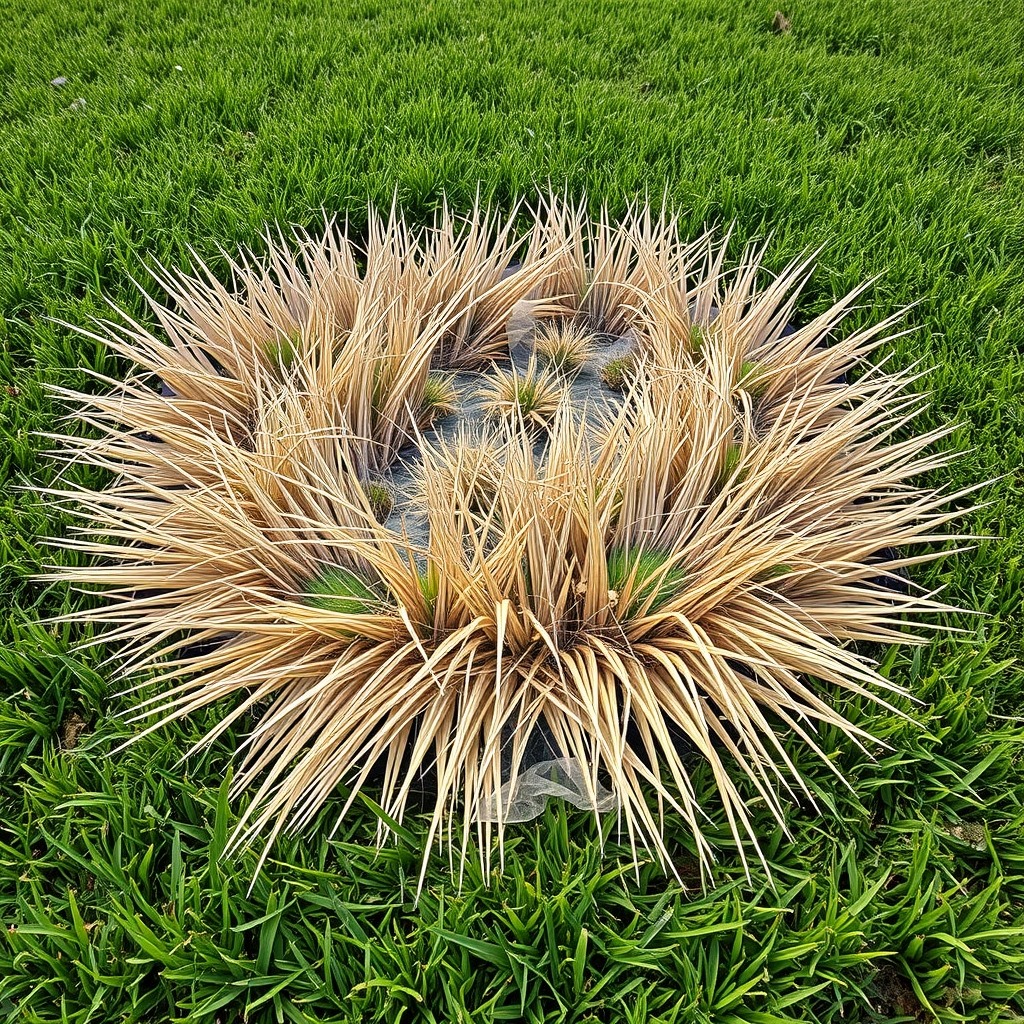 Free fix inside
Outdoor & Garage · Lawn Disease
How to Stop Lawn Fungus Before It Spreads Across the Yard
Read the fix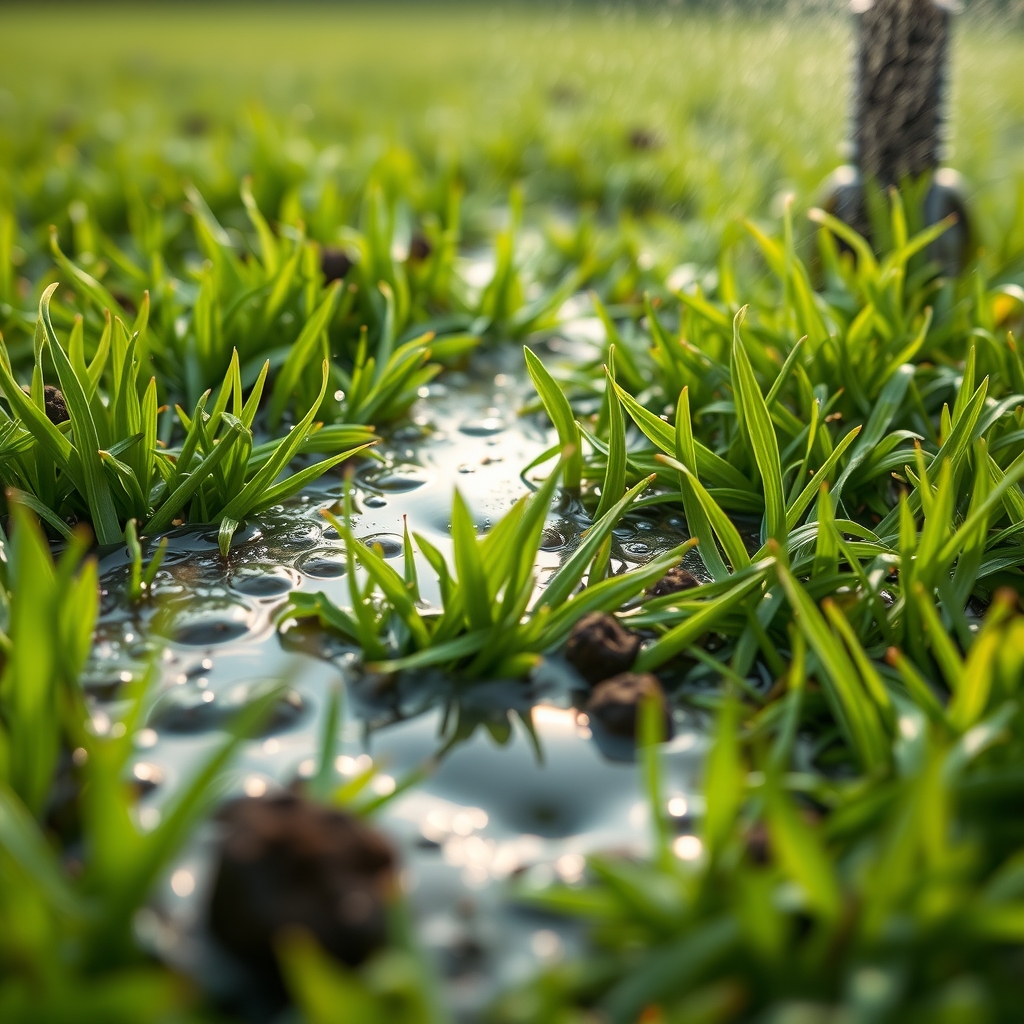 Free fix inside
Outdoor & Garage · Lawn
Lawn Not Absorbing Water? Aerating Opens Up Compacted Soil
Read the fixAs an Amazon Associate I earn from qualifying purchases. Affiliate disclosure