Cutting Board Smells? Salt and Lemon, and When Plastic Beats Wood
Onion, garlic and fish soak into a board's pores. Scrub with coarse salt and lemon, dry it on its edge, and keep a plastic board for the strongest smells.
By Jamilur Rahman Updated November 5, 2026 · 6 min read
- Time
- 10 min
- Cost
- Free
- Difficulty
- Easy
In this guide
Quick answer
Why does my cutting board smell? Wood is porous, so onion, garlic, fish and damp all soak in and stay. Scrub the board with coarse salt and half a lemon, rinse, and dry it standing on its edge. If one board keeps smelling, use a nonporous plastic board for fish, onion and garlic, and save the wood for bread and fruit.
Free fix vs. permanent fix
Salt and lemon scrub, then dry it standing up
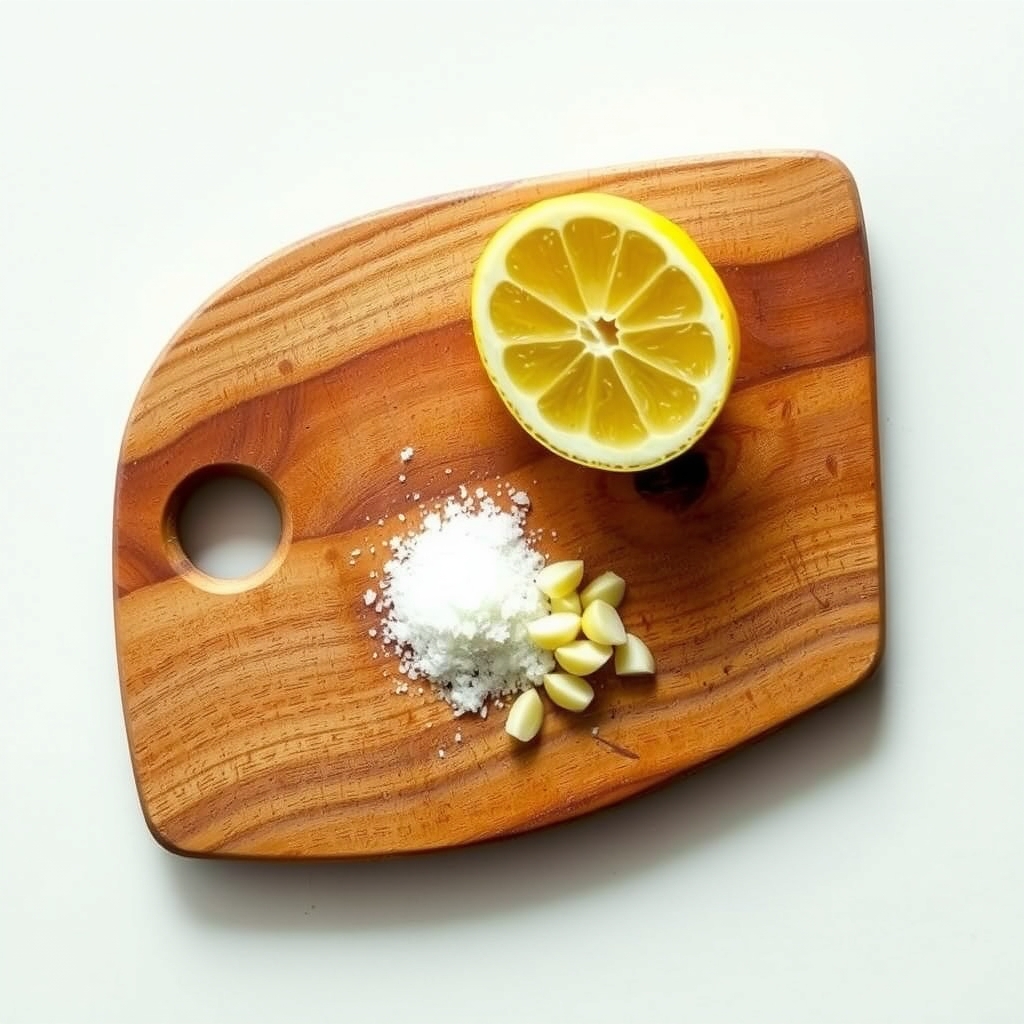
- Sprinkle coarse salt over the board and rub with a cut lemon
- Let the juice sit for 5 minutes, then wash with hot soapy water
- Dry it standing on its edge, never flat
- Oil a wooden board with food-grade mineral oil once it is fully dry
How long it lasts: Clears most smells for weeks. The smell returns if the board stays damp or keeps meeting strong foods.
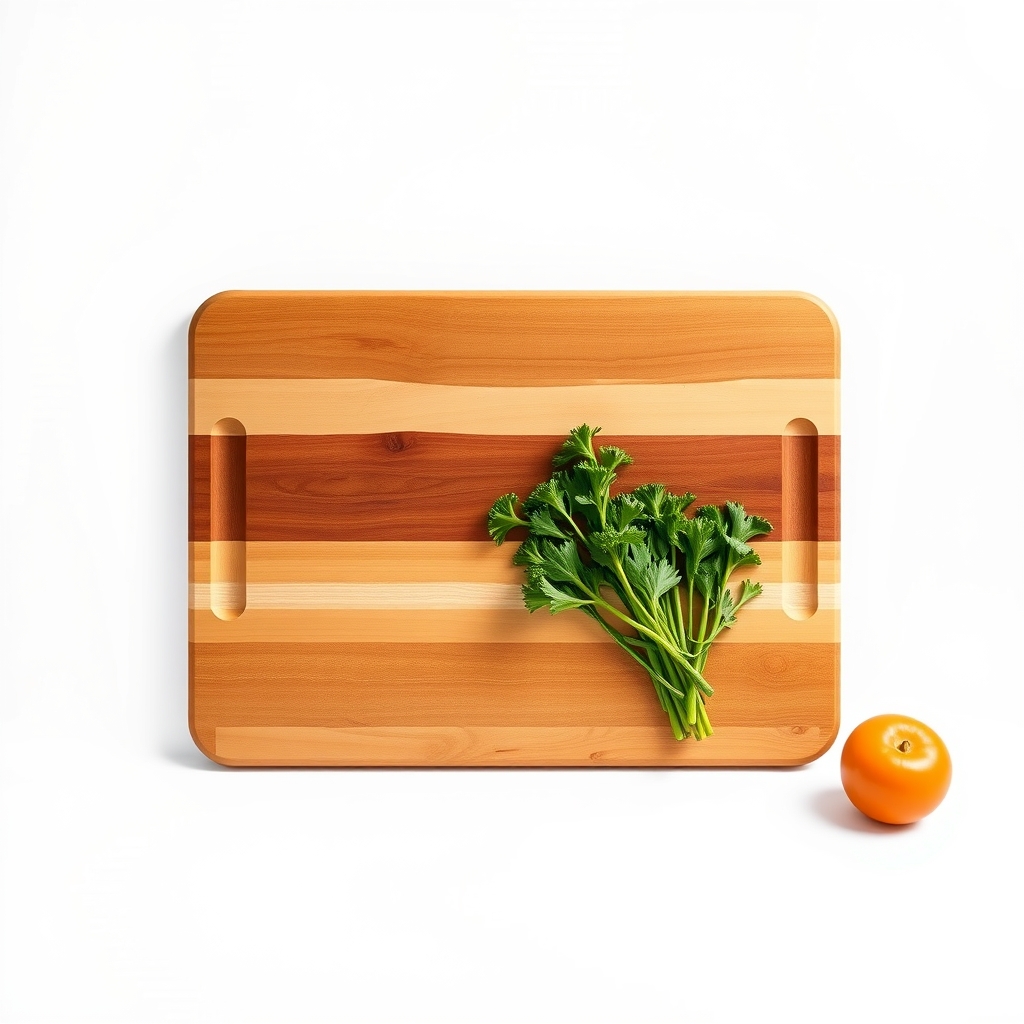
A nonporous plastic board for strong smells
Wood pores absorb juice and odors. A nonporous plastic board gives smells little to cling to and can take hot dishwasher cycles. Use it for onion, garlic and fish, and keep the wood for dry foods.
What to get: Odor-resistant plastic cutting board
How long it lasts: Years. Plastic does not soak up smells the way wood does, and most boards go in the dishwasher. Replace it when it is deeply scarred.
As an Amazon Associate I earn from qualifying purchases.
What you'll need
-
Coarse salt and a lemon
The classic scrub for a wood board
You have it -
Baking soda and white vinegar
For stubborn smells; use them one at a time
You have it - Illustration
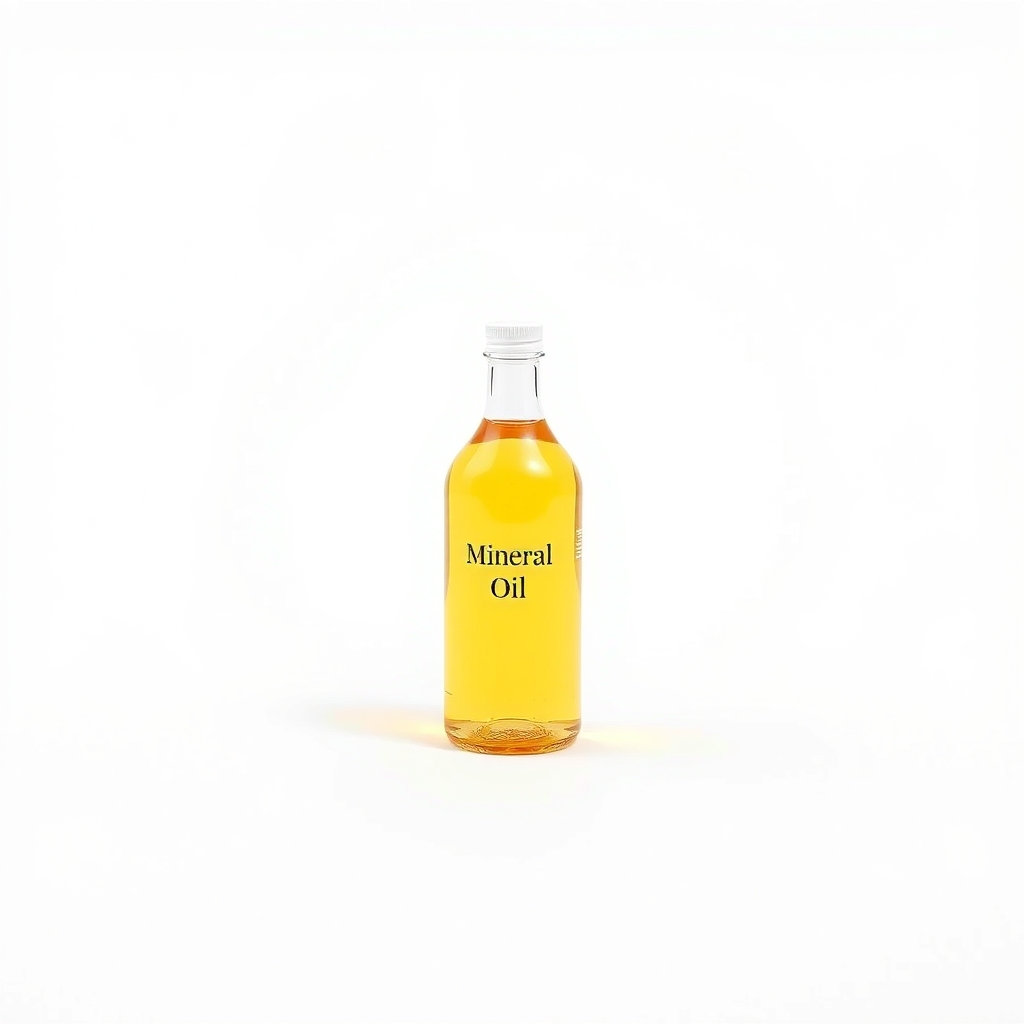
Food-grade mineral oil
Keeps wood from soaking up juice. Only for wood boards.
- Our pick Illustration
Odor-resistant plastic cutting board
A second board for fish, onion and garlic
- Illustration
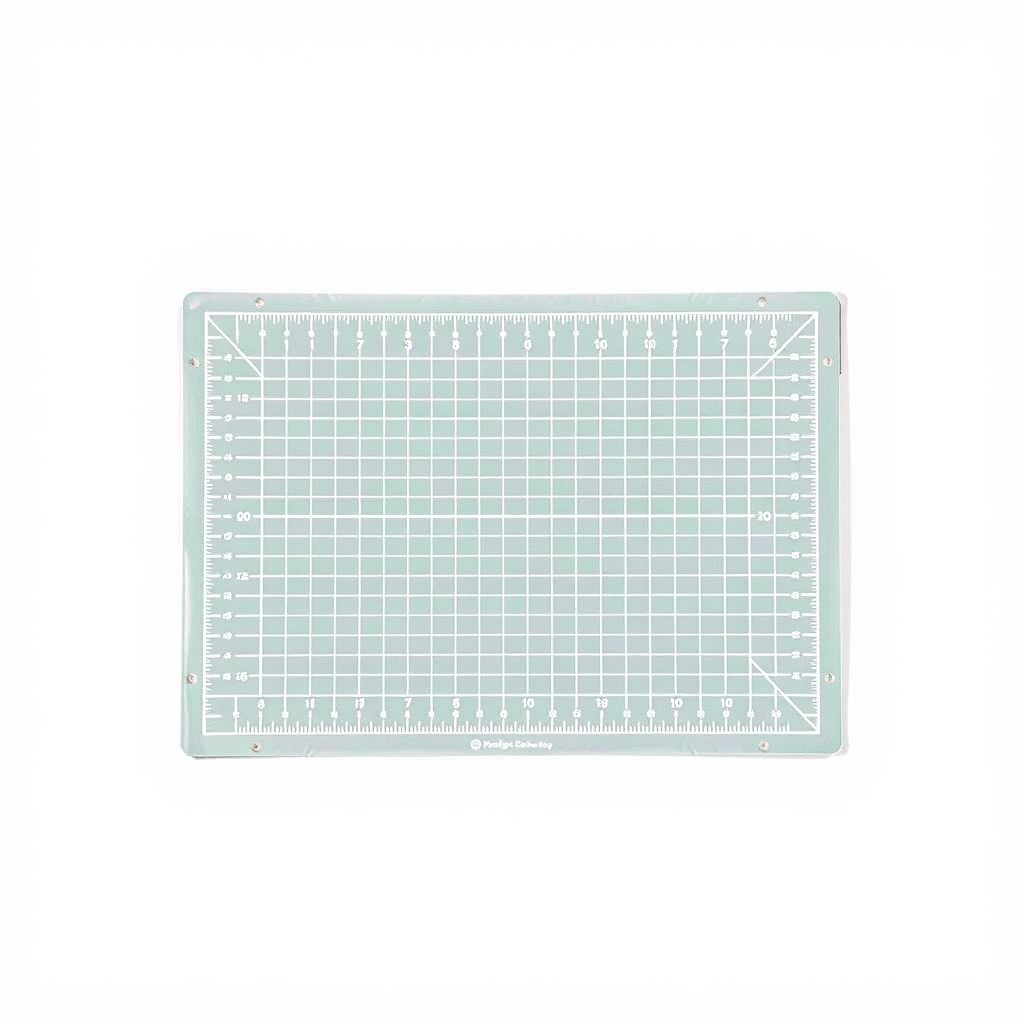
Flexible plastic cutting mats
A cheap, quick-swap second surface
Why it happens
Strong foods soak into the grain
Onion, garlic, fish and citrus oils slide into the pores of wood and stay there. The smell shows up when the board gets wet.
Damp that never dried
A board left flat in a wet sink or on a wet counter gets a sour, musty smell. Wet wood is also where mold starts.
Food stuck in knife grooves
Cuts collect bits of food and juice that rinsing does not reach. Plastic boards do this too once they are scarred.
Washing a wood board the wrong way
Soaking or dishwashing a wood board lets water in, which swells it and invites a musty smell. It can also crack.
Wood that has dried out
A board that was never oiled drinks in juice faster than a conditioned one.
Try this first (free)
Do these in order, starting with the simplest.
-
Scrub with coarse salt and lemon
Tool used: Coarse salt and a lemonSprinkle a handful of coarse salt over the board. Cut a lemon in half and rub it over the salt, pressing so the juice goes into the grooves. Let it sit for 5 minutes.
-
Wash, then treat stubborn smells
Tool used: Baking soda and white vinegarWash with hot soapy water and a brush, then rinse. For fish, wipe the board with white vinegar first. For a lasting smell, spread a paste of baking soda and water, leave it for 10 minutes, then rinse.
-
Dry it standing on its edge
Stand the board in a spot with airflow so both faces dry. Flat on the counter, it traps damp and turns sour.
-
Oil it once it is dry
Tool used: Food-grade mineral oilAfter a day of drying, wipe on a thin coat of food-grade mineral oil, let it soak in, then wipe off the extra. Repeat monthly if the wood looks pale or dry.
IllustrationCheck price on AmazonTool for this step
Food-grade mineral oil · Keeps wood from soaking up juice. Only for wood boards.
-
Give strong foods their own board
Tool used: Odor-resistant plastic cutting boardUse a plastic board for fish, onions and garlic. Wash it right after use, in the dishwasher if the label allows.
IllustrationCheck price on AmazonTool for this step
Odor-resistant plastic cutting board · A second board for fish, onion and garlic
When free fixes aren't enough
If the smell is back within days, or the board smells sour or musty even after it dries, look closer. Black spots, a soft or warped surface or deep cracks mean mold or trapped moisture, and the board should be replaced. Light sanding can remove stained wood, but only if the board is otherwise sound. A plastic board with deep, fuzzy knife grooves that smell no matter what also needs replacing. A second plastic board for fish and onions fixes the problem at the source.
Buy the fix
Still stuck after the free fixes? These are the products we would look at.
| Pick | Product | Fixes | Who it's for | Buy |
|---|---|---|---|---|
| Best pick | Odor-resistant plastic cutting board | smells that soak into wood from onion, garlic and fish | Anyone who chops onions, garlic or fish and keeps getting smells on a wood board. | Check price |
| Budget pick | Flexible plastic cutting mats | a cheap second surface for fish and onion | Small kitchens, or people who want a quick-swap surface for strong foods. | Check price |
Odor-resistant plastic cutting board
Fixes: smells that soak into wood from onion, garlic and fish
Look for: Nonporous plastic such as HDPE or polypropylene; Dishwasher safe on the label; A juice groove and a size that fits your sink for washing.
- Who it's for
- Anyone who chops onions, garlic or fish and keeps getting smells on a wood board.
- Honest downside
- You only chop bread and fruit. A well-cared-for wood board is fine.
Flexible plastic cutting mats
Fixes: a cheap second surface for fish and onion
Look for: Dishwasher safe; A non-slip texture or backing; Thick enough not to tear under a knife.
- Who it's for
- Small kitchens, or people who want a quick-swap surface for strong foods.
- Honest downside
- You want a thick, steady board for heavy chopping.
As an Amazon Associate I earn from qualifying purchases. We don't show prices because they change, so use the button to see today's price.
How we picked: How we picked: this page is based on cutting board care guides, food-safety advice from public health sources, and the problems and fixes owners report in reviews. We do not test products by hand.
Which smell, which fix
- Onion or garlic: coarse salt and lemon, then rinse
- Fish: a white vinegar wipe, then soap, then salt and lemon
- Sour or musty: a baking soda paste, then dry on its edge, and check for black spots
Wood or plastic: which holds smells less?
Plastic is nonporous, so smells have less to grab onto, and most plastic boards can go in the dishwasher. Wood is gentler on knives and looks better, but it needs hand washing and oil. Many cooks use both: a plastic board for the strongest foods and a wood board for everything else.
What to skip
Soaking the board or putting wood in the dishwasher
Water makes wood swell and crack, and the dampness leaves a worse smell than you started with. Wash by hand and dry fast. Also skip scented oils and sprays, which only add another smell on top.
Frequently asked questions
Why does my cutting board smell like onions or garlic?
Why does my wooden cutting board smell bad, even sour or musty?
How do I get fish smell off a cutting board?
How do I stop a cutting board from smelling in the first place?
Is a smelly cutting board unsafe?
Related problems
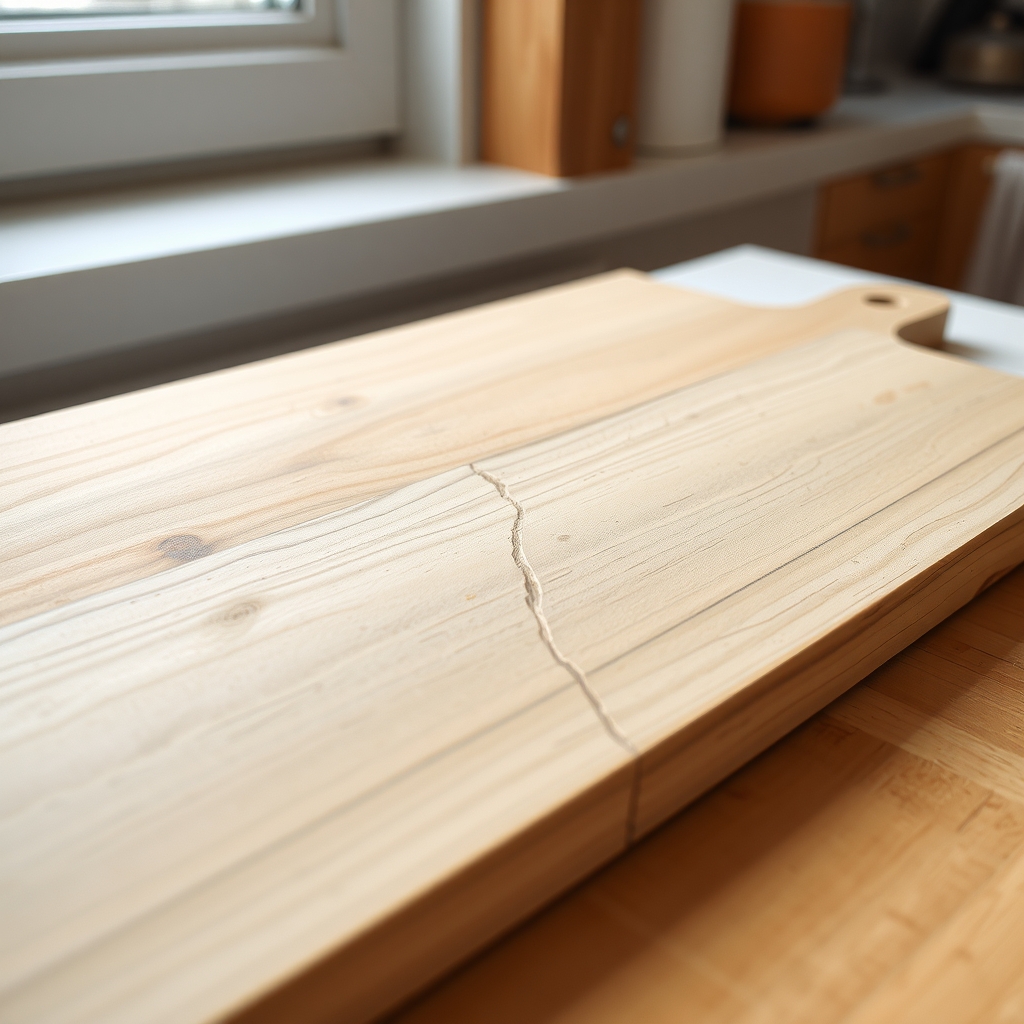 Free fix inside
Kitchen · Cutting Board
Cutting Board Splitting or Cracking? What Oil and Wax Can Save
Read the fix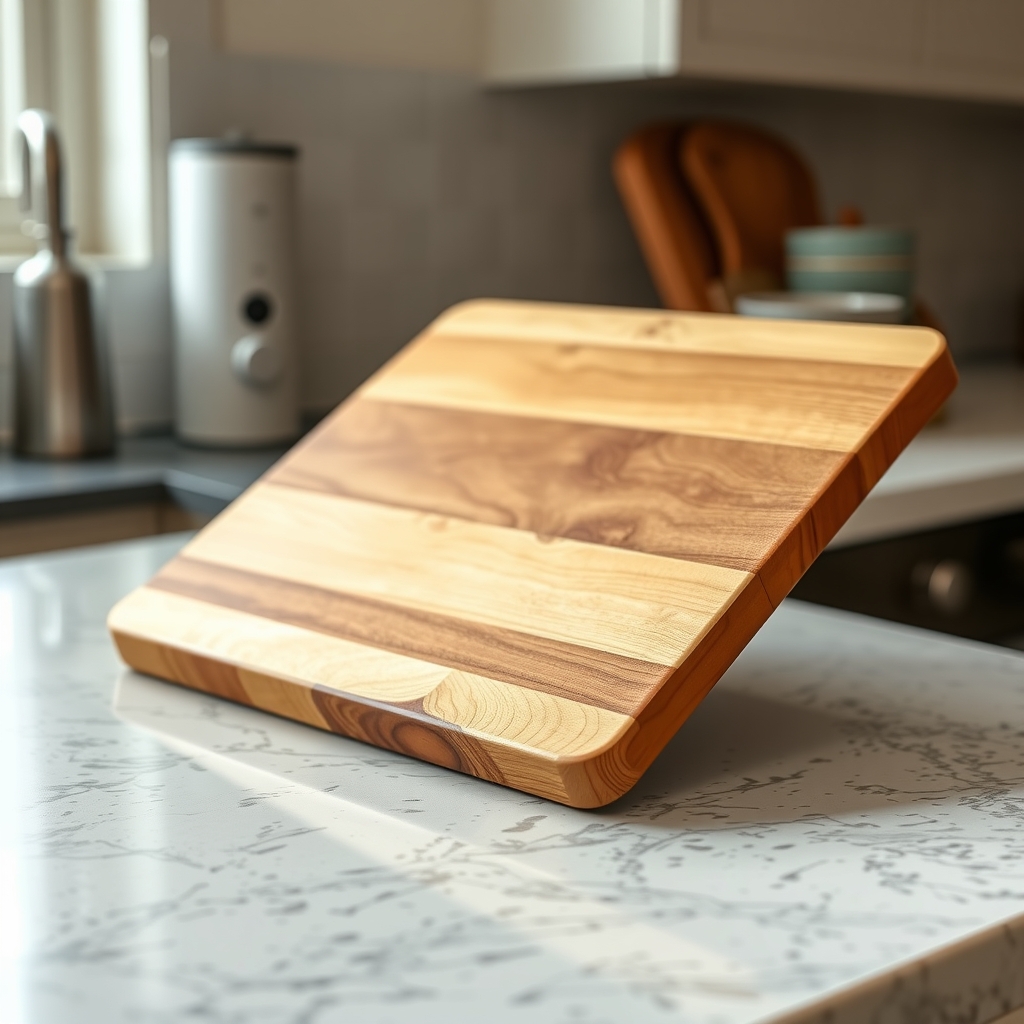 Free fix inside
Kitchen · Cutting Board
Cutting Board Warping? Why It Happens and Boards That Stay Flat
Read the fix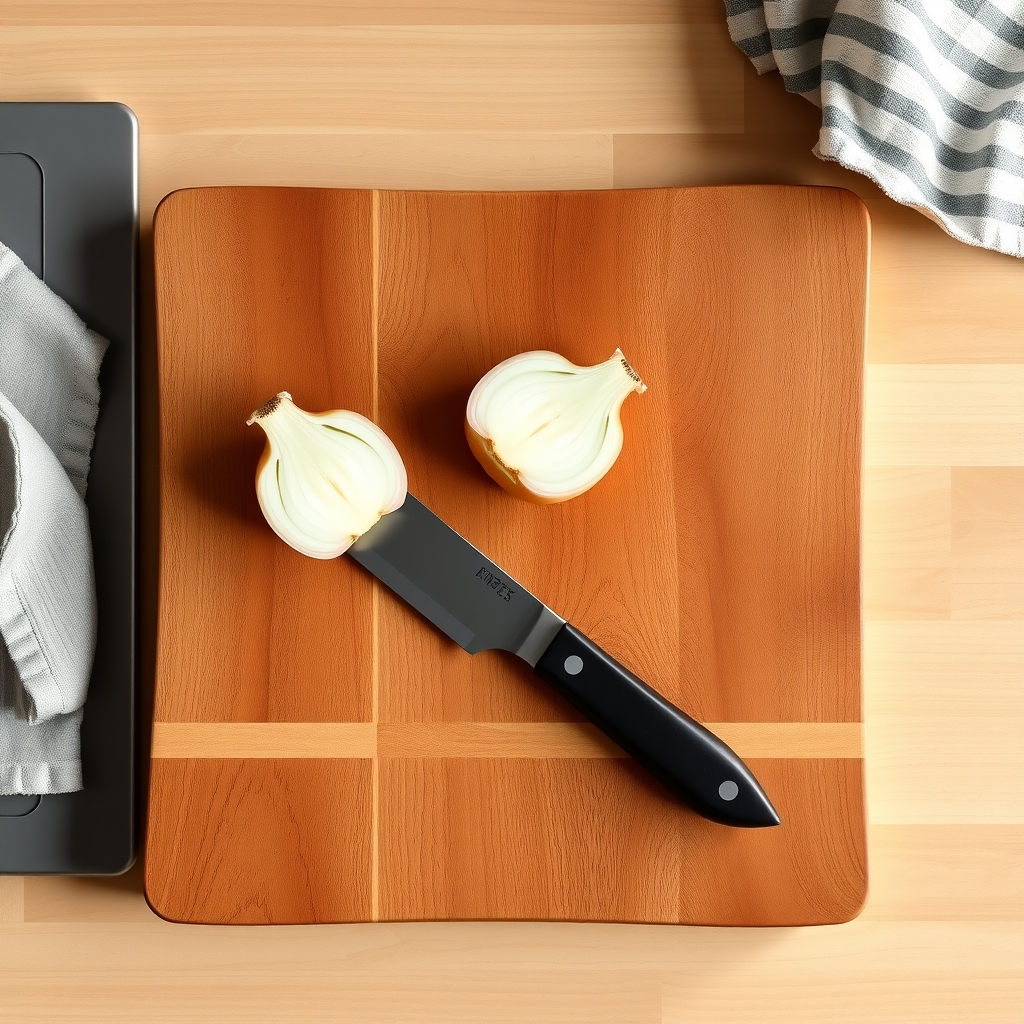 Free fix inside
Kitchen · Cutting Board
Cutting Board Not Plastic? Wood Boards That Hold Up Over Time
Read the fix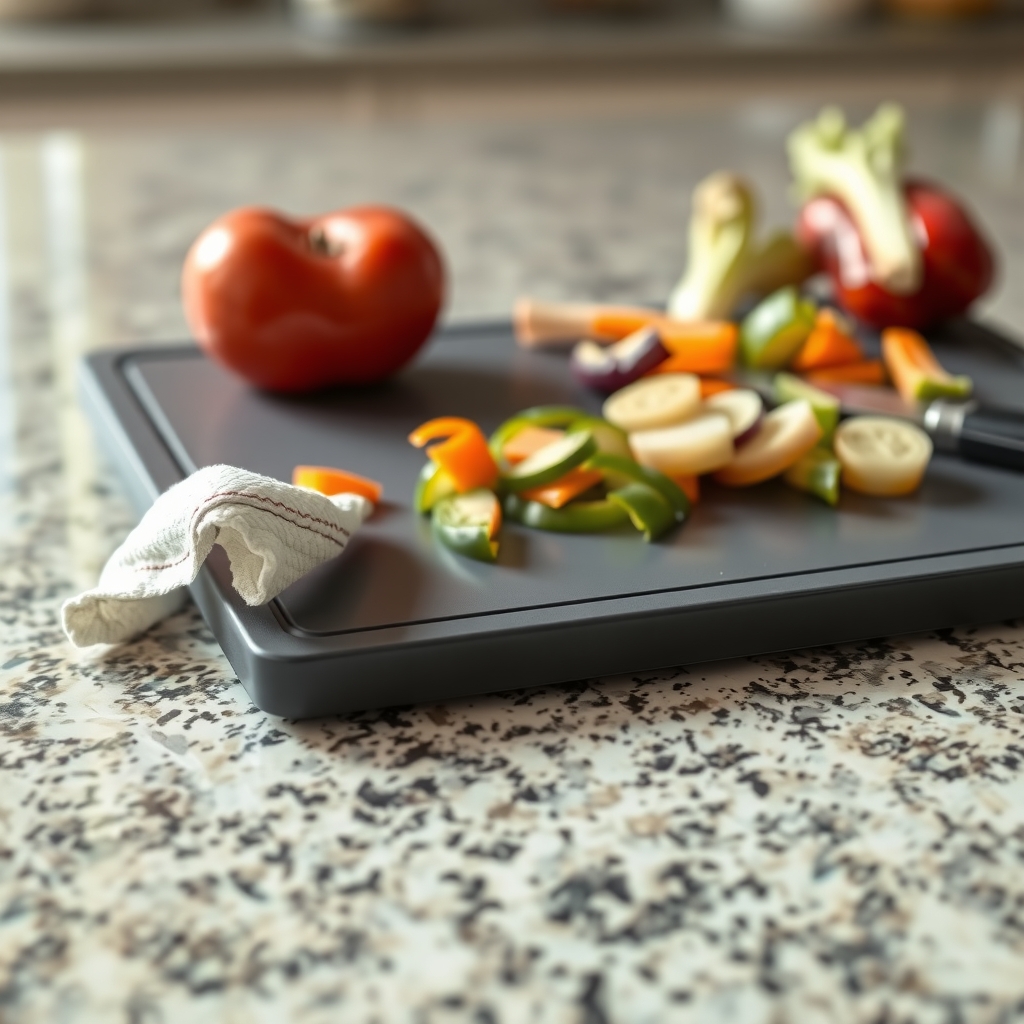 Free fix inside
Kitchen · Cutting Board
Cutting Board Sliding Around? A Damp-Towel Trick and Grippy Boards
Read the fixAs an Amazon Associate I earn from qualifying purchases. Affiliate disclosure