Extension Cord That's Not Ugly: Braided Picks That Blend In
A bright orange or white cord across the room ruins a tidy space. Hide what you can, then swap the eyesore for a braided cord that matches your decor.
By Jamilur Rahman Updated November 5, 2026 · 7 min read
- Time
- 15 min
- Cost
- $20-$50
- Difficulty
- Easy
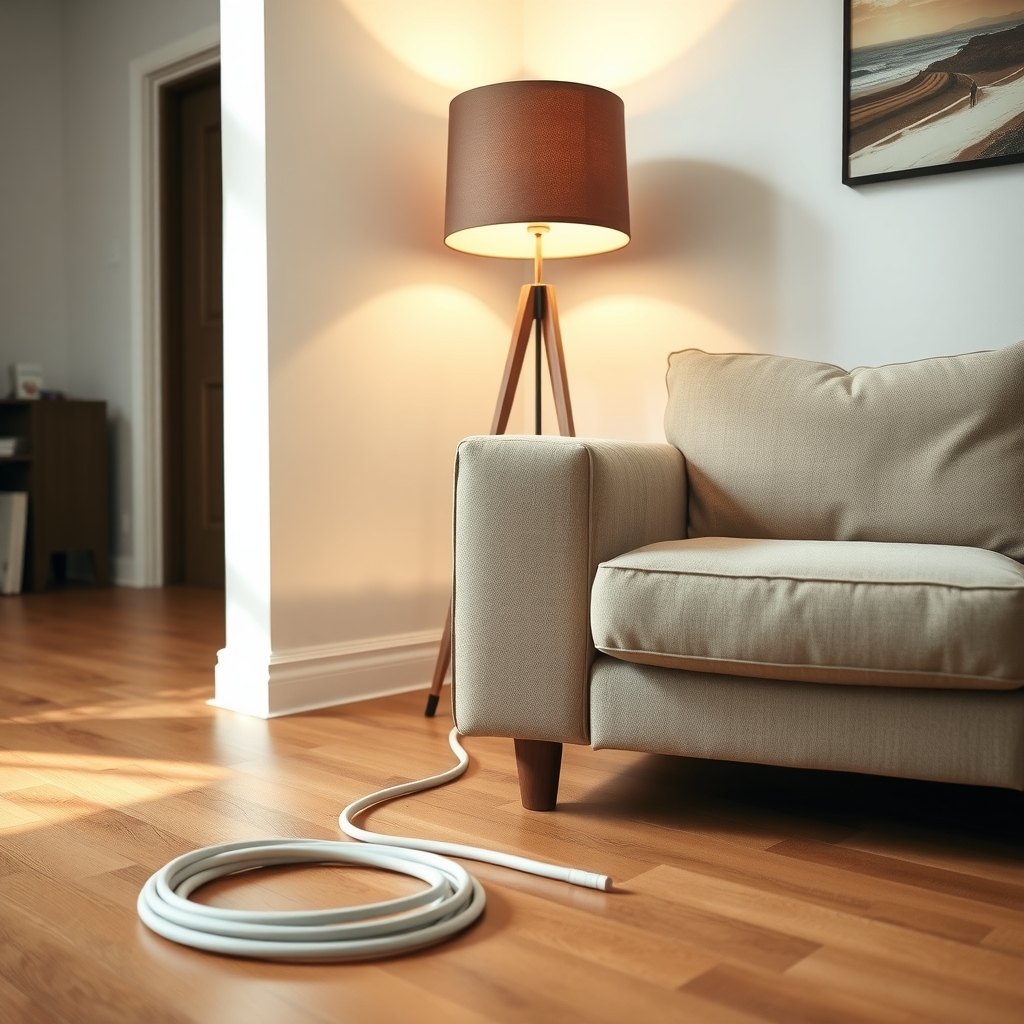
In this guide
Quick answer
A basic extension cord looks ugly because it is made to be cheap and easy to see, not to blend in. Shorten the visible run, route it along a baseboard or behind furniture and tie up the slack. If it still shows, replace it with a braided fabric extension cord in a color that matches your wall or floor, with a flat plug so it sits close to the wall.
Free fix vs. permanent fix
Shorten it, route it, tie up the slack
- Use the shortest cord that reaches
- Run it along a baseboard or behind furniture
- Loop the extra length and tie it with a hook-and-loop strap
- Never run it under a rug
How long it lasts: As long as the cord stays out of view. Any stretch that must cross open floor is still a bright plastic cord.
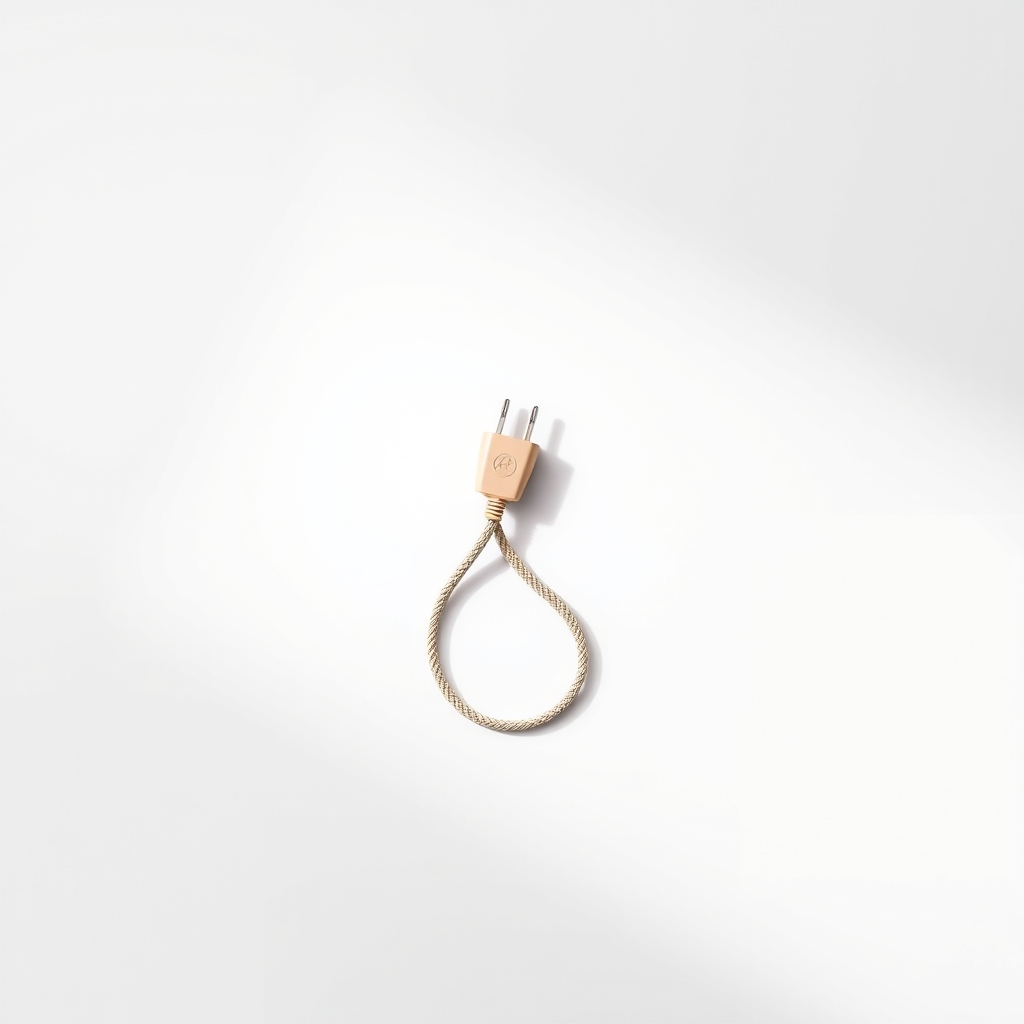
A braided fabric extension cord with a flat plug
Hiding works only where you can hide the cord. A braided cord in a color that matches your wall or floor is not an eyesore wherever it ends up showing, and a flat plug removes the bulky block that sticks out behind a sofa or bed.
What to get: Braided fabric extension cord with a flat plug
How long it lasts: Years. The fabric sleeve resists scuffs, the colors blend into a room and a flat plug lets furniture sit close to the wall.
As an Amazon Associate I earn from qualifying purchases.
What you'll need
-
Tape measure
To measure the route, not the straight line
You have it - Illustration
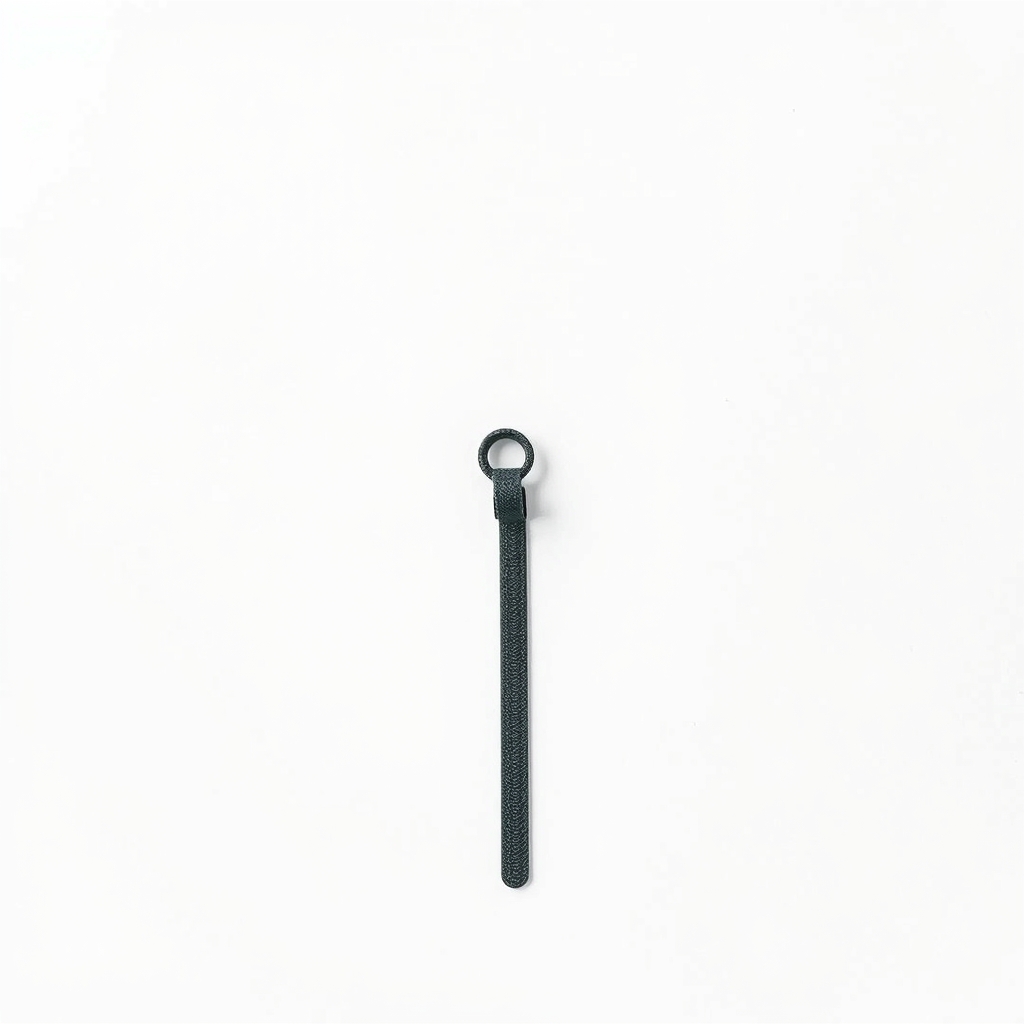
Hook-and-loop cable ties
Reusable straps for tying up slack; a twist tie works too
- Our pick Illustration
Braided fabric extension cord
Pick a flat plug and a color that matches the room
- Illustration
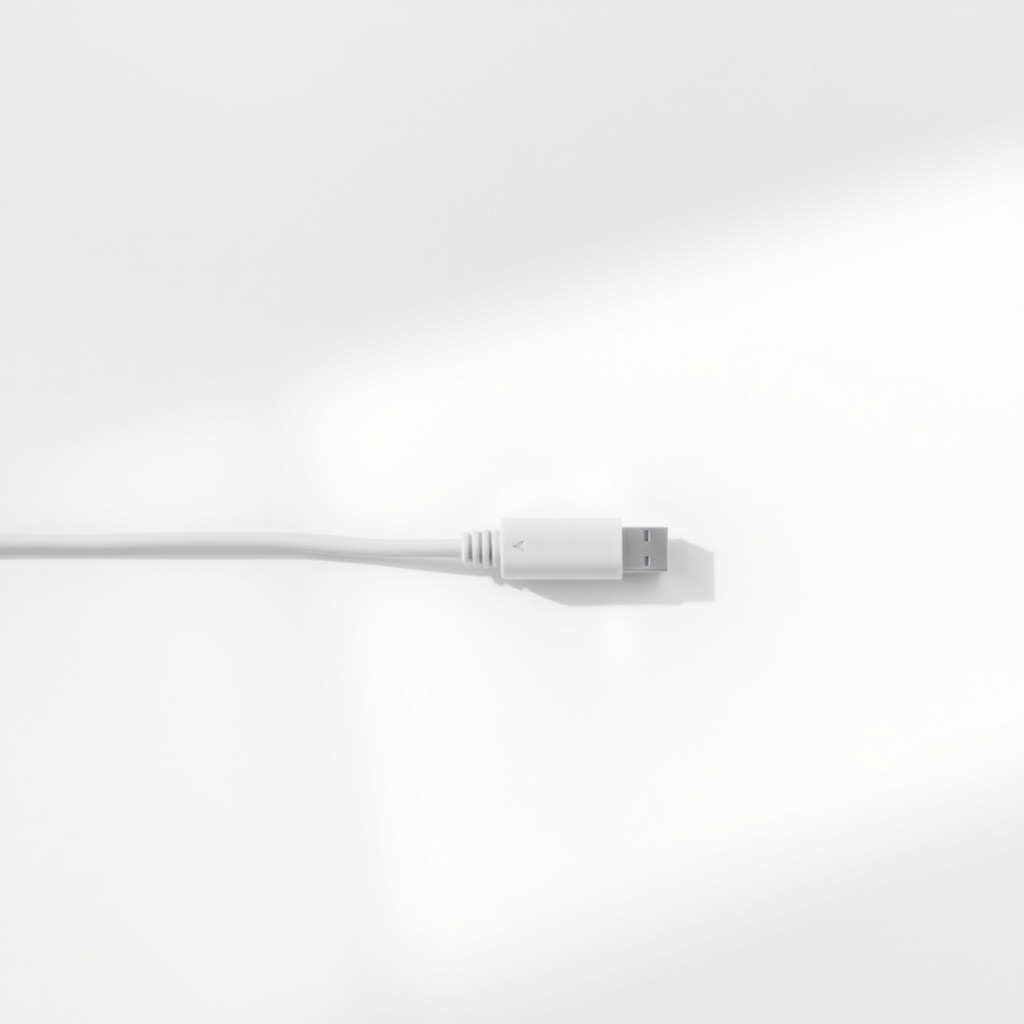
Paintable cord cover
Hides a straight run along a wall or baseboard
- Illustration
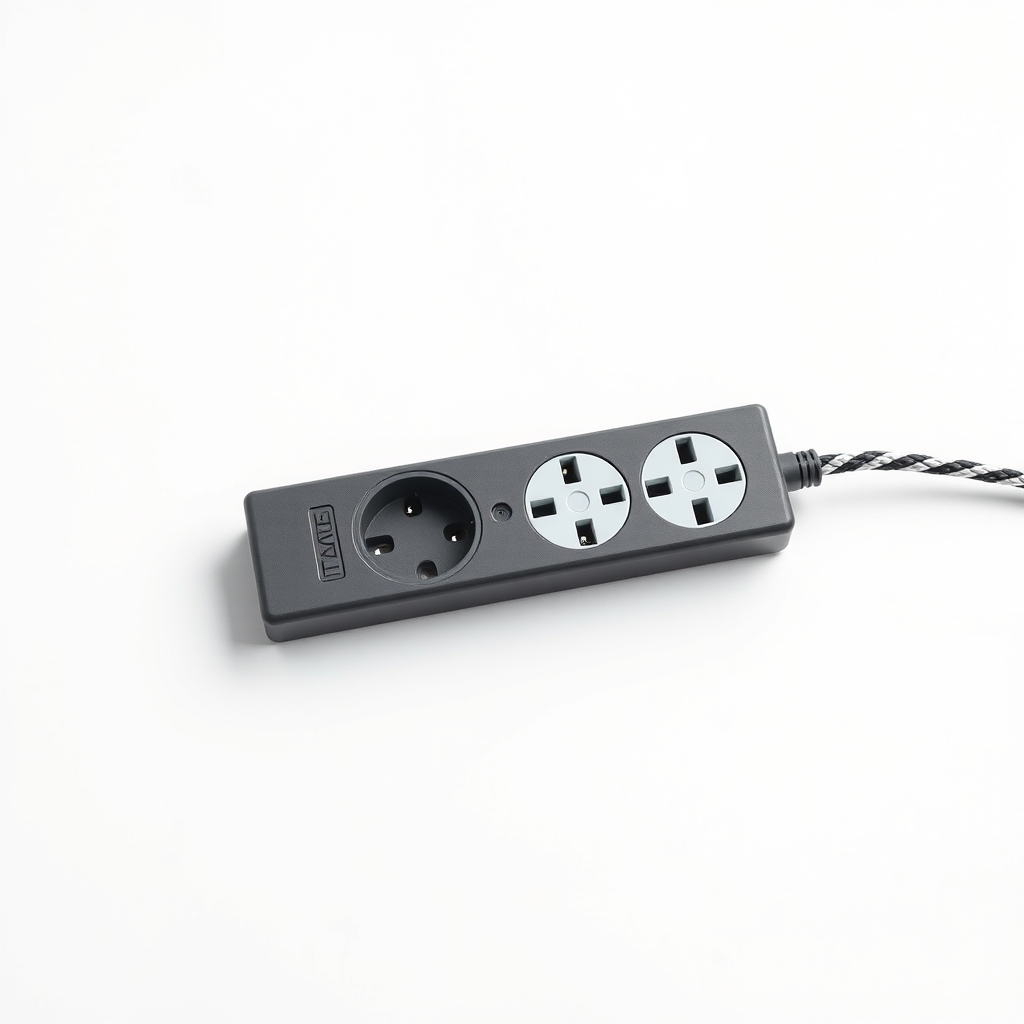
Braided surge protector power strip
For a desk or TV stand with several plugs
Why it happens
Cords are made to be seen
Many extension cords come in bright orange, yellow or white so people notice them and do not trip. That helps in a garage and looks out of place in a living room.
Too much length
A 25-foot cord used for a 6-foot gap leaves loops and coils on the floor. Slack is the part that looks messy.
Bulky straight plugs
A standard plug sticks out from the wall by an inch or two. It pushes furniture away from the wall and bends the cord into a visible curve.
No hidden route
When the outlet is on the wrong wall, the cord has to cross open floor. Nothing about that route can be hidden.
Try this first (free)
Do these in order, starting with the simplest.
-
Measure the route and check the cord
Tool used: Tape measureMeasure along the wall or baseboard, not in a straight line, and add about a foot. Pick the shortest cord that reaches, since a short cord has less slack to hide. Check any cord you keep for cracks, bare wire or a plug that runs warm, and replace a damaged one instead of hiding it.
-
Route it along the edges
Run the cord along the baseboard, behind furniture legs or along the top of a wall. Cords that follow edges are hard for the eye to catch.
-
Tie up the slack
Tool used: Hook-and-loop cable tiesLoop extra length into a loose figure eight and bind it with a strap. Do not coil it tightly while it is powered, because tight coils can trap heat.
IllustrationCheck price on AmazonTool for this step
Hook-and-loop cable ties · Reusable straps for tying up slack; a twist tie works too
-
Cover floor crossings, never rugs
Tool used: Paintable cord coverIf the cord must cross a walkway, use a flat floor cord cover so nobody trips. Do not run a cord under a rug or carpet, where heat can build up and damage goes unseen.
IllustrationCheck price on AmazonTool for this step
Paintable cord cover · Hides a straight run along a wall or baseboard
When free fixes aren't enough
Routing does nothing for a cord that has to cross the open floor or sits beside a sofa where everyone sees it, and a cord cover hides the run but not the plug end. A braided cord is built to be visible, so it works where you cannot hide it. Replace any cord that is cracked, frayed or hot to the touch. If you rely on a cord every day, ask an electrician about adding an outlet where you need one.
Buy the fix
Still stuck after the free fixes? These are the products we would look at.
| Pick | Product | Fixes | Who it's for | Buy |
|---|---|---|---|---|
| Best pick | Braided fabric extension cord with a flat plug | a bright plastic cord that stands out in your room | Anyone whose cord has to stay visible, such as a lamp by the sofa, a desk against a wall or a bedside outlet. | Check price |
| Budget pick | Paintable cord cover | a cord that runs along a wall or baseboard | People with a long straight run along a wall that they can paint to match. | Check price |
| Upgrade pick | Braided surge protector power strip | a cluster of ugly chargers and plugs, not just one cord | Desks and TV stands with several devices plugged in. | Check price |
Braided fabric extension cord with a flat plug
Fixes: a bright plastic cord that stands out in your room
Look for: A flat or right-angle plug, so furniture sits flush with the wall; A safety listing such as UL or ETL printed on the cord or label; A color that matches your wall, floor or furniture; A length close to what you measured, not much longer.
- Who it's for
- Anyone whose cord has to stay visible, such as a lamp by the sofa, a desk against a wall or a bedside outlet.
- Honest downside
- You need to power a heater, kettle, toaster, air fryer or other high-heat appliance. Plug those straight into the wall. Also skip it outdoors unless the label says it is rated for outdoor use.
Paintable cord cover
Fixes: a cord that runs along a wall or baseboard
Look for: A channel that fits the cord you use; A paintable surface you can match to the wall; Corner pieces for turning at corners.
- Who it's for
- People with a long straight run along a wall that they can paint to match.
- Honest downside
- You rent and cannot use adhesive on the wall, or the cord must cross open floor. Use a floor cord cover for that.
Braided surge protector power strip
Fixes: a cluster of ugly chargers and plugs, not just one cord
Look for: A joule rating and a safety listing on the label; Outlets spaced so bulky adapters fit; A fabric-covered cord with a flat plug.
- Who it's for
- Desks and TV stands with several devices plugged in.
- Honest downside
- You only run one lamp or charger. A plain braided cord is enough.
As an Amazon Associate I earn from qualifying purchases. We don't show prices because they change, so use the button to see today's price.
How we picked: How we picked: this page is based on electrical safety guidance from fire-safety groups, cord label standards, and the problems and fixes owners report in reviews. We do not test products by hand.
How to read the cord label
- Safety listing: look for UL, ETL or a similar mark. It means an independent body checked the design.
- Gauge (AWG): a lower number means thicker wire. Lamps, chargers and monitors need little. Anything that heats needs a thicker cord, or a direct wall outlet.
- Amps and watts: the total of everything plugged in must stay under the rating.
- Indoor or outdoor: only use a cord outside if the label says it is rated for it.
What to skip
Painting, taping or hiding a cord under a rug
Paint and tape can crack the insulation and do not change how the cord looks for long. A rug traps heat and hides damage, which is how a worn cord becomes a fire risk. Use a cover or a better-looking cord instead.
Frequently asked questions
Are braided extension cords safe?
Can I use an extension cord permanently?
How do I hide an extension cord on a wall?
What length extension cord should I buy?
Related problems
 Free fix inside
Home Office & Cables · Extension Cord Organizing
Extension Cord Keeps Unplugging? Locks That Hold the Plugs Together
Read the fix Free fix inside
Home Office & Cables · Extension Cord Buying
Extension Cord Getting Hot? When It's Normal and When to Replace It
Read the fix Free fix inside
Home Office & Cables · Extension Cord Buying
Extension Cord Not Long Enough? Safe Ways to Reach Farther
Read the fixAs an Amazon Associate I earn from qualifying purchases. Affiliate disclosure