Why Is My Studio Apartment So Hot? Window AC vs. Portable AC
One room holds the kitchen, the bed and the sun. Cut the heat for free first, then pick a window AC, which usually cools more per watt than a portable.
By Jamilur Rahman Updated November 5, 2026 · 7 min read
- Time
- 30 min
- Cost
- $150+
- Difficulty
- Medium
In this guide
Quick answer
A studio gets hot because the stove, electronics, sun and your body all heat the same single room, often with no cross-breeze. Block the sun, cook with less heat and run a fan at night first. If it is still too hot, a window air conditioner sized to the room usually cools more per watt than a portable AC, because the hot parts sit outside.
Free fix vs. permanent fix
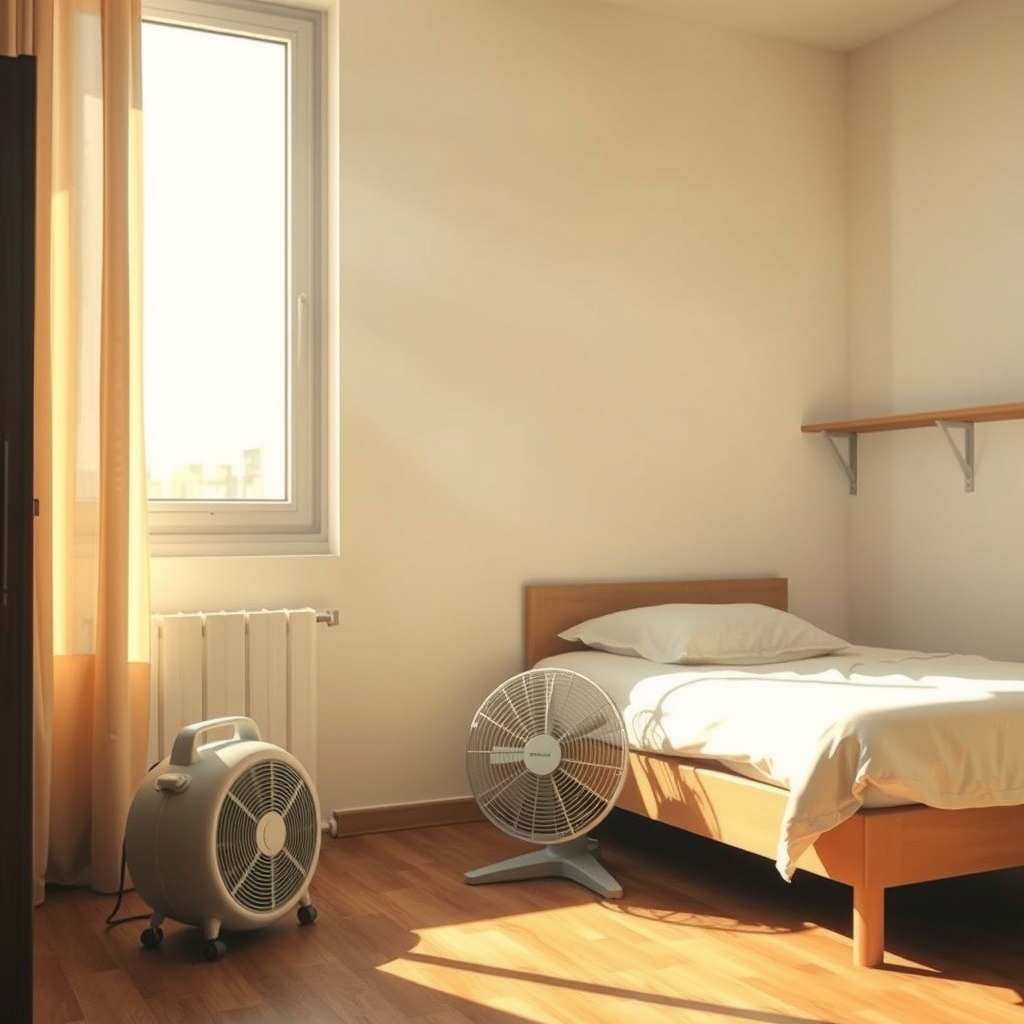
Block sun, cut heat, move air
- Close blinds on sunny windows before noon
- Skip the oven and use a microwave or air fryer
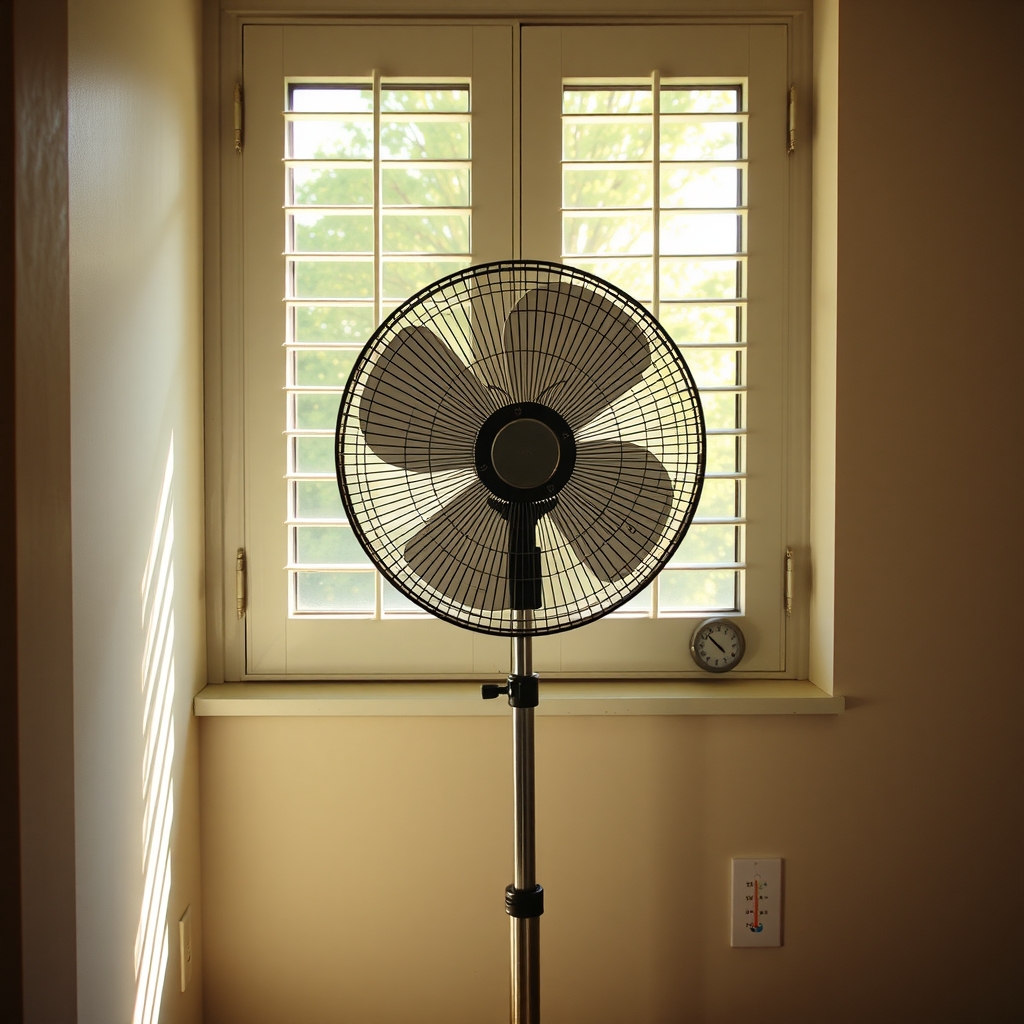
- Run a fan in the window at night to push hot air out
- Turn off lights and electronics you are not using
How long it lasts: Takes a few degrees off on mild days. On hot days the room still climbs, since none of these steps remove heat.
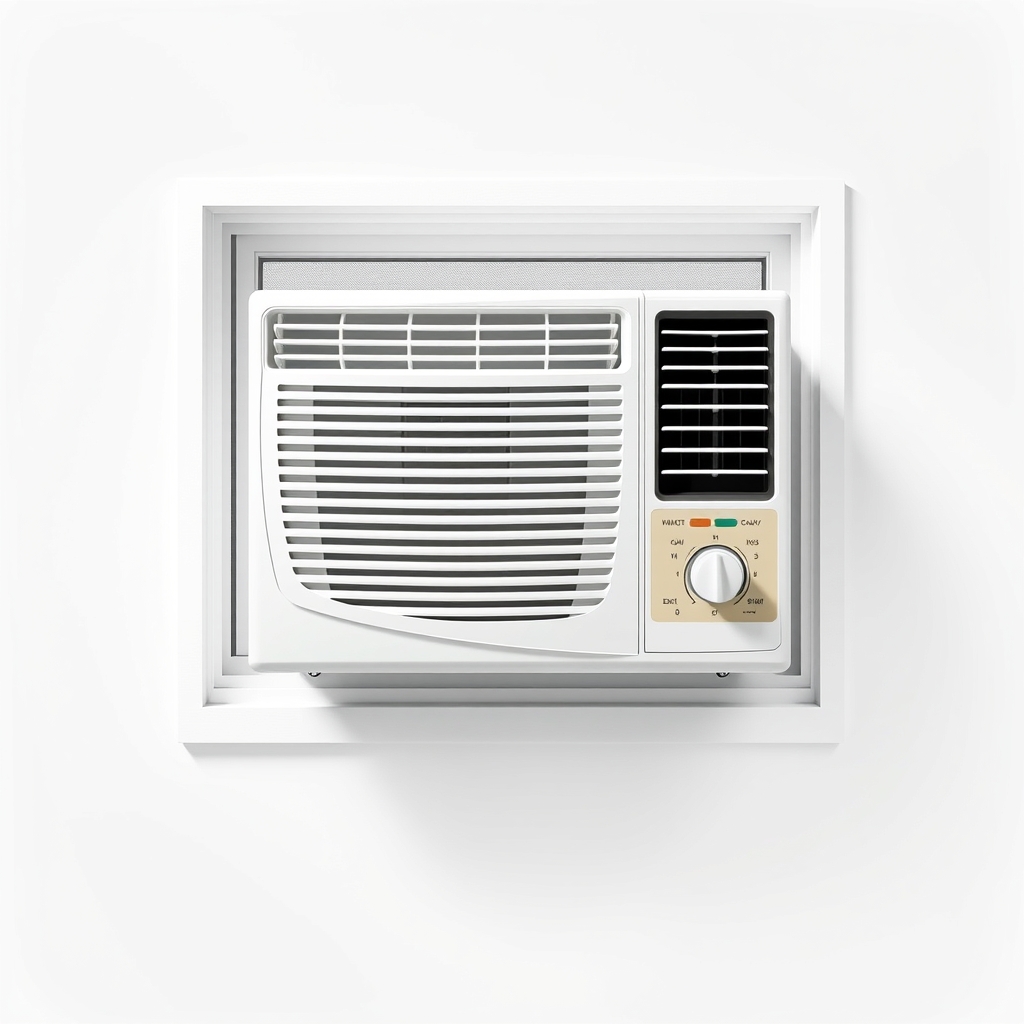
A window AC sized to your room
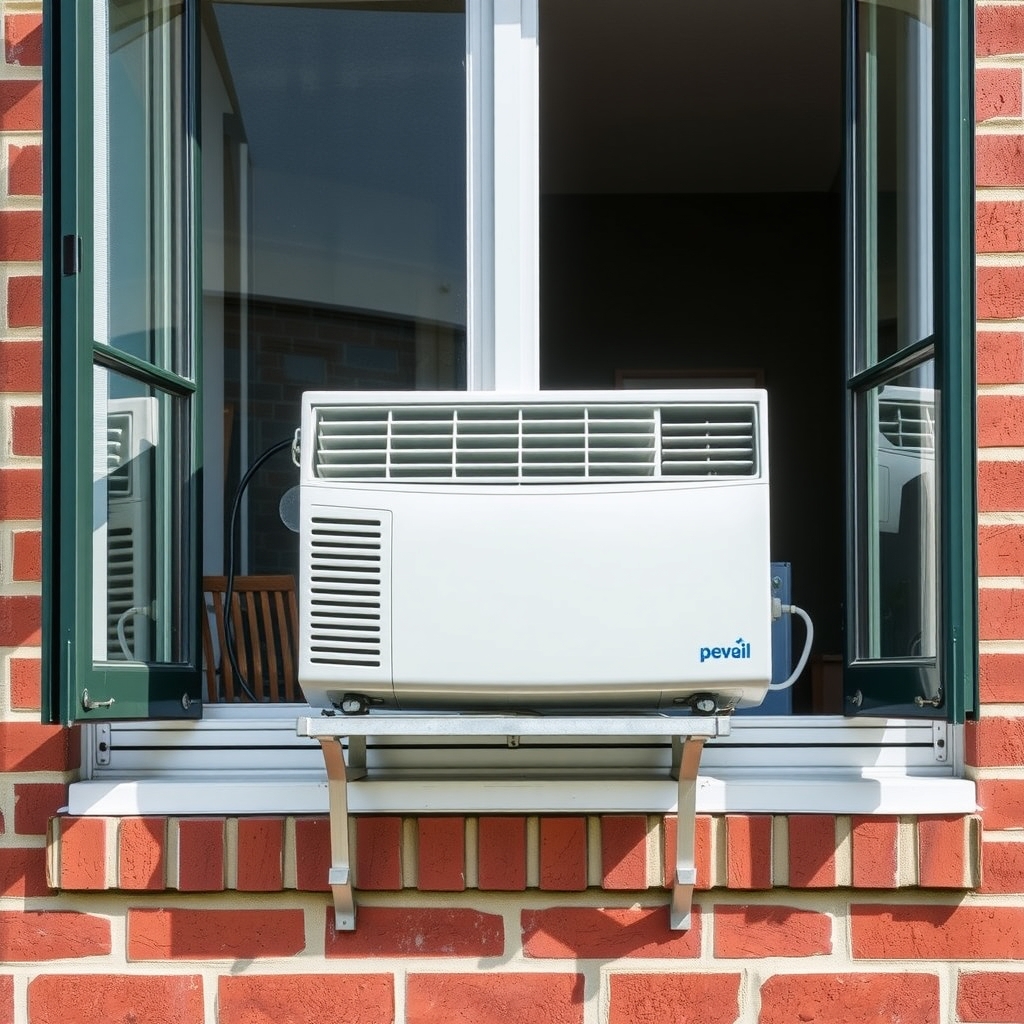
Heat has to leave the room to cool it. A window AC keeps its hot side outside and blows cold air in. A single-hose portable pulls warm replacement air in through gaps around doors and windows, so it cools less for the same BTU rating.
What to get: Window air conditioner sized for a small room (about 6,000 to 8,000 BTU)
How long it lasts: Every summer for years. It lowers the room temperature instead of just moving air.
As an Amazon Associate I earn from qualifying purchases.
What you'll need
-
Blinds or curtains
Close them before the sun hits
You have it -
Box fan
Pushes hot air out of an open window at night
You have it -
Tape measure
For the room and the window opening
You have it - Our pick Illustration
Window air conditioner
The lasting fix
- Illustration
Compact 5,000 BTU window air conditioner
For a small, shaded studio
- Illustration
Quiet inverter window air conditioner
For sleeping in the same room
Why it happens
Everything hot is in one room
The stove, fridge motor, laptop, TV, lights and your own body all give off heat. In a studio there is no second room to move it to.
Sun through big windows
Sunlight through glass turns into heat inside. A south or west window with no shade can add heat all afternoon.
No cross-breeze
A studio often has windows on one wall only, so hot air has no path out, and cooler night air has no path in.
A top floor or a poorly insulated unit
Heat from the roof or a sun-baked wall radiates into the room well after sunset.
Try this first (free)
Do these in order, starting with the simplest.
-
Block the sun before it hits
Tool used: Blinds or curtainsClose blinds or curtains on sunny windows before noon. Blackout or reflective shades help most. A light bedsheet pinned over a bare window beats nothing.
-
Cook without the oven
An oven or stovetop can heat a one-room home for hours. Use a microwave, a toaster oven or an air fryer, or cook in the early morning.
-
Flush the heat out at night
Tool used: Box fanWhen the air outside is cooler than inside, open the window and put a box fan in it facing out. Open another window or the door a little so cooler air comes in.
-
Switch off the heat makers
Unplug chargers and idle electronics, use LED bulbs, and run the laptop on a hard surface, not the bed.
-
Measure before you buy an AC
Tool used: Tape measureMeasure the room's square footage and the window opening. A common chart: 100 to 150 sq ft needs 5,000 BTU, 150 to 250 needs 6,000, 250 to 300 needs 7,000 and 300 to 350 needs 8,000. Add 10 percent for a sunny room and 600 BTU for each person past two. A kitchen area can add up to 4,000.
-
Install it safely
Plug it straight into a wall outlet, not an extension cord or power strip. Use the support bracket and seal the gaps with the foam strips. Do not block a window you need as a fire exit, and ask your landlord first.
When free fixes aren't enough
The free steps slow the heat but do not remove it. If your studio passes 80°F (27°C) on summer afternoons, sits on a top floor or has big sun-facing windows, you need to take heat out, and an AC is the tool. Choose a window AC if your window slides up and down. Casement and sliding windows need a model made for them. Choose a portable only if your building bans window units or you have no window that can hold one. If anyone at home feels dizzy, confused or sick from heat, move to a cooler place and get medical help.
Buy the fix
Still stuck after the free fixes? These are the products we would look at.
| Pick | Product | Fixes | Who it's for | Buy |
|---|---|---|---|---|
| Best pick | Window air conditioner sized for a small room (about 6,000 to 8,000 BTU) | a room that gets hotter than fans can cool | Studio renters whose window slides up and down and whose landlord allows window units. | Check price |
| Budget pick | Compact 5,000 BTU window air conditioner | heat in a small, shaded studio at the lowest cost | A studio under about 150 square feet with shade and one occupant. | Check price |
| Upgrade pick | Quiet inverter window air conditioner | noise and temperature swings when you sleep in the same room | Anyone sleeping a few feet from the unit. | Check price |
Window air conditioner sized for a small room (about 6,000 to 8,000 BTU)
Fixes: a room that gets hotter than fans can cool
Look for: BTU matched to your room using the chart above; Fits your window width and height, with side panels and a bracket included; A remote and a timer; A good efficiency rating (CEER) on the label.
- Who it's for
- Studio renters whose window slides up and down and whose landlord allows window units.
- Honest downside
- Your building bans window units, or your window is a crank-out casement. Look for a casement model or a dual-hose portable.
Compact 5,000 BTU window air conditioner
Fixes: heat in a small, shaded studio at the lowest cost
Look for: Rated for rooms of about 100 to 150 square feet; A washable filter; An efficiency rating (CEER) on the label.
- Who it's for
- A studio under about 150 square feet with shade and one occupant.
- Honest downside
- Your room gets afternoon sun, has a kitchen area or houses two or more people. It will run nonstop and fall short.
Quiet inverter window air conditioner
Fixes: noise and temperature swings when you sleep in the same room
Look for: An inverter compressor that ramps down instead of cycling off; A listed low noise level; App or remote control.
- Who it's for
- Anyone sleeping a few feet from the unit.
- Honest downside
- You are on a tight budget or have mild summers.
As an Amazon Associate I earn from qualifying purchases. We don't show prices because they change, so use the button to see today's price.
How we picked: How we picked: this page is based on room air conditioner sizing guidance, appliance efficiency labels, manuals, and what renters report in reviews of window and portable units. We do not test products by hand.
Window AC vs. portable AC at a glance
- Cooling per watt: window units usually win. A single-hose portable pulls warm air in to replace what it exhausts.
- Price per BTU: window units are usually cheaper.
- Noise: portables are louder, because the compressor sits in the room.
- Install: window units are heavier to lift, but portables need a hose kit and a sealed window.
- Where allowed: portables work when window units are banned or the window will not hold one.
Do not oversize it
A unit that is too big cools the room fast, then shuts off before it removes humidity. You end up with a cold, clammy room. Match the BTU to the chart, even if the bigger one is on sale.
What to skip
Mini evaporative 'air coolers'
Small tank-and-fan units cool by evaporation. They help a little in dry air, but they add moisture in humid places and cannot cool a whole studio. Do not count on one in place of an AC.
Frequently asked questions
Why is my small bedroom so hot?
Is a window AC cheaper to run than a portable?
Can I run a window AC all day?
My landlord does not allow window units. What now?
Related problems
As an Amazon Associate I earn from qualifying purchases. Affiliate disclosure