How to Fix a Small Hole in a Bedroom Door (Hollow-Core Repair)
A hollow-core door has only a thin skin, so a patch needs backing. A mesh patch, filler, sanding and paint make the hole disappear in an afternoon.
By Jamilur Rahman Updated November 5, 2026 · 6 min read
- Time
- 1 hour, plus drying
- Cost
- Under $20
- Difficulty
- Medium
In this guide
Quick answer
To fix a small hole in a bedroom door, back the hole so the filler has something to sit on, fill it, sand it flush and paint. Most bedroom doors are hollow-core, which means a thin skin over an empty center. A hollow-core door repair kit supplies the patch and filler, so the repair comes out flat and strong instead of a sunken blob.
Free fix vs. permanent fix
A cardboard backer and spackle
- Trim the ragged edges with a utility knife
- Slide a cardboard backer on a string behind the hole and glue it in place
- Fill with spackle in thin coats
- Sand and paint to match
How long it lasts: It holds for a small hole if you fill in thin coats. A soft cardboard backer can swell with damp and let the filler crack.
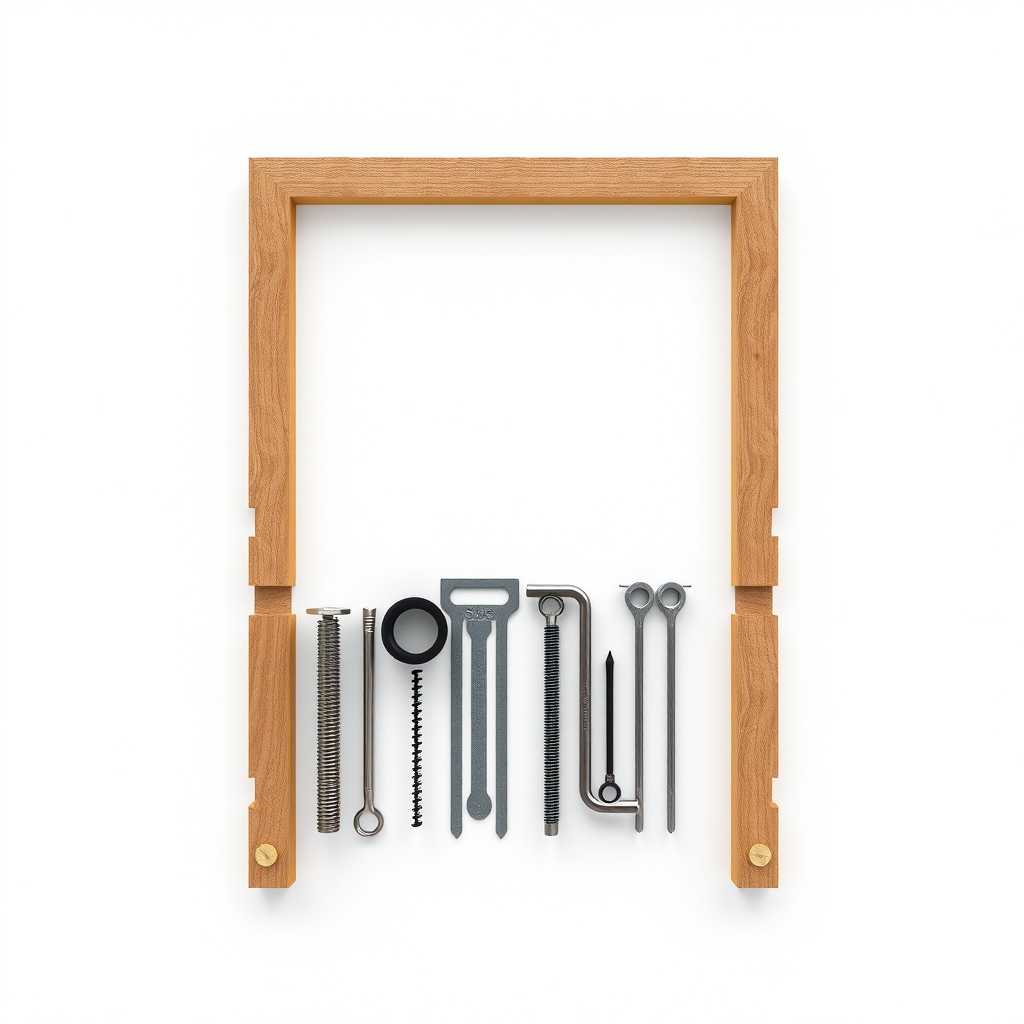
A hollow-core door repair kit
The usual failure is filler that sinks into the hollow center or cracks around the edge. A kit's self-adhesive mesh or metal-backed patch bridges the hole, so the filler cures over a firm base and sands flat.
What to get: Hollow-core door repair kit
How long it lasts: Years. The patch spans the hole, and the filler sands flat and takes paint.
As an Amazon Associate I earn from qualifying purchases.
What you'll need
-
Utility knife and putty knife
Trim the edges and spread the filler
You have it -
Sandpaper, primer and matching paint
120 and 220 grit; paint to match your door
You have it -
Cardboard scrap and string
A backer if you have no patch
Free - Our pick Illustration
Hollow-core door repair kit
Patch and filler in one pack
- Illustration
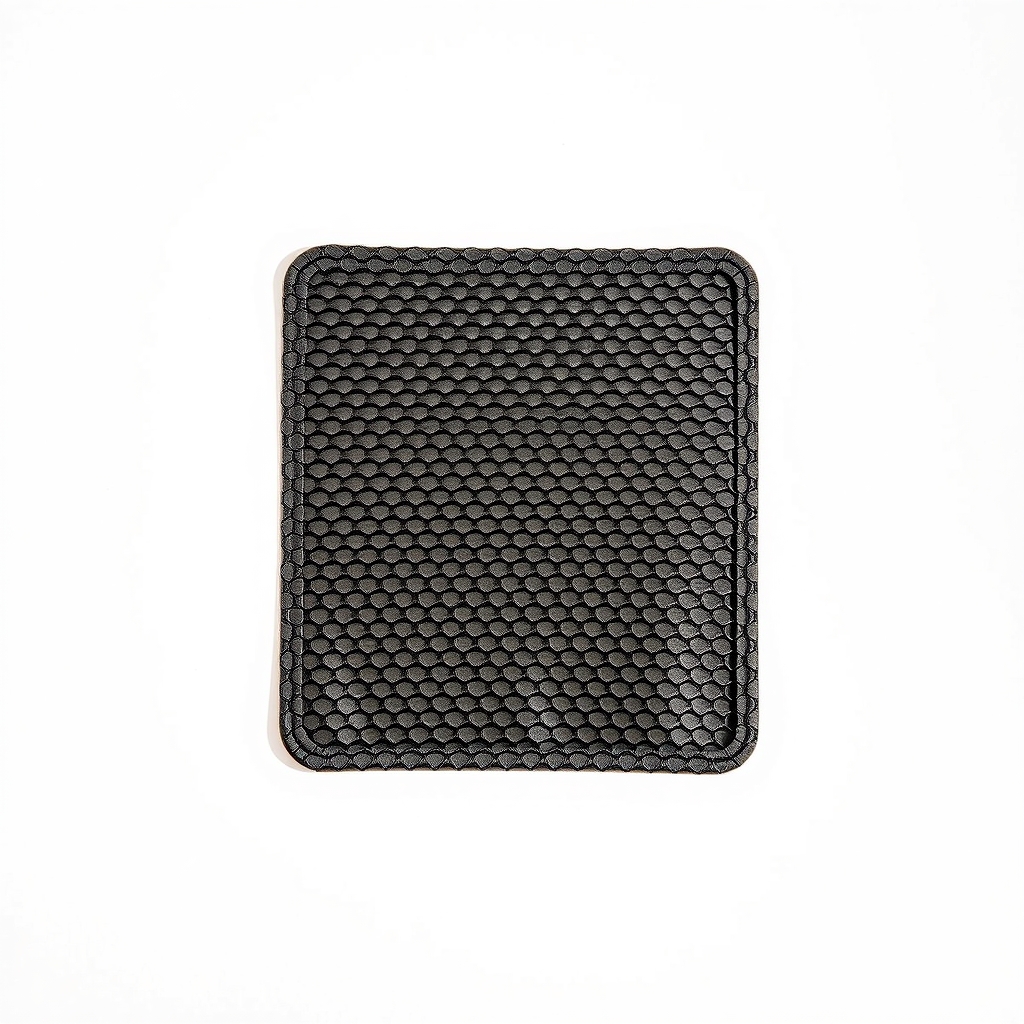
Self-adhesive mesh patch
For a small hole when you already own filler and paint
- Illustration
Lightweight spackle
Dries with little shrinking, and sands easily
Why it happens
A thin skin over an empty core
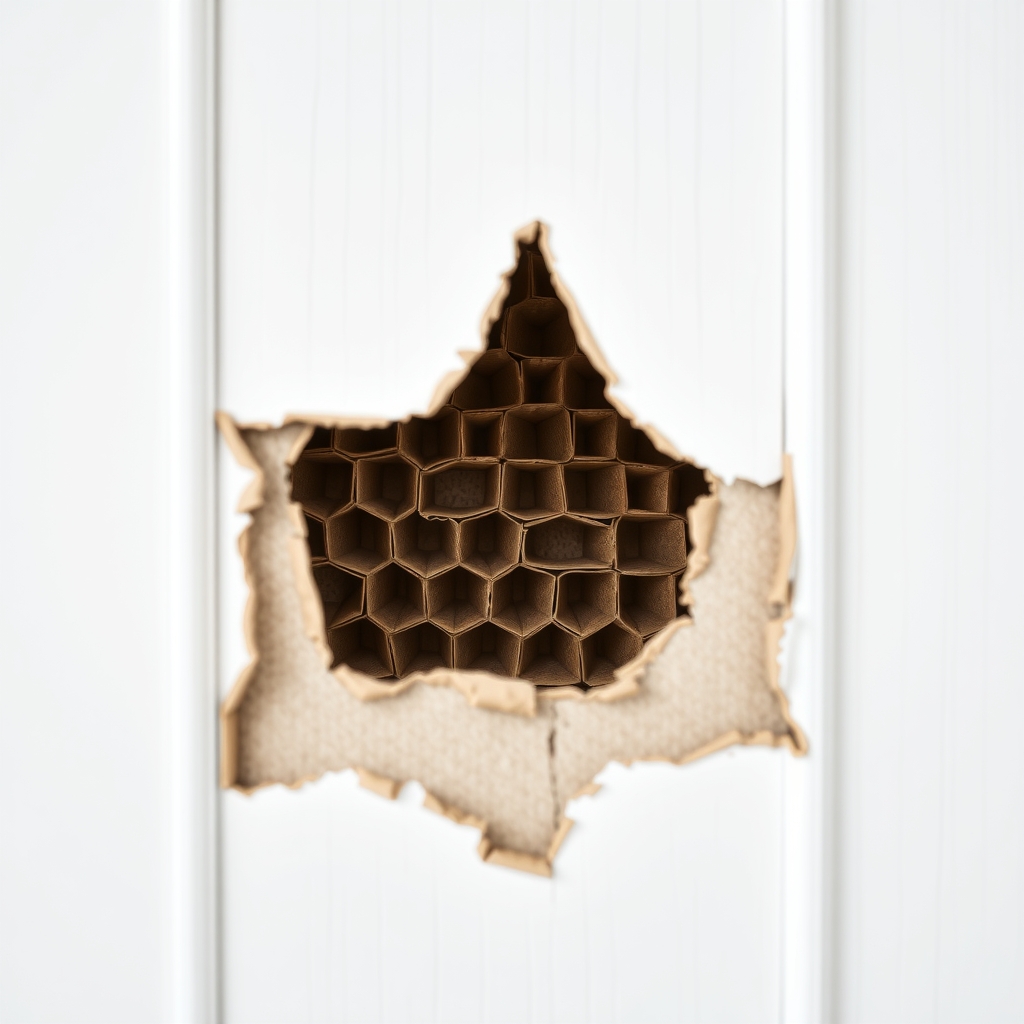
A hollow-core door is two thin skins of hardboard or plywood over a cardboard honeycomb. A knob, a kick or a bump can punch through it.
Nothing behind the hole to hold filler
Filler needs a base. Without a backer, spackle falls into the hollow or sags and cracks as it dries.
Doorknob and furniture strikes
A knob swinging into the door is the classic cause. A rubber door stop or a wall-mounted bumper keeps it from happening again.
The wrong filler, packed too thick
Heavy joint compound shrinks and cracks when it is packed deep. Lightweight spackle in thin coats does better.
Try this first (free)
Do these in order, starting with the simplest.
-
Trim and clean the edges
Tool used: Utility knife and putty knifeCut away ragged splinters with a utility knife until the edge is flat. Vacuum out crumbs, and sand the paint around the hole lightly so filler can grip.
-
Make a cardboard backer
Tool used: Cardboard scrap and stringCut cardboard a bit longer than the hole is wide and thread a string through its center. Spread glue on the edges, slip it in at an angle, then pull the string so it sits flat behind the hole. Tape the string outside and let the glue dry.
-
Or press a patch over the hole
Tool used: Hollow-core door repair kitPeel the backing from the repair kit's self-adhesive patch and press it over the hole from the center out. It does the job of the backer.
IllustrationCheck price on AmazonTool for this step
Hollow-core door repair kit · Patch and filler in one pack
-
Fill in thin coats
Tool used: Lightweight spacklePress spackle in with the putty knife and scrape it flush. Let each coat dry as the label says, usually about an hour, before the next. Thin coats shrink less.
IllustrationCheck price on AmazonTool for this step
Lightweight spackle · Dries with little shrinking, and sands easily
-
Sand smooth
Tool used: Sandpaper, primer and matching paintStart with 120 grit and finish with 220. Wipe off the dust with a damp cloth and feel with your hand for dips.
-
Prime and paint
Tool used: Sandpaper, primer and matching paintPrime the patch so it does not show through, then paint two thin coats and let them dry.
When free fixes aren't enough
A cardboard backer works for a hole about the size of a doorknob dent, but it is fiddly, and soft cardboard can swell with damp. A repair kit's patch is firmer and sits flat, which matters on a wood-grain door when you want the fix to be hard to see. If the hole is larger than a fist, sits on the edge or near the latch, or the door skin is split and peeling, replace the door. New hollow-core doors are inexpensive. If your home was built before 1978, test the old paint for lead before sanding, and do not dry-sand it.
Buy the fix
Still stuck after the free fixes? These are the products we would look at.
| Pick | Product | Fixes | Who it's for | Buy |
|---|---|---|---|---|
| Best pick | Hollow-core door repair kit | a small to medium hole in a hollow-core door | Anyone who wants a flat, paint-ready repair without making a backer by hand. | Check price |
| Budget pick | Self-adhesive mesh patch | a hole up to a few inches across | Anyone who already has spackle and paint and needs only the patch. | Check price |
Hollow-core door repair kit
Fixes: a small to medium hole in a hollow-core door
Look for: A self-adhesive or metal-backed patch for the hole; Filler included, or listed as compatible; Sandable and paintable when dry.
- Who it's for
- Anyone who wants a flat, paint-ready repair without making a backer by hand.
- Honest downside
- Your door is solid wood or solid-core. Knock on it: a hollow door sounds light and drum-like, and a solid door sounds dull.
Self-adhesive mesh patch
Fixes: a hole up to a few inches across
Look for: Aluminum or fiberglass mesh with a sticky back; Big enough to overlap the hole by at least an inch; Several sizes in the pack.
- Who it's for
- Anyone who already has spackle and paint and needs only the patch.
- Honest downside
- The hole is bigger than the patch or sits right at the door's edge.
As an Amazon Associate I earn from qualifying purchases. We don't show prices because they change, so use the button to see today's price.
How we picked: How we picked: this page is based on door and wall repair guides, repair kit instructions, and lead-safe painting advice from public health agencies. We do not test products by hand.
How big is the hole?
- A dent or hole under about an inch: backer or mesh patch, then spackle.
- One to four inches: a mesh patch or kit patch, filler and sanding.
- Bigger than a fist, or at the edge: a door skin patch, or replace the door.
What to skip
Expanding foam and thick joint compound
Expanding foam keeps growing, pushes the skin out and is hard to sand. Joint compound packed deep into the hole shrinks and cracks as it dries. Use a backer and thin coats instead.
Frequently asked questions
How do I tell if my bedroom door is hollow-core?
Can I use spackle on a hole in a door?
How long should I wait between coats of filler?
How do I fix a hole in a wood-grain hollow-core door?
Can I fix a hole near the doorknob or latch the same way?
Related problems
 Free fix inside
Small Spaces & Storage · Closet Doors
How to Stop a Closet Door From Squeaking: A Quick Spray and Check
Read the fix Free fix inside
Bedroom & Sleep · Bedroom Door
Bedroom Door Slamming? Quiet Bumpers and Soft-Close Fixes
Read the fix Free fix inside
Bedroom & Sleep · Bedroom Door
Bedroom Door Won't Latch? Check the Strike Plate First
Read the fix Free fix inside
Bedroom & Sleep · Bedroom Door Hardware
Bedroom Door Handle Loose or Broken? Replacement Knob Guide
Read the fixAs an Amazon Associate I earn from qualifying purchases. Affiliate disclosure