Fish Tank pH Off? How to Test It and Adjust It Safely
Stable water matters more than a perfect number. Test first, then move pH slowly with water changes and KH, not quick-fix chemicals.
By Jamilur Rahman Updated November 5, 2026 · 7 min read
- Time
- 30 min
- Cost
- $20-$50
- Difficulty
- Medium
In this guide
Quick answer
How to fix fish tank pH: test the tank, test your tap water too, and change the pH slowly instead of all at once. A steady pH slightly outside the ideal range is safer than a pH that swings. Most pH problems trace back to KH, the water's buffer, so measure that too, and use water changes and a buffer rather than pH up or pH down.
Free fix vs. permanent fix
Test, then change some water
- Test the tank and the tap water after it has sat 24 hours
- Change 10 to 25 percent of the water with dechlorinated tap water
- Test again the next day
- Pull out any rock or decor that fizzes in vinegar
How long it lasts: It resets pH only as far as your tap water allows. If tap water is the cause, the pH drifts back.
A liquid freshwater test kit
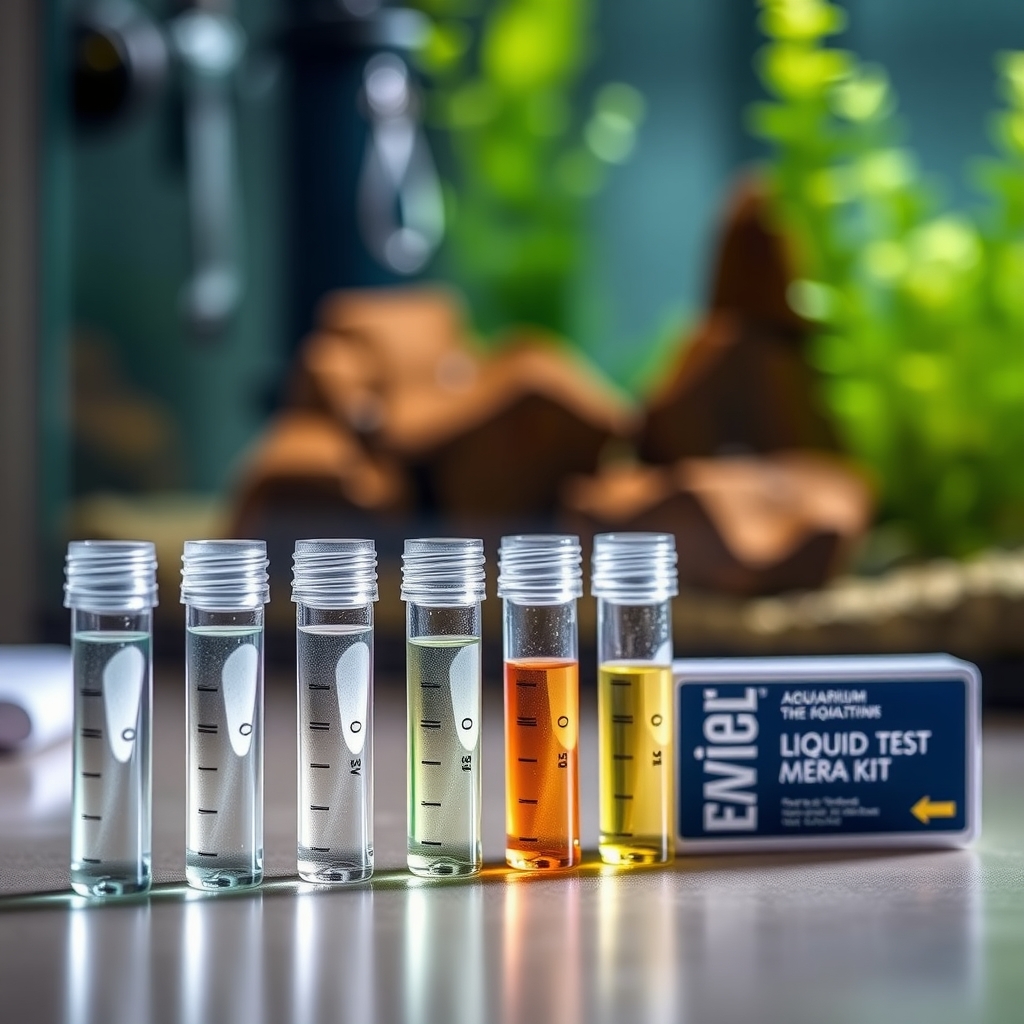
You cannot fix a number you cannot see. A liquid kit reads pH more precisely than strips, and one that also covers ammonia and nitrite shows whether the water is safe. With real numbers you can adjust in small steps instead of guessing.
What to get: Liquid freshwater aquarium test kit
How long it lasts: As long as you keep testing weekly. Check the expiry dates on the reagent bottles.
As an Amazon Associate I earn from qualifying purchases.
What you'll need
-
Clean bucket
For letting tap water sit 24 hours and for water changes
You have it -
Water conditioner
Use on every water change to remove chlorine and chloramine
You have it -
White vinegar
A drop on a rock shows whether it raises pH and hardness
You have it - Our pick Illustration
Liquid freshwater test kit
Covers pH, ammonia, nitrite and nitrate
- Illustration
Aquarium test strips
A fast check between full tests, less precise
- Illustration
Aquarium KH buffer
Raises KH and pH gently when your water is too soft
Why it happens
Tap water that starts high or low
Your tap water sets the baseline. Hard tap water often reads above 7.5, while soft water can read below 7.
Low KH letting pH slide
KH is the buffer that holds pH steady. As the tank ages, the waste cycle uses it up, so pH can drift down between water changes.
Rock, shells or gravel
Limestone, marble, coral and some sand dissolve slowly and push pH and hardness up.
Driftwood and decay
Driftwood, peat and rotting plant matter release acids that lower pH, and so does a heavy build-up of waste.
Try this first (free)
Do these in order, starting with the simplest.
-
Test the tank and the tap
Tool used: Liquid freshwater test kitFill a vial and follow the kit's timing. Then test fresh tap water, and again after it has sat in a bucket for 24 hours. Gas leaves the water as it sits, and the pH can shift.
IllustrationCheck price on AmazonTool for this step
Liquid freshwater test kit · Covers pH, ammonia, nitrite and nitrate
-
Check your fish, not a generic number
Most community fish do well from about 6.5 to 7.5. Livebearers and African cichlids like it higher. Many tetras and discus like it lower. A stable pH inside your fish's range is fine.
-
Change a small amount of water
Tool used: Clean bucketReplace 10 to 25 percent of the water with dechlorinated tap water at the tank's temperature. Big swaps shock fish. Repeat weekly.
-
Test your rocks
Tool used: White vinegarDrip vinegar on each rock, shell or decoration. Fizzing means it is dissolving and raising pH and hardness. Remove it if your fish need softer water.
-
Move pH only a few tenths a day
A slow shift is gentle on fish. A fast one stresses them more than a number that is a little off.
When free fixes aren't enough
If your tap water is far outside what your fish need, water changes cannot fix it, and you will be adjusting every week. Then the answer is a buffer to raise KH and pH, or mixing in purified water to soften. If you read any ammonia or nitrite, treat that first, because ammonia is more toxic at higher pH. If fish are gasping, clamped or lying on the bottom, do a 25 percent water change and call a fish store or an aquatic vet.
Buy the fix
Still stuck after the free fixes? These are the products we would look at.
| Pick | Product | Fixes | Who it's for | Buy |
|---|---|---|---|---|
| Best pick | Liquid freshwater aquarium test kit | guessing at pH, and missing the ammonia or nitrite that makes pH problems worse | Anyone with a tank whose pH has moved, a new tank, or a tank that has sick fish. | Check price |
| Budget pick | Aquarium test strips | not knowing whether pH, GH or KH has moved, at a glance | Quick weekly checks between full liquid tests. | Check price |
| Upgrade pick | Aquarium KH buffer | soft water that lets pH crash | People with soft tap water, or tanks where pH drops between water changes. | Check price |
Liquid freshwater aquarium test kit
Fixes: guessing at pH, and missing the ammonia or nitrite that makes pH problems worse
Look for: Liquid reagents, not only strips, for a precise pH reading; Ammonia, nitrite and nitrate tests in the same kit; Clear instructions and a color card you can read in daylight.
- Who it's for
- Anyone with a tank whose pH has moved, a new tank, or a tank that has sick fish.
- Honest downside
- You run a saltwater tank. It needs a kit made for salt water.
Aquarium test strips
Fixes: not knowing whether pH, GH or KH has moved, at a glance
Look for: A color chart that reads pH, GH and KH; Sealed, in-date tubes of strips; Easy-to-read chart in good light.
- Who it's for
- Quick weekly checks between full liquid tests.
- Honest downside
- You need a precise number, such as when adjusting pH or treating sick fish. Use the liquid kit.
Aquarium KH buffer
Fixes: soft water that lets pH crash
Look for: Made for aquarium use with clear dosing directions; Raises KH and pH in small steps, not one jump; A hard-water fish match: check it suits your species.
- Who it's for
- People with soft tap water, or tanks where pH drops between water changes.
- Honest downside
- Your fish prefer soft, acidic water, or your KH test already reads fine.
As an Amazon Associate I earn from qualifying purchases. We don't show prices because they change, so use the button to see today's price.
How we picked: How we picked: this page is based on aquarium care guides, test-kit and buffer instructions, and what fish keepers report about pH swings and hardness. We do not test products by hand.
Fish tank too acidic or too alkaline: what to change
- Too acidic (below about 6.5): usually low KH. Do regular water changes, add a KH buffer or a bag of crushed coral in the filter, and cut back on peat if your fish need harder water.
- Too alkaline (above about 8): hard tap water, or limestone rock and shells. Remove any rock that fizzes in vinegar, and mix tap water with a little purified water. Add driftwood in small amounts.
Match the target to your fish. Fixing a pH that was already right for them only causes trouble.
How to fix fish tank hardness and alkalinity
Fixing fish tank water hardness comes down to two numbers. GH is general hardness, the calcium and magnesium in the water. KH is carbonate hardness, or alkalinity, the water's buffer for pH. They are not the same thing.
- Raise GH: add a mineral supplement made for aquariums.
- Lower GH: mix tap water with purified water in small steps.
- Raise KH: use a KH buffer.
- Lower KH: dilute with purified water. Go slowly with all of them.
What to skip
pH Up and pH Down in a hurry
Quick-fix chemicals can swing pH within hours. Without enough KH the pH bounces back or crashes, and swings hurt fish more than a steady number a bit off. Use them in small doses, with testing in between, or skip them.
Frequently asked questions
How to fix fish tank water quality?
How fast can I change my tank's pH?
Why does my tank pH keep dropping?
How often should I test pH?
Related problems
 Free fix inside
Pets · Fish Tank
Fish Tank Cloudy? What White, Green or Brown Water Is Telling You
Read the fix Free fix inside
Pets · Fish Tank Equipment
Fish Tank Filter Not Working? Clean, Prime, or Replace the Media
Read the fix Free fix inside
Pets · Fish Tank
Fish Tank Keeps Turning Green? Cut the Light, Then Pick One Tool
Read the fix Free fix inside
Pets · Fish Tank
Fish Tank Smells Bad? Where the Funk Comes From, and the Fix
Read the fixAs an Amazon Associate I earn from qualifying purchases. Affiliate disclosure