Fish Tank Not Level? Why It Matters and the Foam Mat Fix
A tilted tank stresses its glass seams and makes the water line look crooked. Level the stand, then add a foam mat so the whole base sits evenly.
By Jamilur Rahman Updated November 5, 2026 · 6 min read
- Time
- 30 min
- Cost
- Under $20
- Difficulty
- Medium

In this guide
Quick answer
A fish tank not level puts uneven weight on its glass and seams, which can lead to stress cracks and leaks, and a slanted water line looks wrong too. Empty the tank before you adjust anything, shim the stand legs or move the stand until a level reads true, then set a foam leveling mat under the whole base. The mat cushions small bumps in the stand top. It does not fix a real tilt on its own.
Free fix vs. permanent fix
Check the tilt and fix the stand
- Check level front to back and side to side with a level or phone app
- Empty the tank first, since water weighs about 8 pounds a gallon
- Move the stand to a flatter spot on the floor
- Tighten the stand's bolts and check for wobble
How long it lasts: Fine for a small tilt on a solid floor. Without a mat, small bumps and gaps stay under the base.

A foam leveling mat under the whole base
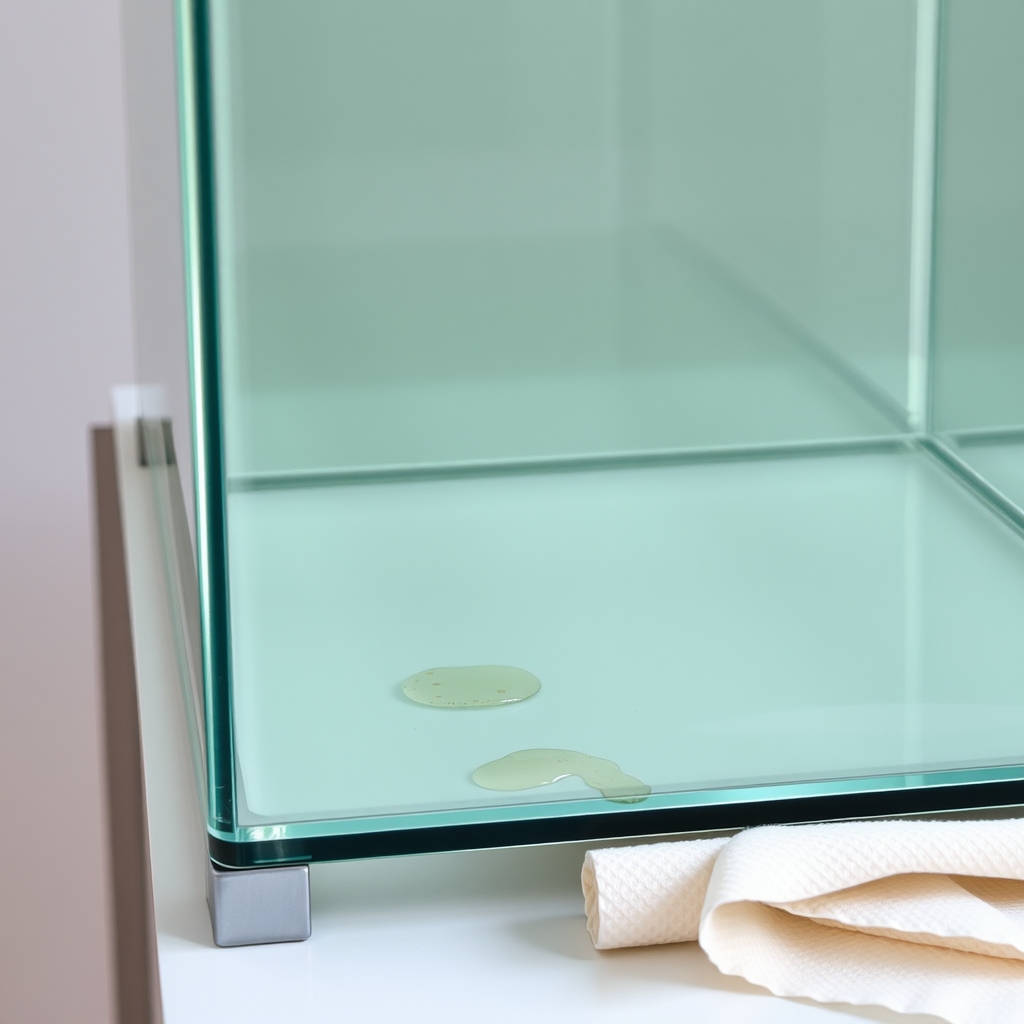
Glass tanks are built to sit on a flat, even surface. A thin foam mat fills small gaps and bumps between the tank base and the stand top. With a level stand under it, the mat keeps stress off the seams.
What to get: Aquarium foam leveling mat
How long it lasts: As long as the tank sits there. It spreads the load over the whole base so no single point carries it.
As an Amazon Associate I earn from qualifying purchases.
What you'll need
-
Level or phone level app
A bubble level on the stand top is best, and a phone app is fine for a quick check
You have it -
Helper
To help you move the stand and hold things steady
You have it - Illustration

Plastic or composite shims
For under the stand legs. Skip wood and cardboard, which compress and rot
- Our pick Illustration
Aquarium foam leveling mat
Size it to the length and width of your tank base
- Illustration

Aquarium stand
Only if your furniture was not built to hold a full tank
Why it happens
An uneven floor
Older houses and wood floors often slope. Even a small slope shows across a three-foot tank.
A short or wobbly stand leg
Foot pads wear down and bolts loosen, so one corner of the stand sits low.
Furniture that is not a stand
A dresser or console that was not built for the weight can bow in the middle or twist, and the tank tilts with it.
Gaps under the tank
Bumps, dust or a warped stand top leave gaps under the base, so one corner carries more of the load.
Try this first (free)
Do these in order, starting with the simplest.
-
Check the tilt
Tool used: Level or phone level appSet a level on the stand top, then on the tank rim, running front to back and side to side. If the bubble sits off the center marks, adjust before the next water change.
-
Empty the tank first
Tool used: HelperNever lift, tilt or shim under a filled tank. Move the fish to a bucket of tank water, drain the tank and take out the rocks and decor. Ask a helper to hold the stand steady.
-
Fix the stand, not the tank
Tool used: Plastic or composite shimsSlip a hard shim under the low stand leg and check the level again. Add shims until it reads true. Never prop up just one corner of the tank itself.
IllustrationCheck price on AmazonTool for this step
Plastic or composite shims · For under the stand legs. Skip wood and cardboard, which compress and rot
-
Lay the foam mat
Tool used: Aquarium foam leveling matCenter the mat on the stand top and make sure it covers the whole base of the tank. Set the tank on it slowly, with no sliding.
IllustrationCheck price on AmazonTool for this step
Aquarium foam leveling mat · Size it to the length and width of your tank base
-
Refill slowly and check again
Add a few inches of water and check the level again. Top it up, then check once more after a few weeks, since stands and floors can settle.
When free fixes aren't enough
Shims and a mat handle a small tilt. If the floor slopes a lot, the stand sags in the middle or the frame is cracked, stop adding shims. A stand with a failing frame is a flood risk, so replace it with one rated for your tank. If the tank already leaks or has a cracked pane, see the related page on leaks. For a large tank, have a pro check the floor, since a sagging floor can keep moving the stand.
Buy the fix
Still stuck after the free fixes? These are the products we would look at.
| Pick | Product | Fixes | Who it's for | Buy |
|---|---|---|---|---|
| Best pick | Aquarium foam leveling mat | uneven pressure points between the tank and the stand | Anyone with a glass tank on a stand that has small bumps or gaps. | Check price |
| Budget pick | Plastic or composite leveling shims | a stand that sits low on one leg | Anyone whose level shows a tilt from the floor or a short leg. | Check price |
| Upgrade pick | Aquarium stand | furniture that was never built to hold a full tank | Owners who use a dresser or an old cabinet that bows. | Check price |
Aquarium foam leveling mat
Fixes: uneven pressure points between the tank and the stand
Look for: Big enough to cover the whole footprint of your tank; Dense foam that springs back and does not soak up spills; Thin enough to keep the tank low and stable; Listed for use under glass aquariums.
- Who it's for
- Anyone with a glass tank on a stand that has small bumps or gaps.
- Honest downside
- The stand is visibly tilted or sagging. Fix that first, because a mat will not.
Plastic or composite leveling shims
Fixes: a stand that sits low on one leg
Look for: Hard plastic or composite that will not compress; Wide enough to sit fully under the stand foot; A heavy-load rating that suits a full tank.
- Who it's for
- Anyone whose level shows a tilt from the floor or a short leg.
- Honest downside
- The stand has built-in adjustable feet. Use those instead.
Aquarium stand
Fixes: furniture that was never built to hold a full tank
Look for: Rated for your tank's size and weight; A flat, solid top that supports the whole base; Adjustable feet for leveling.
- Who it's for
- Owners who use a dresser or an old cabinet that bows.
- Honest downside
- Your current stand is solid and only needs shims.
As an Amazon Associate I earn from qualifying purchases. We don't show prices because they change, so use the button to see today's price.
How we picked: How we picked: this page is based on aquarium-maker setup instructions, general guides on stand and floor support, and what fish keepers report in reviews of leveling mats. We do not test products by hand.
How to check level the right way
- Check the empty stand top first, front to back and side to side.
- Place the empty tank on the stand and check the rim the same way.
- Look at the water line after you fill it. A slanted line means the tank is off.
What to skip
Cardboard or folded paper under the tank
Paper and cardboard compress under water weight and rot if damp, so the tank slowly tilts again. Propping just one corner also concentrates the load on that corner. Fix the stand and use a full-size foam mat instead.
Frequently asked questions
How level does a fish tank need to be?
Can a fish tank that is not level crack?
Do I need a foam mat under my aquarium?
Can I level a tank that is full?
Does the floor matter if the stand is level?
Related problems
 Free fix inside
Pets · Fish Tank
Fish Tank Leak? When to Patch It and When to Replace the Tank
Read the fix Free fix inside
Pets · Fish Tank
Fish Tank Water Evaporating Fast? A Lid Fixes More Than Water Loss
Read the fix Free fix inside
Pets · Fish Tank Equipment
Fish Tank Filter Not Working? Clean, Prime, or Replace the Media
Read the fix Free fix inside
Pets · Fish Tank
Fish Tank Filter Making Noise? Fixes Before You Buy a New One
Read the fixAs an Amazon Associate I earn from qualifying purchases. Affiliate disclosure