Shower Curtain Not Plastic? Best Fabric Liners That Resist Mildew
Fabric liners skip the vinyl smell, wash in the machine and shed water when the weave is tight. Here is what to look for, and what mildew still needs from you.
By Jamilur Rahman Updated November 5, 2026 · 6 min read
- Time
- 15 min
- Cost
- $20-$50
- Difficulty
- Easy
In this guide
Quick answer
If you want a shower curtain that is not plastic, a tightly woven fabric liner is the swap. It has no vinyl film, so no new-liner chemical smell, and you can machine wash it. Fabric holds more moisture than vinyl, so it needs to dry between showers, but a water-repellent weave, regular washing and an open curtain after each shower keep mildew down.
Free fix vs. permanent fix
Dry it, wash it and air it out
- Spread the liner open after each shower so it dries
- Wash a fabric liner monthly following the care label
- Air a new vinyl liner outside before hanging it
- Do not leave it bunched against the wall
How long it lasts: Cuts mildew and smell on any liner, but cannot remove the plastic itself. The habits only work if you keep them up.
A water-repellent fabric shower liner
A tight weave sheds water and a fabric liner has no vinyl film. It still needs to dry between showers, but a monthly wash resets mildew far more easily than scrubbing a stiff plastic one.
What to get: Water-repellent fabric shower liner (machine washable)
How long it lasts: Years. A washable fabric liner can be refreshed in the machine instead of thrown away.
As an Amazon Associate I earn from qualifying purchases.
What you'll need
-
Washing machine
For the monthly liner wash
You have it -
White vinegar
A cup in the rinse helps with mildew smell
You have it - Our pick Illustration
Water-repellent fabric shower liner
Check the size against your rod and tub
- Illustration
Basic fabric shower liner
A plain one with no pockets or extras
- Illustration
Hemp or organic cotton liner
For a no-plastic-fiber choice that needs more drying
Why it happens
Vinyl smell and chemicals
New vinyl (PVC) liners often give off a strong smell for days. PEVA is vinyl-free but still plastic. If you are avoiding plastic films, neither is the answer.
Moisture trapped against the wall
Any liner stays damp if it bunches against the tile. Soap scum and body oil feed mildew in the damp folds, whatever the material.
A weave too loose to shed water
A thin or loosely woven fabric soaks through and drips on the floor. It stays wet longer, which helps mildew grow.
Try this first (free)
Do these in order, starting with the simplest.
-
1. Test the weave first
Tool used: Water-repellent fabric shower linerHold the liner up to a window. If you can see through it, it is too thin. Sprinkle a few drops of water on it. Good fabric makes the water bead up or run off instead of soaking in.
IllustrationCheck price on AmazonTool for this step
Water-repellent fabric shower liner · Check the size against your rod and tub
-
2. Hang the liner inside the tub
Hang it so the hem falls inside the tub, and keep the decorative curtain outside. Pull the liner open after each shower, so it dries instead of staying folded.
-
3. Wash it monthly
Tool used: Washing machineMachine wash following the care label, usually on a cool or warm gentle cycle. Add a cup of white vinegar to the rinse for mildew smell. Hang it to dry instead of using high heat.
-
4. Replace it when it stays damp or smells
If the liner is still musty after a wash, or the weave has thinned out, replace it. A tired liner holds moisture and keeps the mildew coming back.
When free fixes aren't enough
Washing and airing help any liner, but they cannot take plastic out of a vinyl one. If the smell is back after a few days, or you want no vinyl or PEVA film in your shower at all, a fabric liner is the only fix. Fabric is not zero plastic, since most are polyester. If you need no plastic fibers at all, choose hemp or cotton, and plan to dry them more carefully. Black mold that keeps coming back on the wall behind the liner is a damp problem, not a liner problem.
Buy the fix
Still stuck after the free fixes? These are the products we would look at.
| Pick | Product | Fixes | Who it's for | Buy |
|---|---|---|---|---|
| Best pick | Water-repellent fabric shower liner (machine washable) | the vinyl smell and the plastic film, with a liner you can wash | Anyone replacing a vinyl or PEVA liner who wants a washable fabric one. | Check price |
| Budget pick | Basic fabric shower liner | a plastic liner at the lowest cost, with a plain washable one | Anyone who wants to drop vinyl without paying for extras. | Check price |
| Upgrade pick | Hemp or organic cotton shower liner | the plastic fibers in polyester, by using a natural fiber | Anyone avoiding plastic fibers as well as vinyl, and willing to dry the liner open every day. | Check price |
Water-repellent fabric shower liner (machine washable)
Fixes: the vinyl smell and the plastic film, with a liner you can wash
Look for: A tight weave that makes water bead and roll off; Machine washable, with a care label you can follow; Metal rust-proof grommets and a weighted hem; No vinyl or PEVA film layer listed.
- Who it's for
- Anyone replacing a vinyl or PEVA liner who wants a washable fabric one.
- Honest downside
- You never dry the liner open. Any damp fabric can mildew. Check whether the water resistance comes from the weave or a coating.
Basic fabric shower liner
Fixes: a plastic liner at the lowest cost, with a plain washable one
Look for: A tight weave and a clear care label; The right width and drop for your rod; Strong grommets that will not tear.
- Who it's for
- Anyone who wants to drop vinyl without paying for extras.
- Honest downside
- You want pockets, a mesh window or extra-wide sizing. Look at the best pick instead.
Hemp or organic cotton shower liner
Fixes: the plastic fibers in polyester, by using a natural fiber
Look for: A dense natural weave with a care label; Metal grommets that will not rust; Enough width and drop for your rod.
- Who it's for
- Anyone avoiding plastic fibers as well as vinyl, and willing to dry the liner open every day.
- Honest downside
- Your bathroom stays damp. Natural fiber holds water longer, so a damp room can still grow mildew.
As an Amazon Associate I earn from qualifying purchases. We don't show prices because they change, so use the button to see today's price.
How we picked: How we picked: this page is based on shower liner material guides, care labels from liner makers, and the problems and fixes people report in owner reviews. We do not test products by hand.
Vinyl, PEVA, polyester and hemp: what you give up
- Vinyl (PVC): cheap and stiff, often with a strong new-liner smell.
- PEVA: vinyl-free but still a plastic film.
- Polyester fabric: washable and quick to dry, but still a plastic-based fiber.
- Hemp or cotton: no plastic fibers, but it holds water longer and needs open drying.
How to read a liner listing
Look for machine washable, a tight weave, metal grommets and a weighted hem. The words water-resistant are honest. The word waterproof can mean a coating. If a listing does not say what the water resistance is made of, treat it with caution.
What to skip
Spray-on waterproofing and bleach soaks
Waterproofing sprays often add the same chemical coating you are trying to avoid. Strong bleach can weaken fabric. A wash with vinegar or an oxygen-based cleaner is gentler and works for most mildew spots.
Frequently asked questions
What is a shower curtain that is not plastic made of?
Does a fabric shower liner get moldy?
Is a fabric liner waterproof?
How often should I wash a fabric shower liner?
Related problems
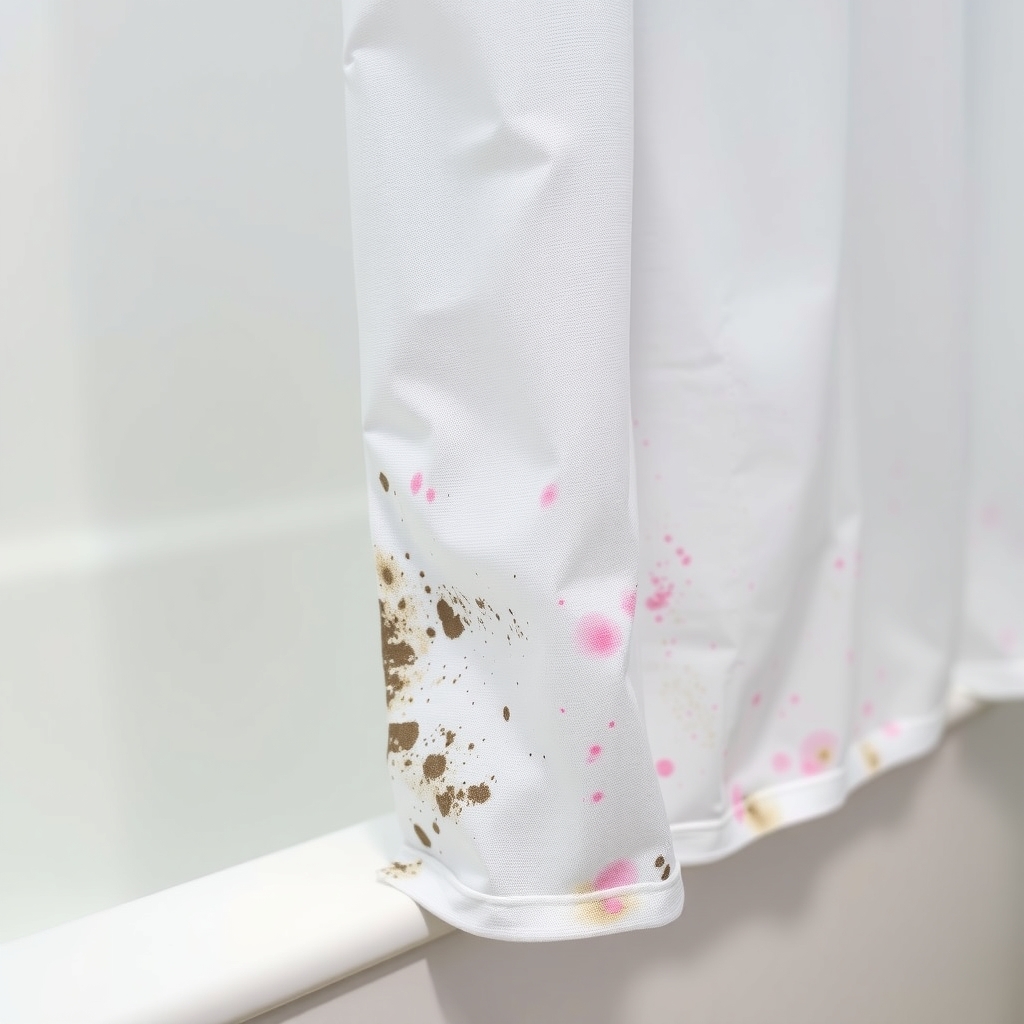 Free fix inside
Bathroom · Shower Curtain
Shower Curtain Keeps Getting Moldy? Why It Happens and What to Buy
Read the fix Free fix inside
Bathroom · Shower Curtain
Shower Curtain Not Long Enough? An Extra-Long Liner Fixes the Gap
Read the fix Free fix inside
Bathroom · Shower Curtain
Shower Curtain Not Wide Enough? An Extra-Wide Option Closes the Gap
Read the fix Free fix inside
Bathroom · Shower Curtain
Shower Curtain Blowing In? 3 Fixes, From Free to a Curved Rod
Read the fixAs an Amazon Associate I earn from qualifying purchases. Affiliate disclosure