Kitchen Drawer Too Deep? Stackable Trays That Use the Space
Deep drawers swallow tools. Sort by how often you reach, then stack trays so daily tools sit on top and the rest stays within reach below.
By Jamilur Rahman Updated November 5, 2026 · 6 min read
- Time
- 30 min
- Cost
- $20-$50
- Difficulty
- Easy
In this guide
Quick answer
In a deep drawer, tools pile up and whatever sinks to the bottom disappears. Empty it, keep only what you use and sort by how often you reach for it. Then add stackable trays: daily tools on top, bulky or rare ones below. Measure the drawer's inside width, depth and height first, so the stack clears the rim and the drawer still closes.
Free fix vs. permanent fix
Declutter and use boxes you have
- Empty the drawer and keep only what you use
- Put daily tools in a shallow box or lid from another drawer
- Stand tall tools upright in a jar
- Lay a towel or a mat under boxes so they do not slide
How long it lasts: A few weeks. Loose boxes slide around, and tools drift back into a pile.
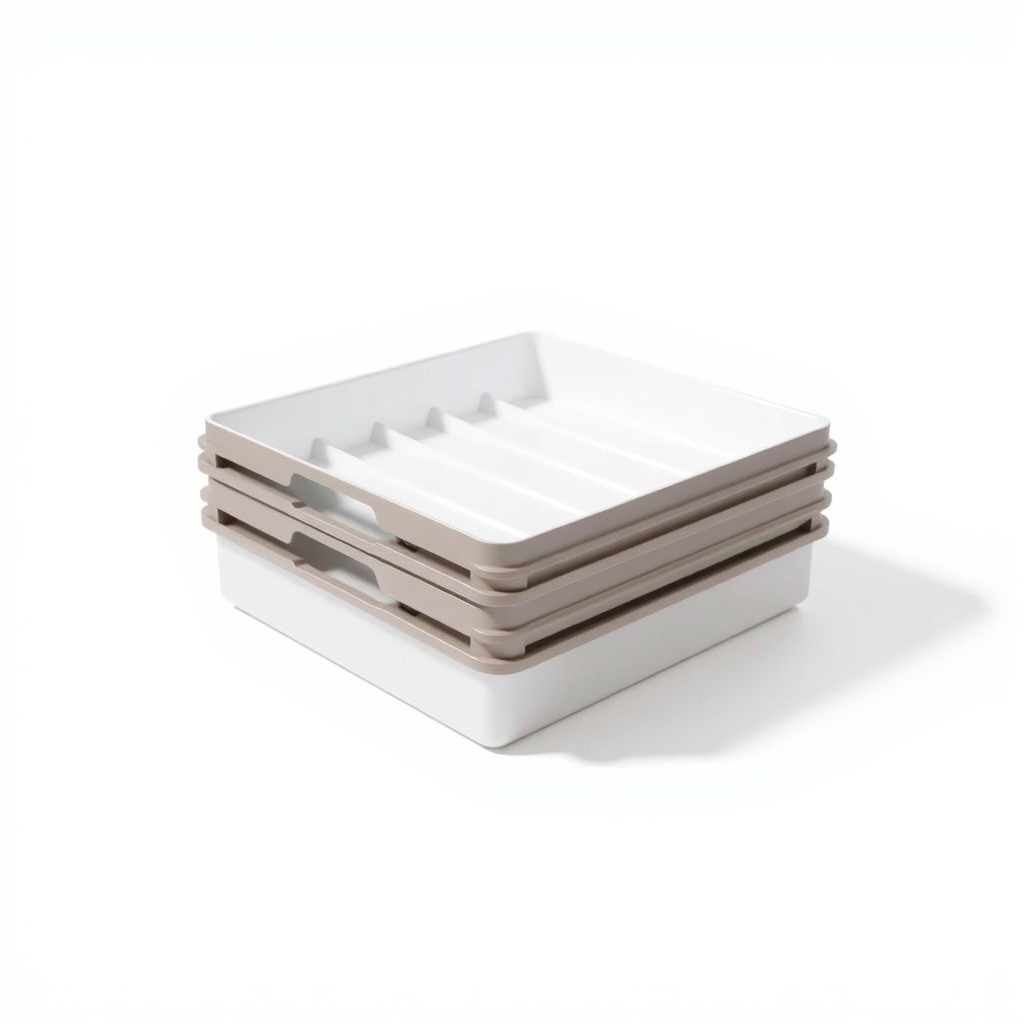
Stackable drawer organizer trays
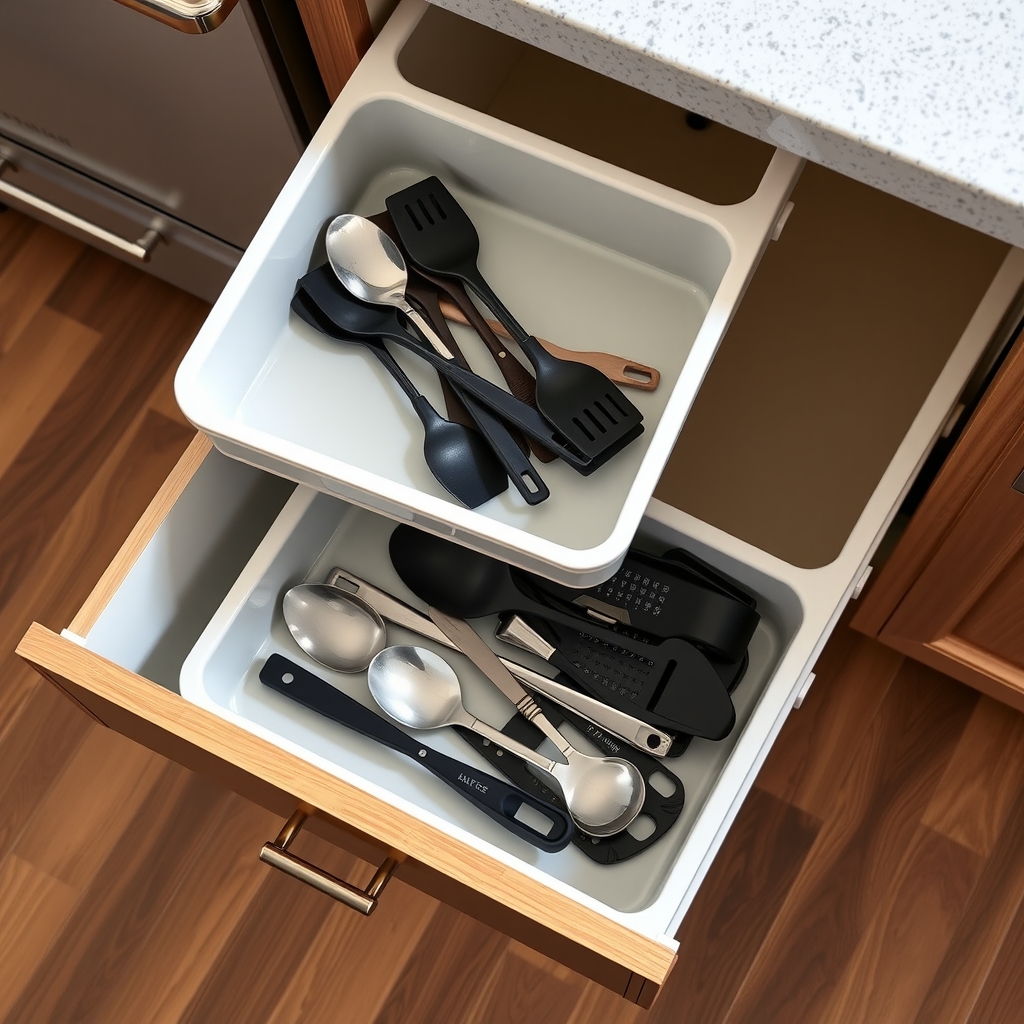
A deep drawer wastes its height. Stacking trays turns one pile into two or three layers, so daily tools sit on top and nothing hides underneath. A tray lifts out, so the layer below is easy to reach.
What to get: Stackable kitchen drawer organizer trays
How long it lasts: Years. Plastic or bamboo trays do not wear out, and non-slip feet keep the layers in place.
As an Amazon Associate I earn from qualifying purchases.
What you'll need
-
Tape measure
For the inside of the drawer, not the front
You have it -
Shallow boxes or lids
Test the layout before you buy anything
Free - Illustration
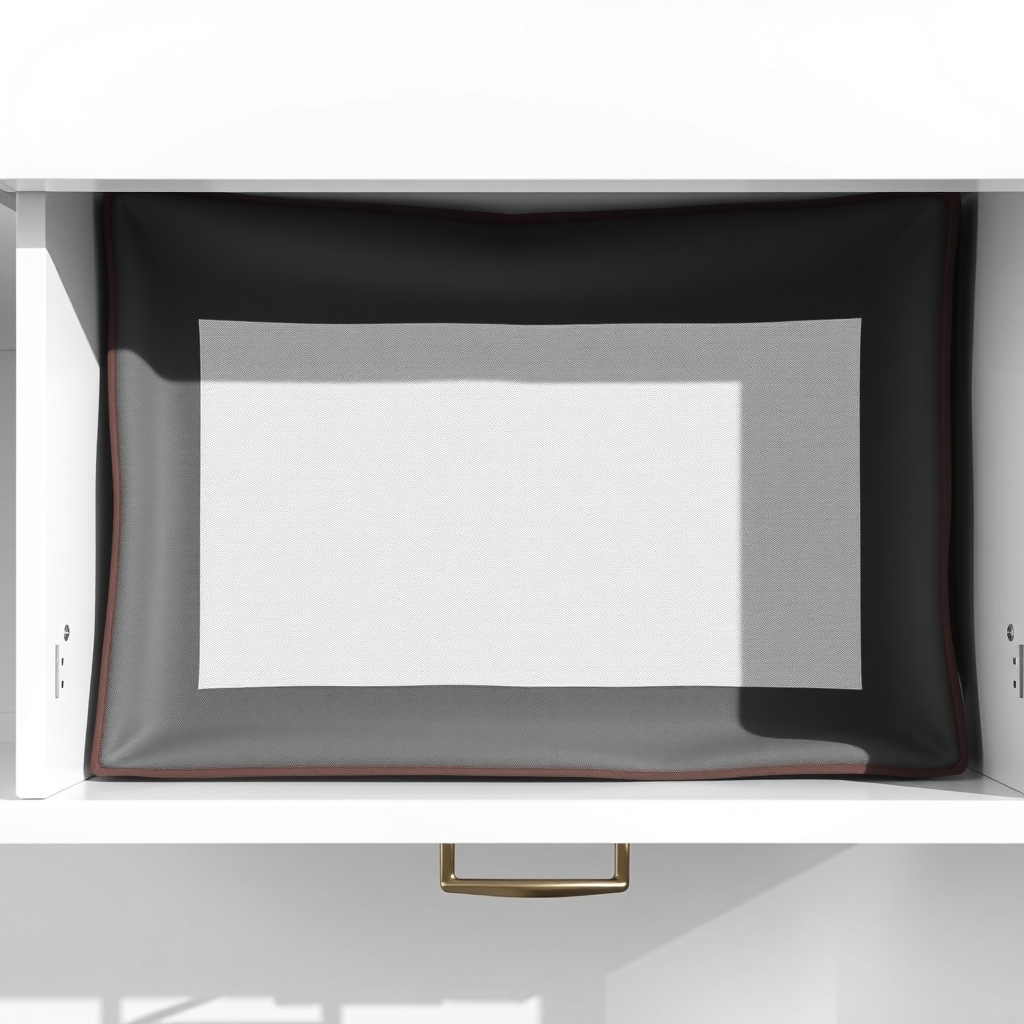
Non-slip drawer liner
Keeps the bottom tray from sliding
- Our pick Illustration
Stackable drawer organizer trays
Match them to your measured width and depth
- Illustration
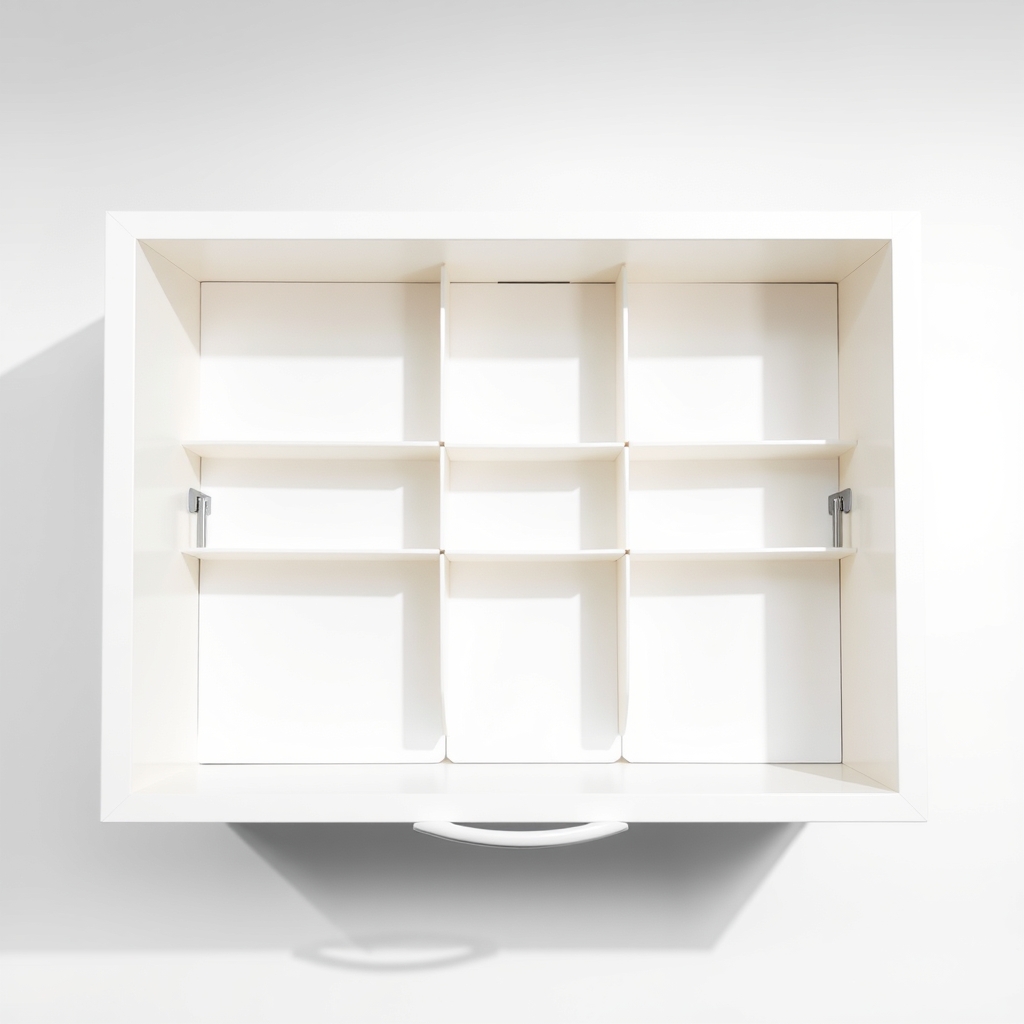
Adjustable drawer dividers
For a drawer that is not very deep
Why it happens
Wasted height
A deep drawer often holds one layer of tools, with a lot of empty air above them. The height is there, but nothing uses it.
Everything in one pile
Mixed tools tangle together, and you dig through the pile to find the whisk or the peeler.
Rare tools on top of daily ones
A pizza cutter or a melon baller lands on top of the spatula you use every night, and the daily tools get buried.
No dividers
Loose items slide to the front every time you shut the drawer, then jam when you open it.
Try this first (free)
Do these in order, starting with the simplest.
-
1. Empty the drawer and sort
Take everything out. Make three piles: daily, now and then, and rarely. Donate what you do not use, and move the rarely pile to a high cabinet.
-
2. Measure the inside
Tool used: Tape measureMeasure the inside width, the depth from front to back, and the clear height from the drawer floor to the top edge. A stack must be about half an inch lower than that height, so the drawer still closes.
-
3. Test the layout with boxes
Tool used: Shallow boxes or lidsPlace shallow boxes or lids in the drawer, fill them and close the drawer. Put daily tools in the front. Notice what you reach for, and what you never touch.
-
4. Grip the bottom layer
Tool used: Non-slip drawer linerLay a non-slip liner under the first tray, so nothing shifts when you yank the drawer open.
IllustrationCheck price on AmazonTool for this step
Non-slip drawer liner · Keeps the bottom tray from sliding
-
5. Stack trays by how often you reach
Tool used: Stackable drawer organizer traysPut the daily spatula, spoons and peeler in the top tray. Put whisks, tongs and larger tools in the lower tray. Keep sharp knives in a slotted knife tray or in sheaths, never loose.
IllustrationCheck price on AmazonTool for this step
Stackable drawer organizer trays · Match them to your measured width and depth
When free fixes aren't enough
Boxes work as a test. They slide, they do not nest, and they waste the height you are trying to use. If your drawer is deeper than your tallest tool, or you cannot see the bottom layer without moving everything, stackable trays are the fix. The top tray slides or lifts out, so the layer below is reachable. If your tallest tools are taller than the drawer itself, a stack will not fit, so keep those in a crock on the counter instead.
Buy the fix
Still stuck after the free fixes? These are the products we would look at.
| Pick | Product | Fixes | Who it's for | Buy |
|---|---|---|---|---|
| Best pick | Stackable kitchen drawer organizer trays | a deep drawer where tools pile up and the bottom layer is lost | Anyone with a drawer deeper than a single layer of tools. | Check price |
| Budget pick | Adjustable drawer dividers | tools sliding and tangling in a drawer that is not very deep | A single-layer drawer, or a cheap first step before you buy trays. | Check price |
Stackable kitchen drawer organizer trays
Fixes: a deep drawer where tools pile up and the bottom layer is lost
Look for: Interlocking or nesting trays that sit steady, not loose; A stack height at least half an inch below the drawer's clear height; Non-slip feet, or a flat base that sits well on a liner; Sizes that fit your measured width and depth, or trays that expand.
- Who it's for
- Anyone with a drawer deeper than a single layer of tools.
- Honest downside
- Your drawer is shallow, or the stack would be taller than its clear height.
Adjustable drawer dividers
Fixes: tools sliding and tangling in a drawer that is not very deep
Look for: Spring or expanding tension that holds without screws; A height that matches the drawer sides; Non-marking rubber ends.
- Who it's for
- A single-layer drawer, or a cheap first step before you buy trays.
- Honest downside
- Your drawer is truly deep and you want layers. Dividers do not use the height.
As an Amazon Associate I earn from qualifying purchases. We don't show prices because they change, so use the button to see today's price.
How we picked: How we picked: this page is based on kitchen organizing guides, drawer organizer maker size charts, and the fit and sliding problems owners report in reviews. We do not test products by hand.
Measure three things before you shop
- The inside width, from side to side, not the front panel.
- The depth from the front of the drawer to the back.
- The clear height, from the drawer floor to the top edge of the sides, less half an inch.
A sample layout for a cooking drawer
Top tray: spatula, wooden spoon, peeler and can opener. Lower tray: whisk, ladle, tongs and a rolling pin. Back or side: the pizza cutter and other rare tools. Sharp knives go in their own tray or sheaths. Change it to match what you cook most.
What to skip
Tiny compartments, and loose knives under trays
Organizers with many small compartments lock you into today's tools and leave awkward gaps. And never bury sharp knives under stacked trays. Store them in a slotted knife tray or in blade guards, in the top layer where you can see them.
Frequently asked questions
How do I organize a very deep kitchen drawer?
What size trays do I need?
Will stacked trays stop the drawer from closing?
Where should sharp knives go in a deep drawer?
Related problems
 Free fix inside
Small Spaces & Storage · Drawer Organizing
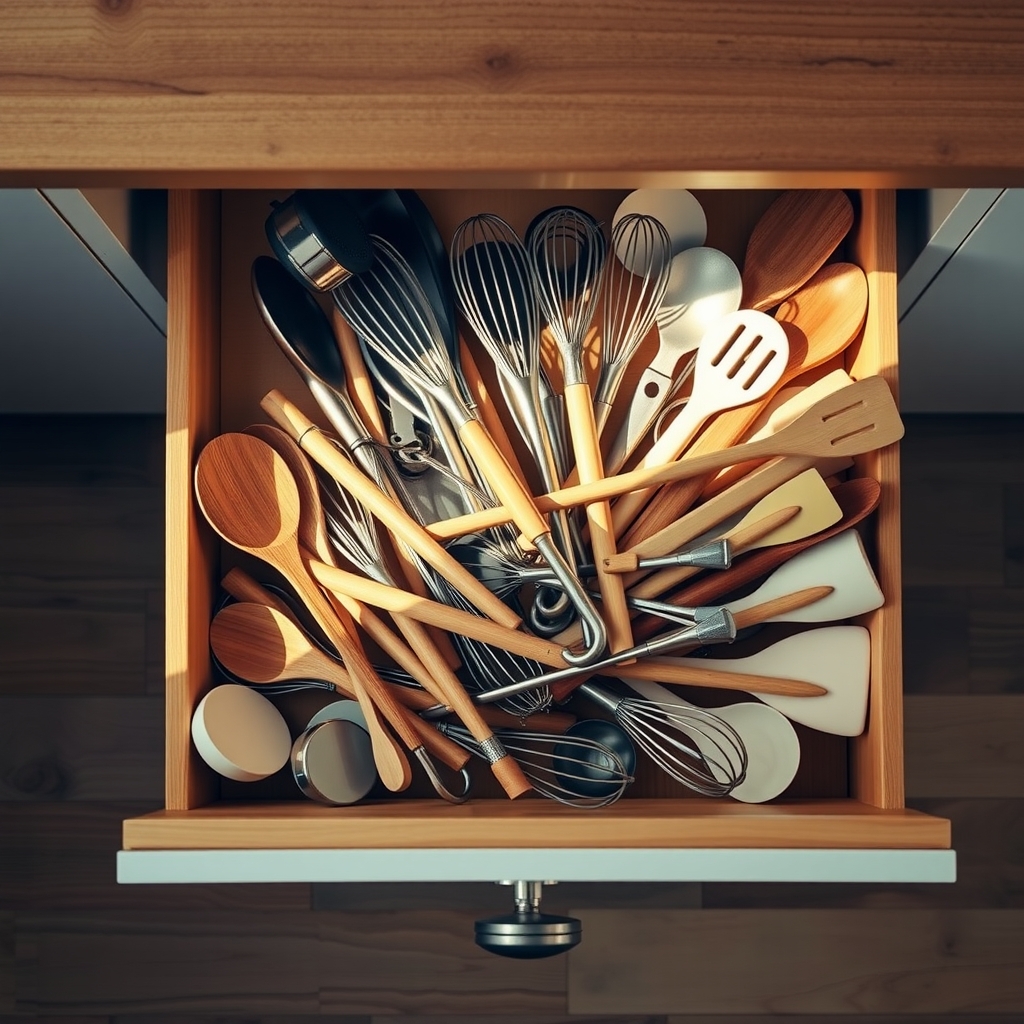
Kitchen Drawer Tool Organizer: Trays That End the Utensil Jumble
Read the fix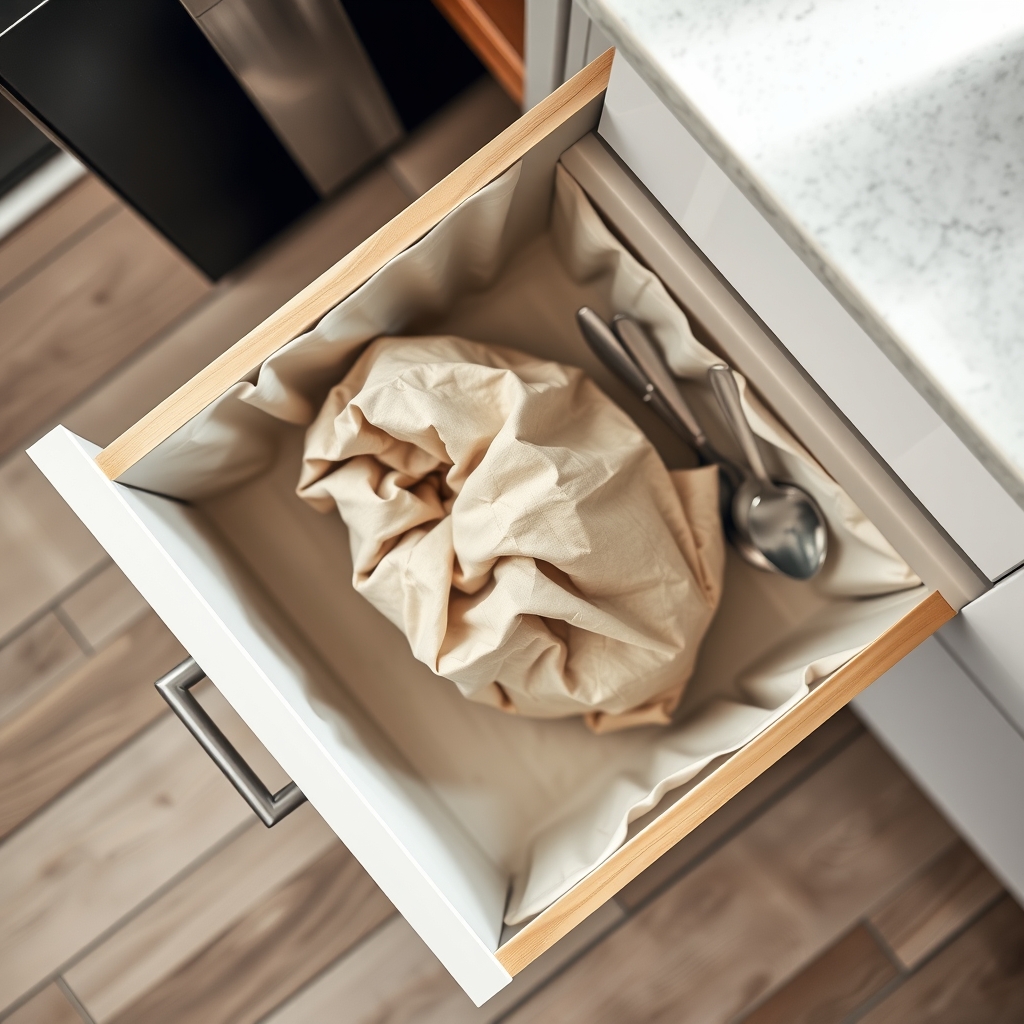 Free fix inside
Small Spaces & Storage · Drawer Organizing
How to Keep Kitchen Drawer Liners From Sliding: Grip Liners That Stay
Read the fix Free fix inside
Small Spaces & Storage · Kitchen Drawer
Kitchen Drawer Keeps Opening? Level It, Then Add a Catch
Read the fix Free fix inside
Small Spaces & Storage · Kitchen Drawer
Kitchen Drawer Keeps Falling Off Track? Reset It or Replace the Slides
Read the fixAs an Amazon Associate I earn from qualifying purchases. Affiliate disclosure