Lawn Mower Cutting Uneven? Dull or Unbalanced Blades Are Likely
Strips and ragged tips usually mean a dull, bent or unbalanced blade, or wheels at different heights. Check the free causes, then sharpen and balance.
By Jamilur Rahman Updated November 5, 2026 · 7 min read
- Time
- 45 min
- Cost
- Under $20
- Difficulty
- Medium
In this guide
Quick answer
Why is my lawn mower cutting uneven? Most often the blade is dull or bent, or the wheels sit at different heights. Set all four wheels to the same notch, check tire pressure and scrape the deck clean. That fixes uneven height for many people. If strips and ragged tips remain, sharpen and balance the blade. A sharpener and balancer set lets you do both at home.
Free fix vs. permanent fix
Level the wheels, clean the deck, check the blade
- Set all four wheels to the same height notch
- Check that the tires have matching pressure
- Scrape packed grass off the underside of the deck
- Look at the blade for bends, nicks and a rounded edge
How long it lasts: Corrects uneven height from wheels and clogs right away. A dull blade stays dull.

A blade sharpener and balancer set
A dull edge tears grass, and an unbalanced blade wobbles, so the cut height changes with each turn. Sharpening restores the edge. The balancer shows which end is heavy, so you grind until the blade hangs level.
What to get: Lawn mower blade sharpener and balancer set
How long it lasts: Season after season. You can touch up the blade at home instead of making a shop trip.
As an Amazon Associate I earn from qualifying purchases.
What you'll need
-
Work gloves
For handling the blade
You have it -
Socket wrench set
To remove the blade bolt
You have it -
Tape measure
For checking if the blade is bent
You have it -
Short piece of 2x4 wood
Wedged between the blade and deck to hold it still
Free - Our pick Illustration
Blade sharpener and balancer set
Often a drill attachment plus a cone or wall balancer
- Illustration
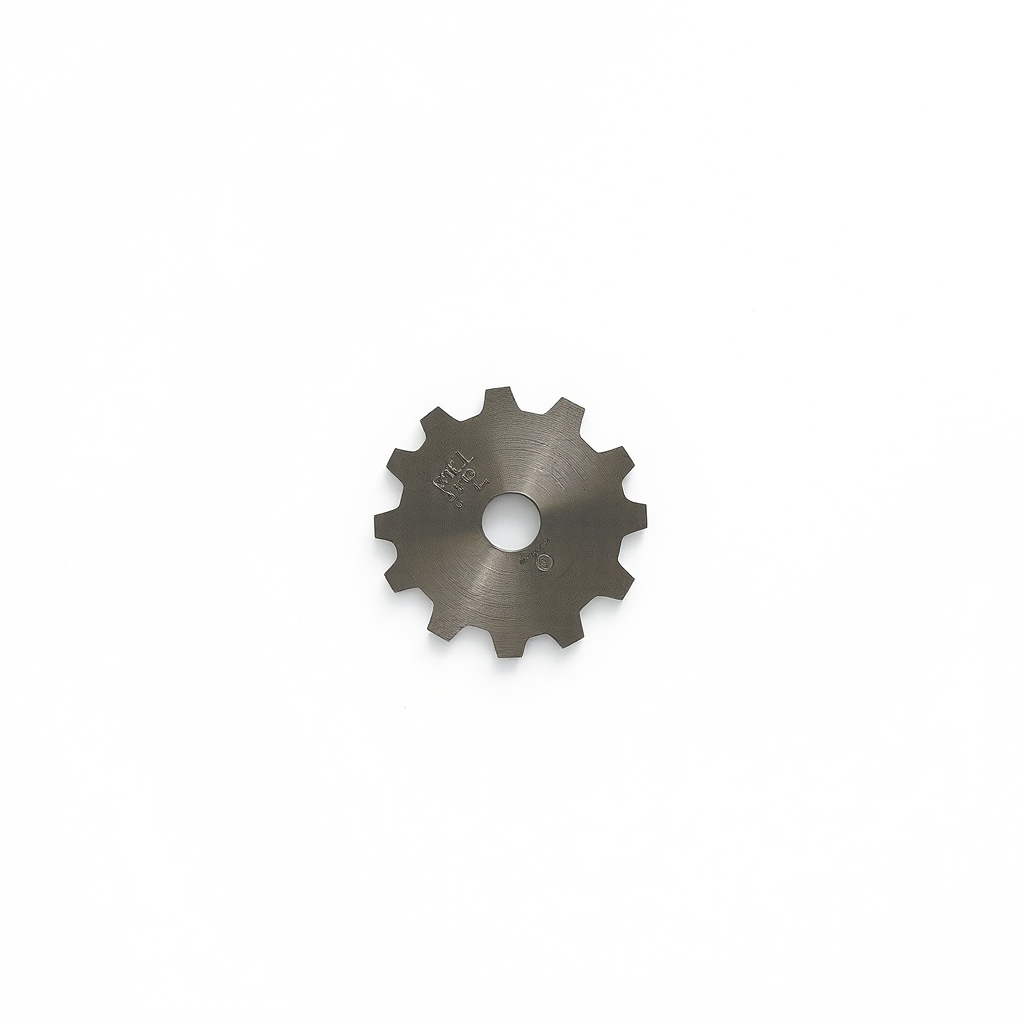
Mill file
A hand file for a patient, no-power sharpening job
- Illustration
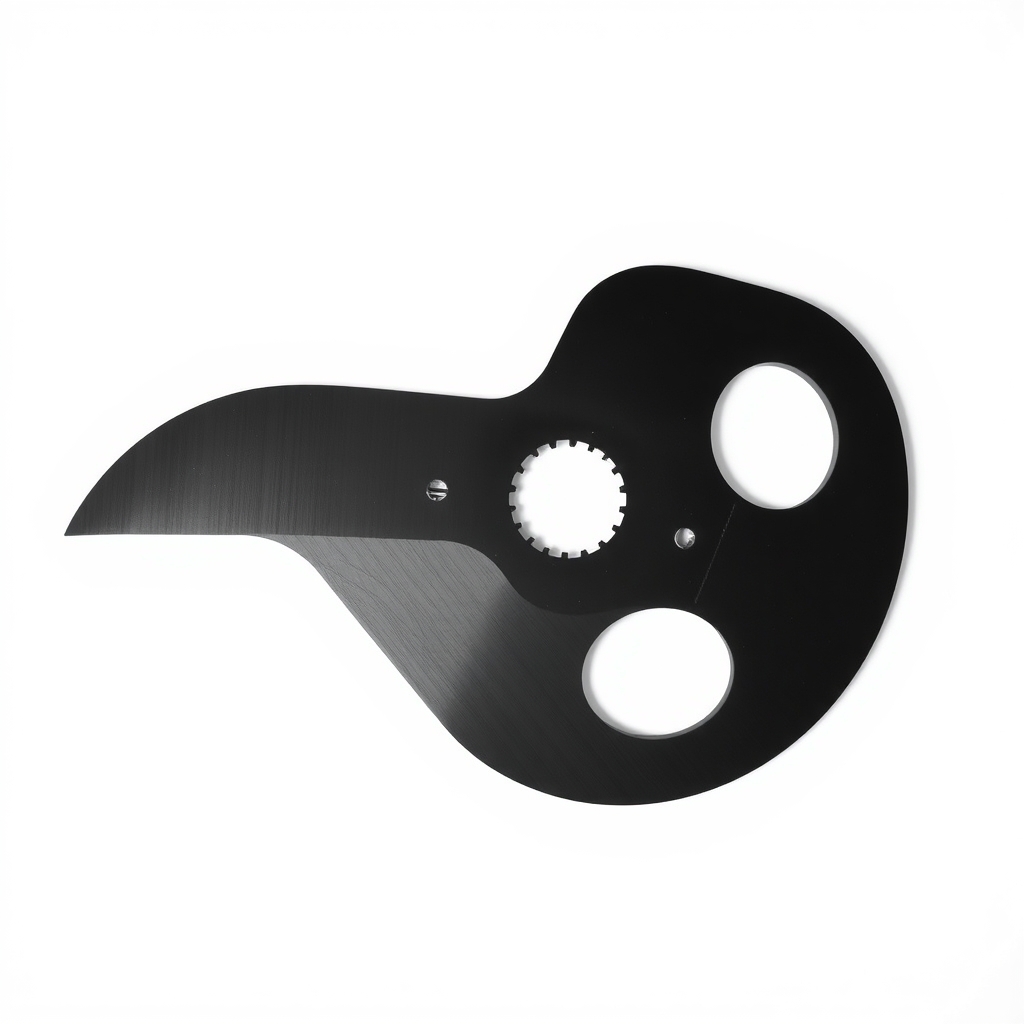
Replacement mower blade
For a bent, cracked or worn-out blade
Why it happens
A dull blade
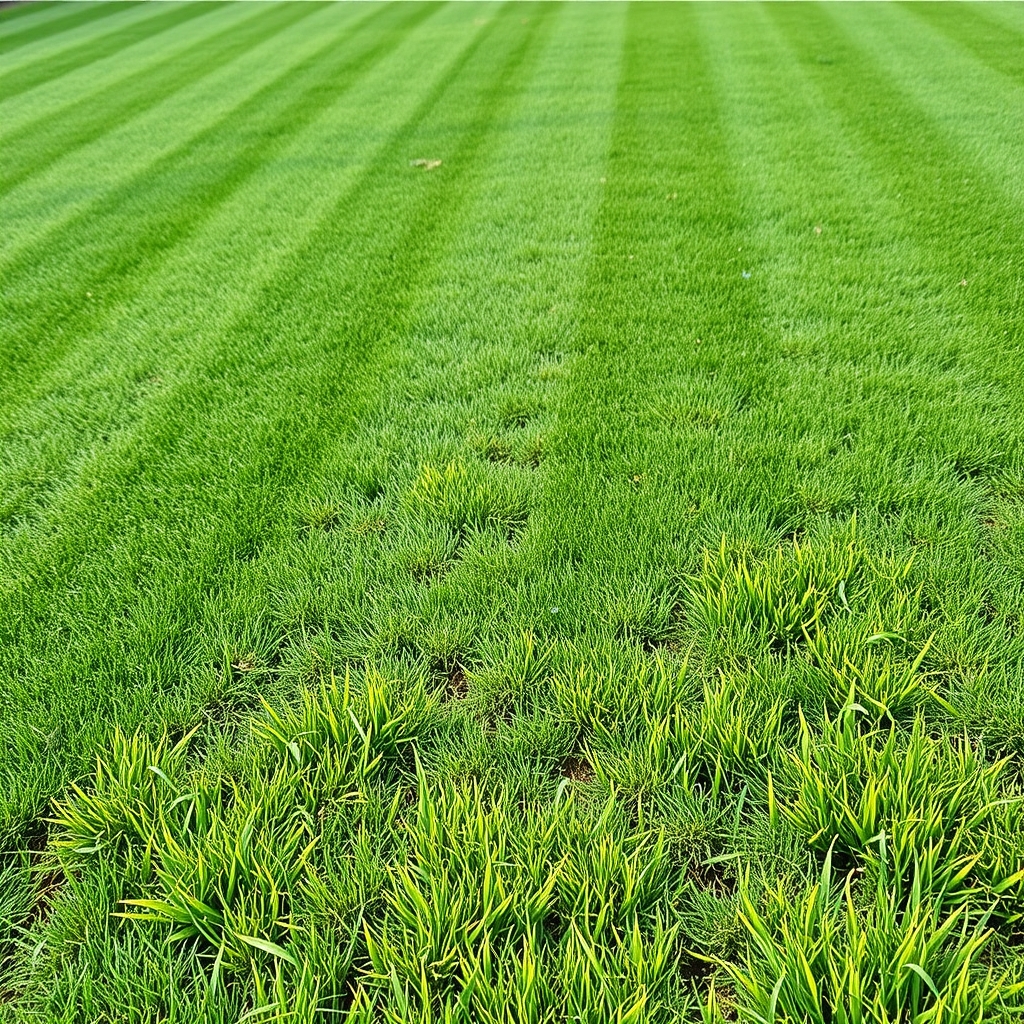
A dull edge rips grass instead of slicing it. You see pale, ragged tips and a patchy cut, mostly in thick spots.
A bent blade
A root, rock or curb can bend a blade slightly. One end then rides lower than the other and cuts a stripe or leaves a ridge.
An unbalanced blade
A blade ground unevenly, or nicked on one side, is heavier at one end. The mower shakes, the cut wobbles and the engine takes extra stress.
Wheels at different heights or a soft tire
Many mowers set each wheel on its own lever. A wheel one notch off tilts the deck. A low tire does the same.
A packed deck or a bumpy lawn
Grass caked under one side blocks airflow and lifts the grass unevenly. Bumps and dips scalp the high spots.
Try this first (free)
Do these in order, starting with the simplest.
-
Set all wheels to the same notch
Check each wheel lever, or the single height lever if you have one. Put every wheel on the same setting, then look at the deck from the front to see if it sits level.
-
Match the tire pressure
Inflate each tire to the pressure on its sidewall. Low or uneven tires tilt the deck and change the cut height.
-
Disconnect the spark plug and tip the mower
Tool used: Work glovesPull the spark plug wire, then tilt the mower with the air filter and carburetor facing up. Wear gloves and stay clear of the blade.
-
Measure the blade for a bend
Tool used: Tape measureTurn the blade so one tip points at the front edge of the deck and measure from the tip to the edge. Rotate to the other tip and measure again. If the numbers differ by more than about 1/8 inch, the blade is bent. Replace it.
-
Sharpen along the original edge
Tool used: Blade sharpener and balancer setRemove the bolt with the socket wrench, then clamp the blade in a vise. File or grind along the existing bevel until it shines, taking the same amount off both ends. Wear eye protection.
IllustrationCheck price on AmazonTool for this step
Blade sharpener and balancer set · Often a drill attachment plus a cone or wall balancer
-
Balance it before you refit it
Tool used: Blade sharpener and balancer setHang the blade on the balancer by its center hole. If one end drops, remove a little metal from that heavy end, not from the curved sail, until the blade sits level. Refit it with the markings facing the ground side and tighten to the torque in your manual.
IllustrationCheck price on AmazonTool for this step
Blade sharpener and balancer set · Often a drill attachment plus a cone or wall balancer
When free fixes aren't enough
If the blade is bent, cracked, deeply nicked or worn thin near the sail, do not sharpen it. Replace it. If a new, balanced blade still leaves a wavy cut or the mower shakes hard, the cause may be a bent blade adapter, a worn spindle or a bent deck, and that needs a shop. Stop mowing if the mower vibrates heavily or you feel a loose bolt, since a blade that comes loose can be thrown. For a blade in decent shape, the sharpener and balancer set saves you the trip.
Buy the fix
Still stuck after the free fixes? These are the products we would look at.
| Pick | Product | Fixes | Who it's for | Buy |
|---|---|---|---|---|
| Best pick | Lawn mower blade sharpener and balancer set | dull or out-of-balance blades that cut unevenly | Anyone with a bolt-on mower blade who wants to sharpen it at home each season. | Check price |
| Budget pick | Mill file for mower blades | a dull edge, if you do not mind doing it by hand | People who sharpen once a season and already own a vise. | Check price |
| Upgrade pick | Replacement mower blade | bent, cracked or worn-out blades | Anyone whose blade got bent on a root, or is worn thin. | Check price |
Lawn mower blade sharpener and balancer set
Fixes: dull or out-of-balance blades that cut unevenly
Look for: A drill-mounted or bench sharpener that holds a steady bevel; A cone or wall balancer to check the blade; Fits your blade's thickness and center hole.
- Who it's for
- Anyone with a bolt-on mower blade who wants to sharpen it at home each season.
- Honest downside
- Your blade is bent, cracked or thin. Replace it instead. Also skip it if you will never take the blade off.
Mill file for mower blades
Fixes: a dull edge, if you do not mind doing it by hand
Look for: A single-cut mill file about 10 inches long; A handle to protect your hand; A vise or clamp to hold the blade.
- Who it's for
- People who sharpen once a season and already own a vise.
- Honest downside
- The edge has deep nicks, or you want a balanced blade quickly.
Replacement mower blade
Fixes: bent, cracked or worn-out blades
Look for: A listing that matches your mower's model and deck size; The right length, center hole and bolt pattern; Hardened steel with a clean, even edge.
- Who it's for
- Anyone whose blade got bent on a root, or is worn thin.
- Honest downside
- You cannot confirm the part number for your mower.
As an Amazon Associate I earn from qualifying purchases. We don't show prices because they change, so use the button to see today's price.
How we picked: How we picked: this page is based on mower owner manuals, small-engine care guides and the problems and fixes owners report in reviews. We do not test products by hand.
Is it the blade or the lawn?
If the cut is uneven only on bumps and dips, the lawn is the cause, not the mower. Raise the deck a notch there. If the same strip is uneven on flat ground, or the grass tips look torn everywhere, look at the blade and wheels.
What to skip
Hammering a bent blade straight
Bending a blade back weakens the steel and rarely gets it true. Replace a bent blade. Also skip lowering the deck to hide uneven stripes, since it only scalps the high spots.
Frequently asked questions
How often should I sharpen my mower blade?
How do I know if my mower blade is dull?
Why does my mower cut uneven on one side?
Is it safe to sharpen a mower blade myself?
Related problems
 Free fix inside
Outdoor & Garage · Lawn Mower
Lawn Mower Leaving Clumps? Mulching Blades and Dry Grass
Read the fix Free fix inside
Outdoor & Garage · Lawn Mower
Lawn Mower Smoking? Overfilled Oil Is Where to Look
Read the fix Free fix inside
Outdoor & Garage · Lawn Mower
Lawn Mower Keeps Dying? Dirty Fuel Is the Usual Suspect
Read the fix Free fix inside
Outdoor & Garage · Lawn Mower Parts
Lawn Mower Belt Slipping? Check the Wear, Then Swap It
Read the fixAs an Amazon Associate I earn from qualifying purchases. Affiliate disclosure