Garden Tool Storage: Wall Racks That Free the Shed Floor
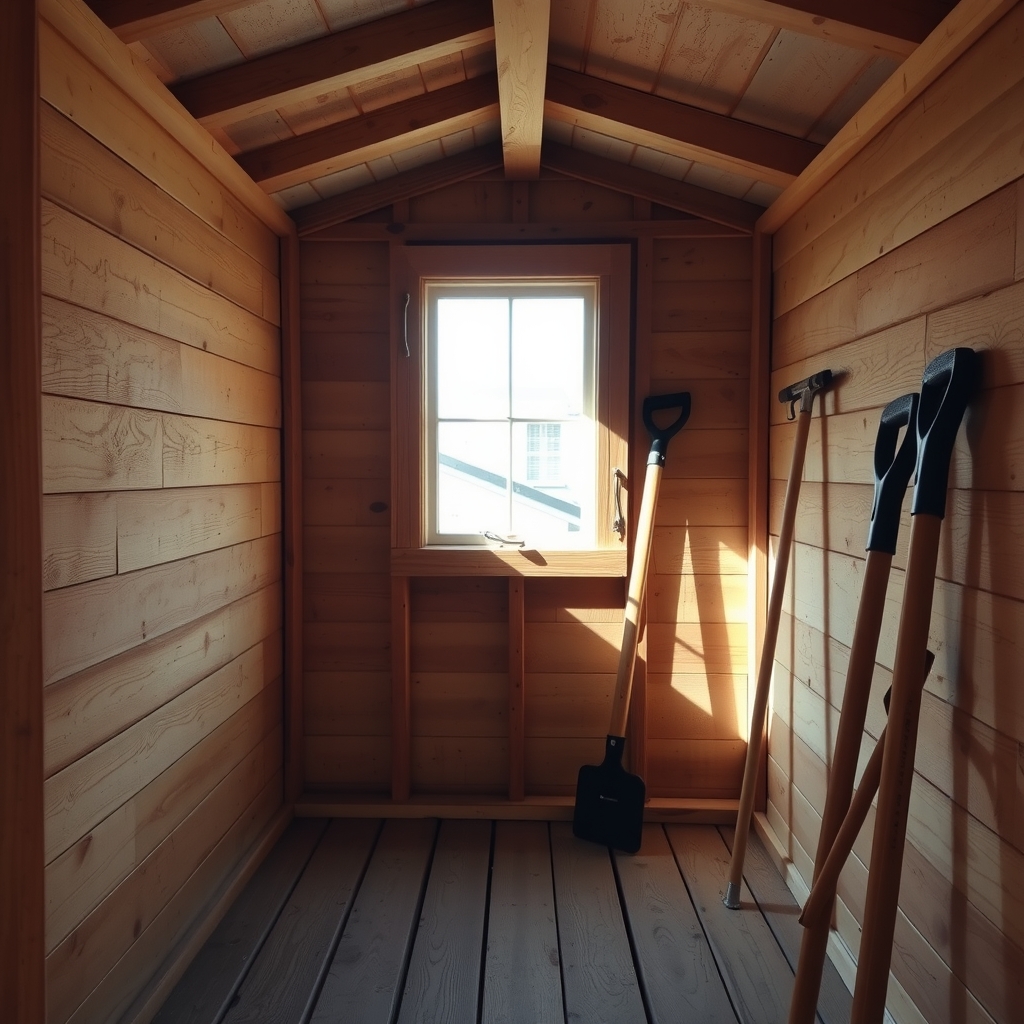
Tools piled on the floor rust, tangle and trip you. Sort and clean them first, then hang them on a wall rack so every handle has its own spot.
By Jamilur Rahman Updated November 5, 2026 · 6 min read
- Time
- 1-2 hours
- Cost
- $20-$50
- Difficulty
- Medium
In this guide
Quick answer
Garden tools take over a shed floor because long handles have nowhere to go but a leaning pile. Sort and clean them first, then hang them. A wall-mounted rail with hooks and tool holders gets shovels, rakes, hoes and shears off the floor in an afternoon. Screw it into studs or the right anchors for your wall, and the floor stays clear.
Free fix vs. permanent fix
Sort, clean and bin them
- Pull everything out and toss anything broken or rusted through
- Wipe off soil and dry the metal to stop rust
- Stand long handles in a trash can with the heads up
- Keep hand tools in a bucket of sand with a little oil
How long it lasts: Weeks. Leaning tools slide back into a heap as soon as you pull one out.
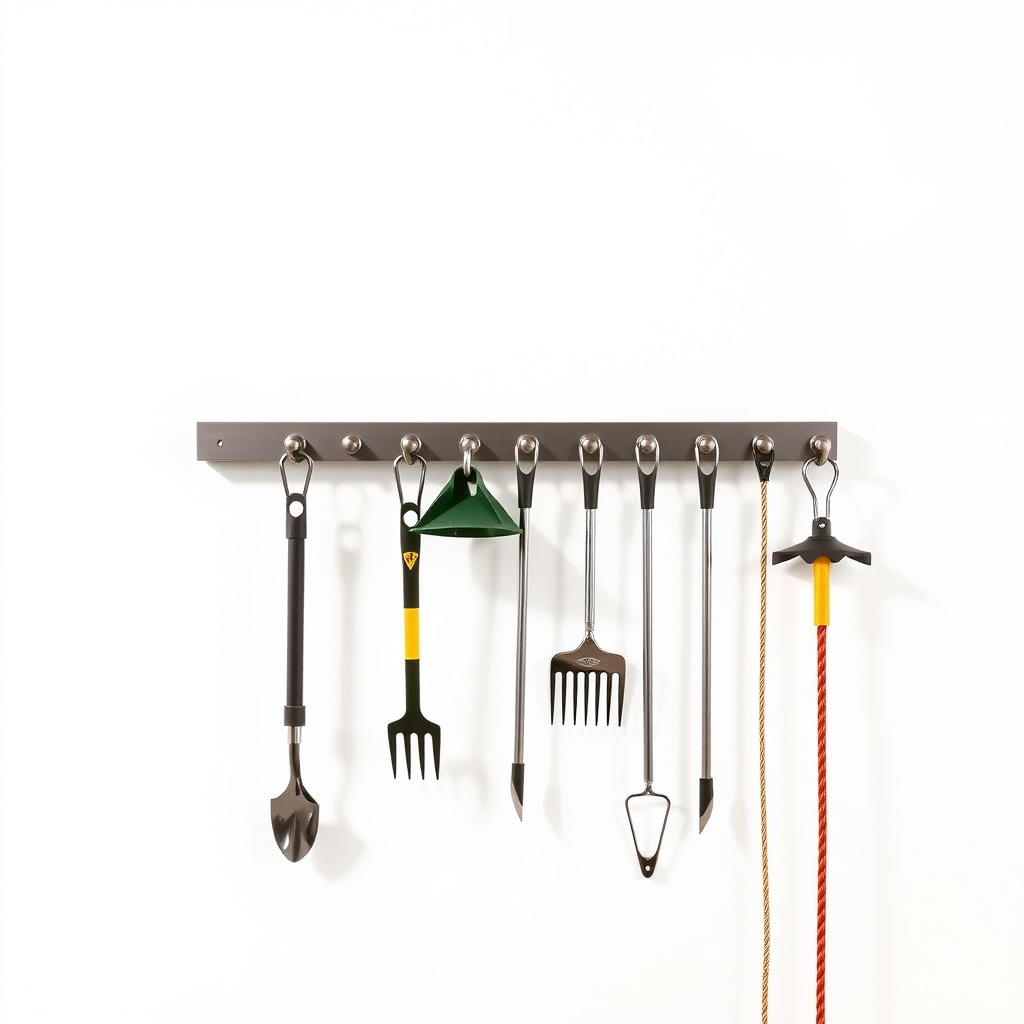
A wall-mounted rail with hooks and tool holders
Floor storage fails because leaning tools slip and tangle. A rail holds each handle at a fixed point, and the hooks slide along it, so you can add or move tools without drilling new holes.
What to get: Wall-mounted garden tool rail with sliding hooks and holders
How long it lasts: Years. Every tool has a fixed spot, so the floor stays empty.
As an Amazon Associate I earn from qualifying purchases.
What you'll need
-
Trash can or bucket
A short-term home for long handles
You have it -
Wire brush and rag
For soil and light rust
You have it -
Drill and stud finder
To mount into studs, not just thin siding
You have it - Our pick Illustration
Wall-mounted garden tool rail with hooks
The main fix for long-handled tools
- Illustration
Spring-clip wall tool holders
A cheaper option for a few tools
Why it happens
Long handles with nowhere to hang
A rake or shovel is 4 to 6 feet long and has an awkward shape. With no hook, it leans, slides and tangles with the next tool.
Small tools that get buried
Trowels, shears and hand forks sink to the bottom of a pile. You buy a second one rather than dig for the first.
Damp tools stacked together
Wet soil stays on the blade in a pile, and tools touching a damp floor rust sooner.
An unused wall
Many people skip the wall because they are not sure what it can hold. Studs, plywood and block walls can all carry a rail with the right screws.
Try this first (free)
Do these in order, starting with the simplest.
-
Empty the shed and sort
Pull every tool onto the lawn. Toss cracked handles and rusted-through blades, and keep one of each tool you actually use. The less you hang, the better the wall looks.
-
Clean and dry each tool
Tool used: Wire brush and ragScrape off soil, brush off flaking rust, dry the metal and wipe on a thin film of oil. A tool stored clean stays sharp and rust free much longer.
-
Stand the long ones in a bin for now
Tool used: Trash can or bucketPut long handles heads-up in a trash can or bucket against a wall so they stop sliding. This gives you a clear floor while you plan the wall.
-
Find the studs and mark the line
Tool used: Drill and stud finderFind studs or the framing behind the wall. Aim for a rail that spans at least two studs, high enough that handle ends clear the floor, with your most-used tools at chest height.
-
Mount the rail and hang the heaviest tools first
Tool used: Wall-mounted garden tool rail with hooksScrew the rail in with the screws the instructions call for. Hang the heaviest tools toward the ends, hand tools in the middle, and give each a firm pull to test it.
IllustrationCheck price on AmazonTool for this step
Wall-mounted garden tool rail with hooks · The main fix for long-handled tools
When free fixes aren't enough
A bucket or bin works for a few tools, but long handles lock together and heads end up on the floor where someone steps on them. If you own more than five or six long-handled tools, or have ever snagged a hoe pulling it out of a pile, a wall rack is the fix. It uses wall space you are not using, keeps blades off damp ground and lets you see every tool at a glance. Check your wall first, because some thin shed walls cannot carry a heavy rack.
Buy the fix
Still stuck after the free fixes? These are the products we would look at.
| Pick | Product | Fixes | Who it's for | Buy |
|---|---|---|---|---|
| Best pick | Wall-mounted garden tool rail with sliding hooks and holders | tools piled on the floor and long handles tangling together | Most sheds and garages with a stud, plywood or masonry wall, and anyone with six or more long-handled tools. | Check price |
| Budget pick | Spring-clip wall tool holders | a few long-handled tools leaning in one corner | A small collection and a small budget, mounted along a single stud. | Check price |
| Upgrade pick |  Heavy-duty track or slatwall tool system | a large, mixed collection of tools, hoses and ladders in one place | A garage or large shed with a full wall to fill and many tools. | Check price |
Wall-mounted garden tool rail with sliding hooks and holders
Fixes: tools piled on the floor and long handles tangling together
Look for: A steel rail or track that screws into studs, not just thin panels; Holders or clips sized for common 1 to 1.5 inch handles; Hooks you can slide along the rail; A stated weight rating that covers your heaviest tool.
- Who it's for
- Most sheds and garages with a stud, plywood or masonry wall, and anyone with six or more long-handled tools.
- Honest downside
- Your shed wall is thin metal or resin that cannot take screw loads. Use a floor-standing rack instead.
Spring-clip wall tool holders
Fixes: a few long-handled tools leaning in one corner
Look for: Spring clips that grip round handles; Sturdy plastic or steel that does not crack in the cold; Mounting screws included.
- Who it's for
- A small collection and a small budget, mounted along a single stud.
- Honest downside
- Your tools have oversized, flat or odd-shaped handles. Clips grip round handles best.
Heavy-duty track or slatwall tool system
Fixes: a large, mixed collection of tools, hoses and ladders in one place
Look for: Panels or tracks rated for the weight of full tools; Hooks and baskets that lock into the track; Room to add more hooks later.
- Who it's for
- A garage or large shed with a full wall to fill and many tools.
- Honest downside
- Your shed is small. A single rail does the job for less.
As an Amazon Associate I earn from qualifying purchases. We don't show prices because they change, so use the button to see today's price.
How we picked: How we picked: this page is based on shed and garage storage guides, mounting instructions from rack makers, and the problems and fixes people report in reviews. We do not test products by hand.
Check your wall before you buy
- Wood studs or plywood: screw the rail into studs. Plywood alone can work for light loads.
- Masonry or block: use masonry anchors rated for the load.
- Thin metal shed: add a wood backer board and bolt through it.
- Resin or plastic shed: use only the maker's accessory rails and weight limits.
What to skip
Nails and light hooks in thin siding
A few nails in thin shed siding hold light tools until a wet shovel pulls them out. Skip hooks that rely on thin panels or drywall anchors alone. Use screws into studs or the correct anchors for your wall.
Frequently asked questions
How do I store garden tools so they do not rust?
How high should I hang a garden tool rack?
Should garden tools hang heads up or down?
Can I mount a rack on a metal or plastic shed?
Related problems
As an Amazon Associate I earn from qualifying purchases. Affiliate disclosure