Kitchen Trash Can Always Smells? Why It Happens and What Lasts
The smell comes from residue in the can, not only the trash. Scrub it out, change how you bag scraps, then add a carbon filter lid to hold odor in.
By Jamilur Rahman Updated November 5, 2026 · 7 min read
- Time
- 30 min
- Cost
- $50-$150
- Difficulty
- Easy
In this guide
Quick answer
A kitchen trash can smells when liquid and food residue sit in the bottom of the can, the bag leaks, and the lid lets odor out every time it opens. Scrub the can with hot soapy water, dry it fully, and keep meat and fish scraps in the freezer until trash day. If the smell keeps returning, a can with a closing lid and a carbon filter holds the odor in.
Free fix vs. permanent fix
Deep-clean the can and change the habits
- Empty the can and scrub the inside with hot soapy water
- Dry it fully in the sun or with a towel
- Sprinkle baking soda in the bottom
- Freeze fish and meat scraps until trash day
How long it lasts: A few weeks if you keep up the habits. The smell returns when liquid soaks past the bag again and the lid lets odor out.
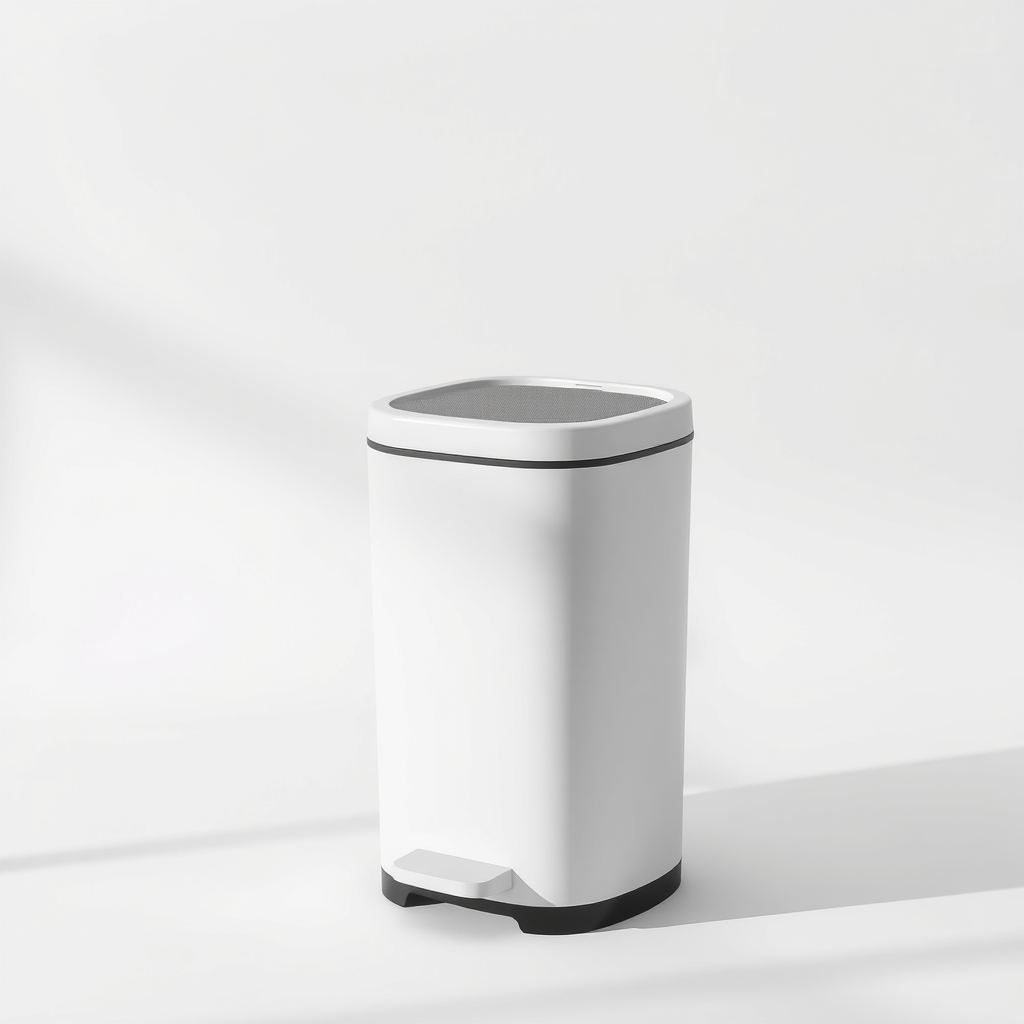
A step can with a carbon filter lid
Smell is gas that escapes every time the lid opens and through any gap. A closing lid with an activated carbon filter traps odor molecules as air passes through it. Cleaning removes today's smell, and the lid handles what the next bag brings.
What to get: Step trash can with a carbon filter lid
How long it lasts: As long as you swap the filter on the maker's schedule, often every few months.
As an Amazon Associate I earn from qualifying purchases.
What you'll need
-
Dish soap and a scrub brush
For cleaning the can and the underside of the lid
You have it -
Baking soda
A light layer in the bottom soaks up moisture and odor
You have it -
Freezer bag or container
Keeps fish, meat and bones frozen until trash day
Free - Illustration
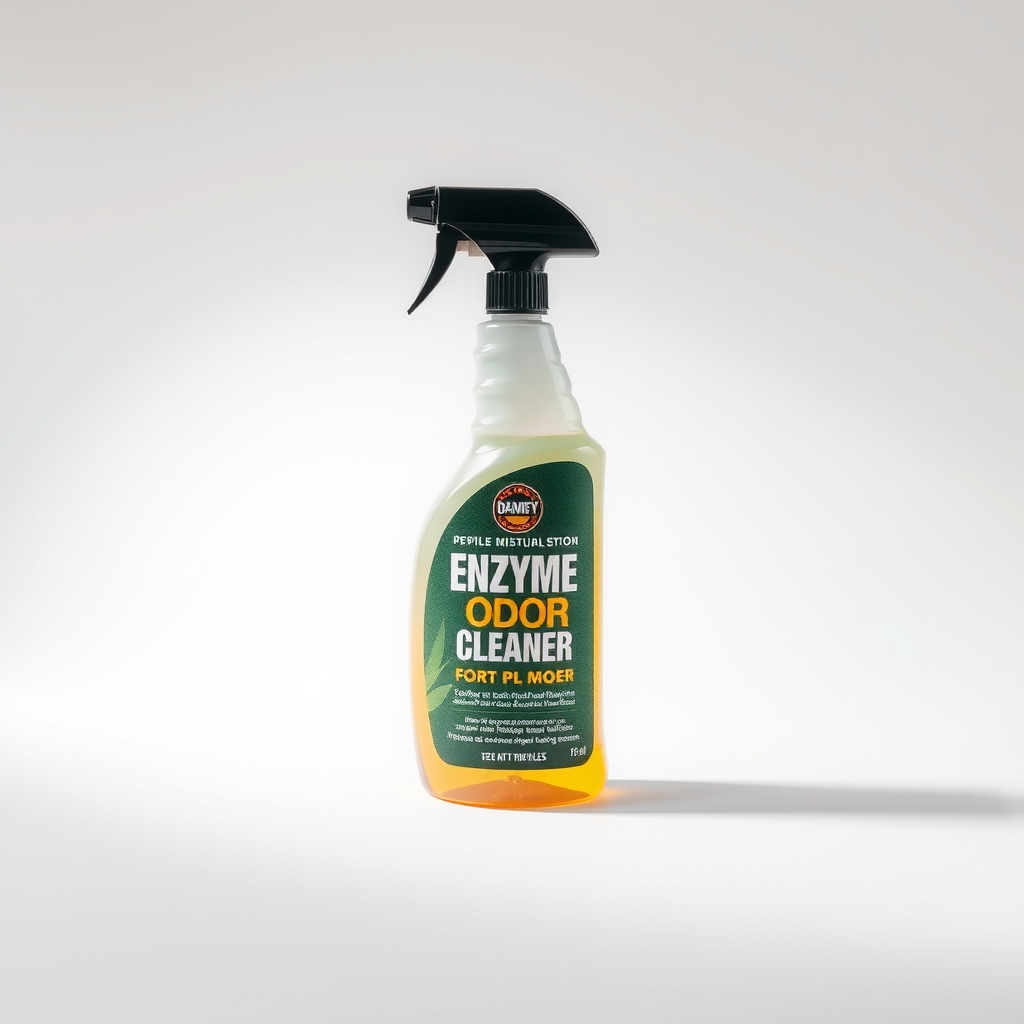
Enzyme odor cleaner
Breaks down the residue that soap can leave behind
- Our pick Illustration
Trash can with a carbon filter lid
A closing step can with a replaceable filter
- Illustration
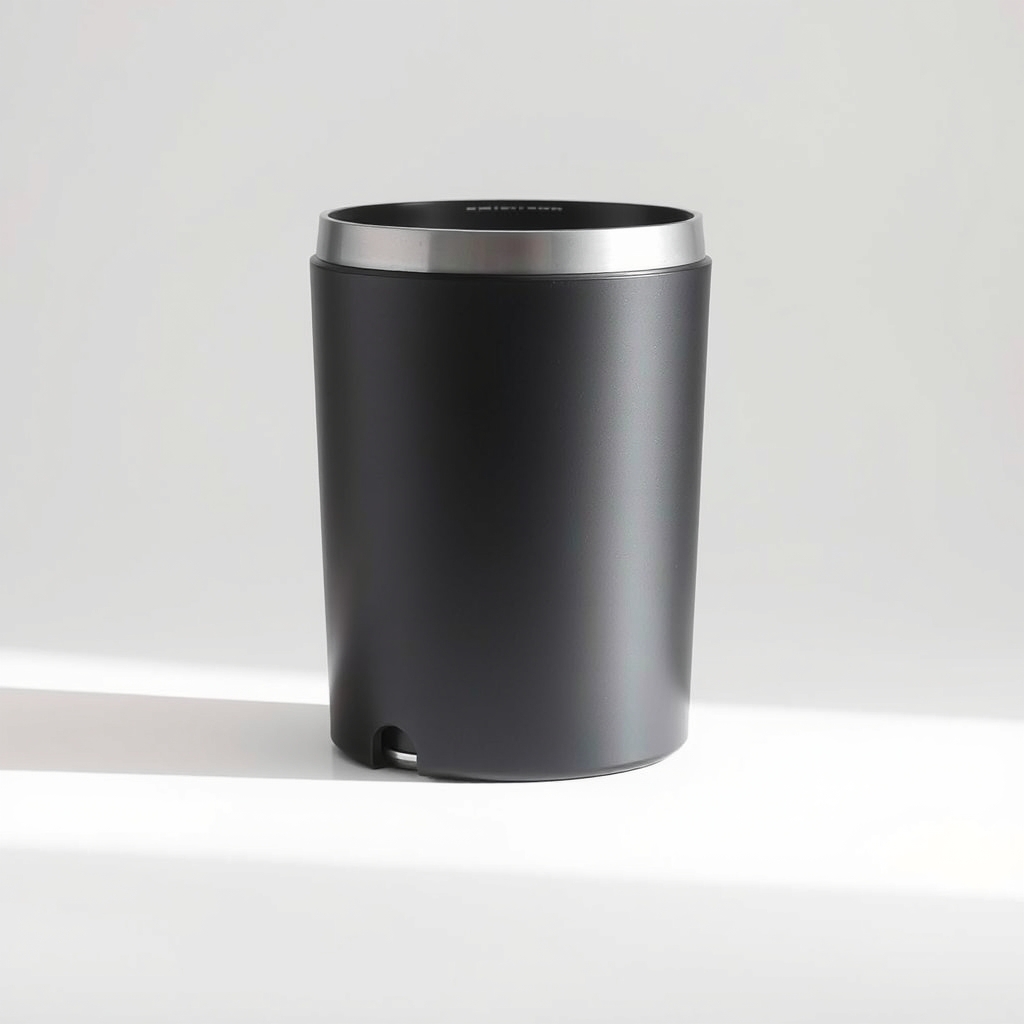
Countertop food scrap bin with carbon filter
Keeps the smelliest scraps out of the main can
Why it happens
Liquid and residue in the bottom of the can
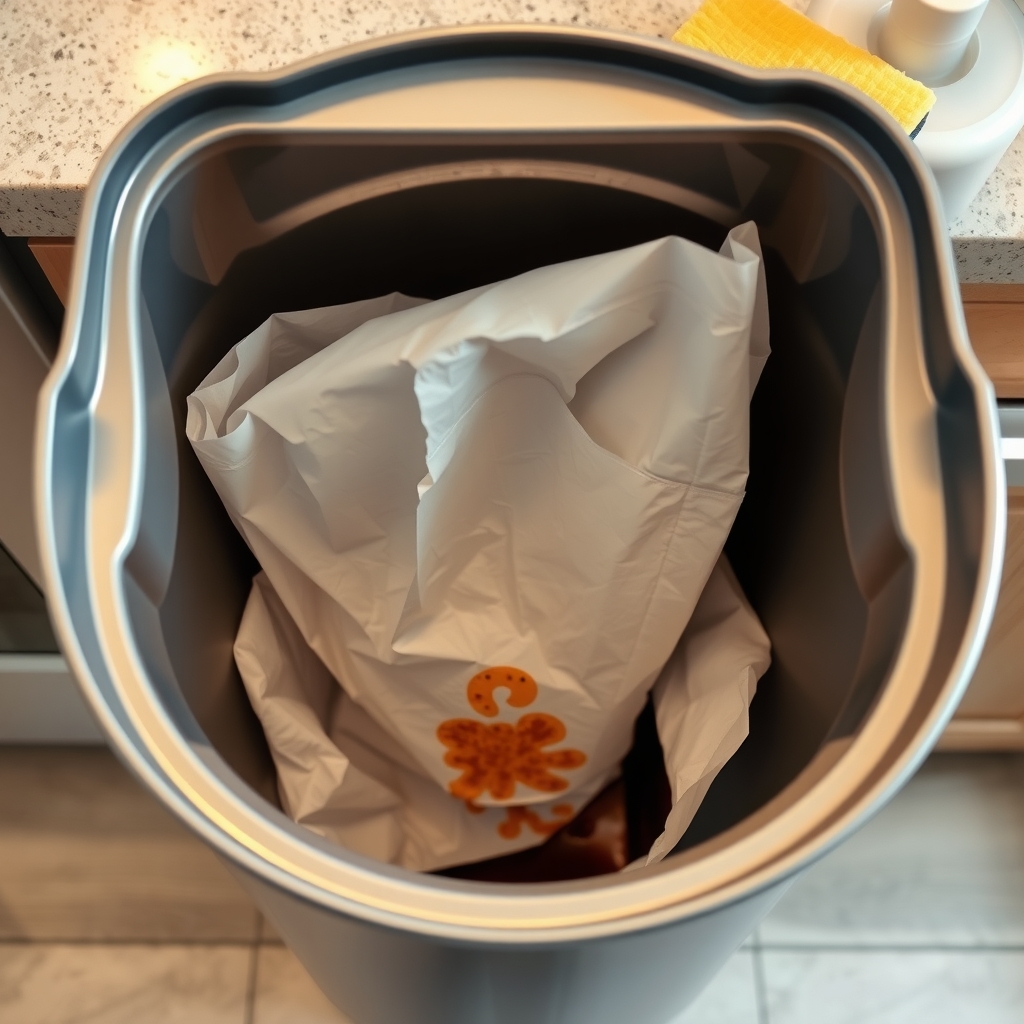
Bags leak small amounts of liquid from food. It pools under the bag and grows bacteria. That film is often what you smell even when the can is empty.
Food scraps sitting too long
Meat, fish, dairy and cooked food start to rot in a day or two in a warm kitchen. Emptying the can only when it is full lets the smell build.
A lid that lets the smell out
Open-top cans and loose lids let odor drift into the room all day. Each time the lid opens, a puff of smell comes out.
A liner that is too thin or does not fit
Thin bags tear on bones and sharp edges. A bag that does not fit the can flaps and leaves gaps where liquid slips down the side.
The can is not the only source
A smelly sink drain, garbage disposal, dishwasher filter, fridge or dirty dishcloth can make the whole kitchen smell like garbage. If the can is clean and the smell stays, check those.
Try this first (free)
Do these in order, starting with the simplest.
-
Empty the can and wash it out
Tool used: Dish soap and a scrub brushTake the can outside, tip out the bag and scrub the inside with hot water and dish soap. Do the bottom, the corners and the underside of the lid. Rinse with a hose or in the tub.
-
Clean away the residue
Tool used: Enzyme odor cleanerWipe the inside with an enzyme cleaner, or a half-and-half mix of white vinegar and water. Never mix vinegar with bleach or ammonia. Let the can dry fully in the sun, because trapped water brings the smell back.
IllustrationCheck price on AmazonTool for this step
Enzyme odor cleaner · Breaks down the residue that soap can leave behind
-
Soak up moisture at the bottom
Tool used: Baking sodaSprinkle a thin layer of baking soda in the bottom, or lay a folded paper towel under the bag to catch leaks. Replace either one each time you change the bag.
-
Freeze the worst scraps
Tool used: Freezer bag or containerPut fish, meat trimmings and bones in a freezer bag or tub, and drop them in the trash on pickup day. They cannot rot while frozen.
-
Bag smarter
Use a liner that fits the can, tie it tight and take it out every 2 to 3 days in summer, or as soon as it smells. Double-bag anything that leaks.
-
Move to a can with a carbon filter lid
Tool used: Trash can with a carbon filter lidIf a clean can with good habits still smells, the lid is the leak. Use a can that closes fully and holds a carbon filter, and replace the filter as the maker advises.
IllustrationCheck price on AmazonTool for this step
Trash can with a carbon filter lid · A closing step can with a replaceable filter
When free fixes aren't enough
Cleaning and smarter bagging fix most kitchen trash smells, and many kitchens need nothing more. If you cook meat and fish often, have a small kitchen, live somewhere warm or the can sits open next to the stove, the smell comes back within days. That is where a closing lid with a carbon filter earns its place, since it traps the odor you cannot stop making. It does not replace cleaning. A can with soaked residue still smells, and a filter that is used up does nothing.
Buy the fix
Still stuck after the free fixes? These are the products we would look at.
| Pick | Product | Fixes | Who it's for | Buy |
|---|---|---|---|---|
| Best pick | Step trash can with a carbon filter lid | odor escaping from the can into the kitchen | Anyone who has cleaned the can and still smells it. | Check price |
| Budget pick | Countertop food scrap bin with a carbon filter | smelly food scraps that sit in the main trash can | Small kitchens, or cooks with lots of peels, coffee grounds and leftovers. | Check price |
Step trash can with a carbon filter lid
Fixes: odor escaping from the can into the kitchen
Look for: A lid that closes fully, with a carbon filter built in; Replacement filters that are easy to buy; A removable inner bucket for easy cleaning; A size that fits the bags you buy.
- Who it's for
- Anyone who has cleaned the can and still smells it.
- Honest downside
- The smell comes from the sink, the disposal or the fridge. A new can will not fix that.
Countertop food scrap bin with a carbon filter
Fixes: smelly food scraps that sit in the main trash can
Look for: A tight lid with a replaceable charcoal filter; A liner or bucket you can wash; A size that holds a day or two of scraps.
- Who it's for
- Small kitchens, or cooks with lots of peels, coffee grounds and leftovers.
- Honest downside
- You rarely have food scraps, or you cannot empty a small bin every day or two.
As an Amazon Associate I earn from qualifying purchases. We don't show prices because they change, so use the button to see today's price.
How we picked: How we picked: this page is based on food-safety and household cleaning guides, trash can maker instructions on carbon filters, and the problems and fixes people report in owner reviews. We do not test products by hand.
How to keep your kitchen trash can from smelling: a 3-minute weekly routine
- Every bag change: wipe the inside of the can and lid with a damp cloth, and put in fresh baking soda or a paper towel.
- Once a week: wash the can with hot water and dish soap, and dry it.
- Once a month: use an enzyme cleaner and leave the can in the sun for an hour.
- Every few months: replace the carbon filter.
Why does my kitchen smell like garbage? Check these spots first
- Sink drain: food film collects in the pipe. See the page on a smelly sink.
- Garbage disposal: food stuck under the splash guard rots.
- Fridge: forgotten leftovers and a dirty drip pan.
- Dishcloth and sponge: wet cloth that stays damp goes sour in a day.
What to skip
Scented bags, sprays and room fresheners
Perfume masks the smell for a few hours but leaves the residue and the bacteria in the can. Scent mixed with garbage often smells worse. Remove the cause, which is the liquid, the residue and the open lid.
Frequently asked questions
Why does my kitchen trash can smell bad even when it is empty?
How do I remove odor from a kitchen trash can for good?
How do I stop my trash can from smelling in summer?
Why does my kitchen smell like garbage when the can is clean?
How often should I replace a carbon filter?
Related problems
 Free fix inside
Kitchen · Kitchen Trash Can
Keep Your Dog Out of the Kitchen Trash Can: Latching Cans That Work
Read the fix Free fix inside
Kitchen · Kitchen Trash Can
How to Hide a Trash Can in the Kitchen: 3 Setups for Any Layout
Read the fix Free fix inside
Kitchen · Kitchen Trash Can
Flies in the Kitchen Trash Can? Tight Lids and Habits That Stop Them
Read the fix Free fix inside
Kitchen · Kitchen Trash Can
Kitchen Trash Can That Holds the Bag in Place: 3 Picks With a Grip Rim
Read the fixAs an Amazon Associate I earn from qualifying purchases. Affiliate disclosure