How to Stop an Oven Door From Squeaking (5-Minute Hinge Fix)
A squeaky oven door is nearly always a dry hinge. Cool the oven, clean the hinge and add a high-temperature, food-safe grease that will not burn off.
By Jamilur Rahman Updated November 5, 2026 · 6 min read
- Time
- 10 min
- Cost
- Under $20
- Difficulty
- Easy
In this guide
Quick answer
To stop an oven door from squeaking, grease the hinges. The noise is dry metal sliding on metal where the hinge arms pivot and slide. With the oven cool, wipe the hinge clean and add a small amount of high-temperature, food-safe grease, then swing the door open and shut about ten times. Cooking oil and household spray lubricants burn off or turn gummy near oven heat, so an oven-grade grease is what makes the fix last.
Free fix vs. permanent fix
Clean the hinges and check for rubbing
- Make sure the oven is off and fully cool
- Wipe the hinge arms and slots with a damp cloth
- Check that the door is not rubbing the frame
- Tighten any loose screws you can see
How long it lasts: Short-lived. Wiping off grit may quiet the squeak for a while, but dry metal squeaks again.

High-temperature, food-safe hinge grease
A squeak means the metal has lost its lubricant. A grease rated for oven heat and made for incidental food contact stays on the hinge, where thin oils and sprays burn off. It is the one thing that actually fixes a dry hinge.
What to get: High-temperature food-safe grease
How long it lasts: Usually a year or more, though it depends on the oven and how often you cook and clean.
As an Amazon Associate I earn from qualifying purchases.
What you'll need
-
Paper towels
For wiping the hinge and the extra grease
You have it -
Cotton swabs
Place a small dab exactly where it is needed
You have it -
Flashlight
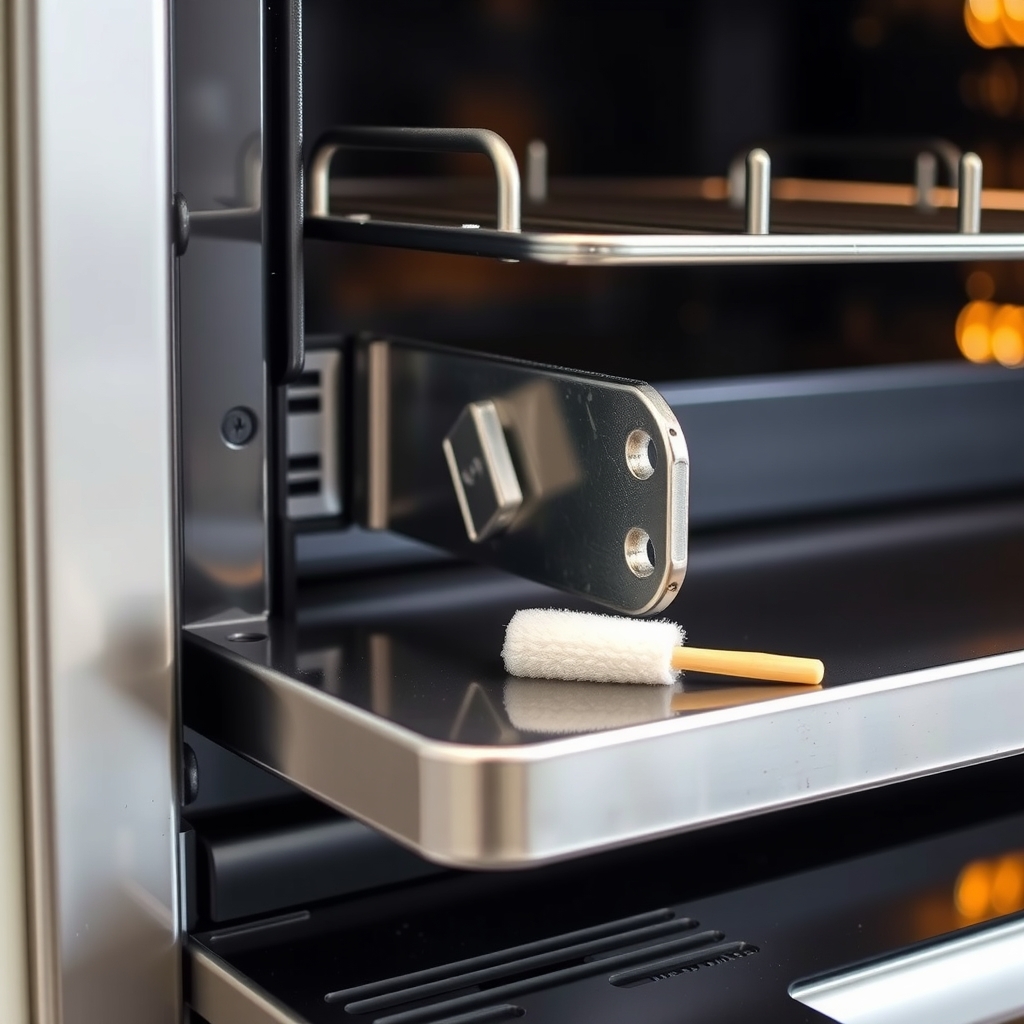
Shows the hinge arm and its slot
You have it - Our pick Illustration
High-temperature food-safe grease
Look for a food-grade rating and an oven-range temperature rating
Why it happens
Dry hinge pivots
Oven hinges are steel arms that pivot and slide. Heat dries out the factory grease over time, and bare metal on metal squeaks.
Grit and baked-on grease in the hinge
Dust, crumbs and old grease collect in the hinge slot. They act like sandpaper and add to the noise.
A hinge spring or roller that is rubbing
Springs and sliding parts behind the front frame wear down. A dry one groans when the door opens and closes.
A door that sits a little crooked
Loose hinge screws or a slightly misaligned door can scrape the frame, the gasket or the glass and sound like a squeak.
Try this first (free)
Do these in order, starting with the simplest.
-
Let the oven cool and open the door all the way
Turn the oven off and wait until the door and frame are cool to the touch. Open the door fully so the hinge arms at the bottom corners come into view.
-
Wipe away dirt and old grease
Tool used: Paper towelsWipe the hinge arm, the pivot points and the edge of the slot it slides into with a damp paper towel. Dry them. Grease will not grip a dirty surface.
-
Put a small dab of grease on each pivot
Tool used: High-temperature food-safe greaseUse a cotton swab to put a pea-sized amount on each pivot and on the part of the hinge arm that slides into the frame. A little goes a long way. Keep it off the glass and the door gasket.
IllustrationCheck price on AmazonTool for this step
High-temperature food-safe grease · Look for a food-grade rating and an oven-range temperature rating
-
Work it in and wipe the extra
Tool used: Cotton swabsSwing the door open and shut about ten times so the grease spreads into the joint. Wipe off any extra so it cannot drip or catch crumbs.
-
Check that the door sits square
Tool used: FlashlightClose the door and shine a light around its edges. If it rubs the frame or looks crooked, snug any loose screws. If it will not close squarely, see the hinge repair page.
When free fixes aren't enough
Grease will not fix a worn or broken part. If the door still squeaks or grinds after greasing, sags when open, drops shut, will not stay closed or leaves a gap, a hinge spring or arm is probably worn out. Those springs are under tension and can snap, so follow the model's repair steps or call a technician. If you smell gas or something burning, or see sparks, turn the oven off and call a pro. For a plain dry squeak, the right grease is the whole fix.
Buy the fix
Still stuck after the free fixes? These are the products we would look at.
High-temperature food-safe grease
Fixes: a dry, squeaking oven hinge
Look for: A food-contact rating on the label, such as NSF H1; A stated temperature range that reaches well above your oven's top setting; A paste or grease, not a thin spray that drips off a vertical hinge; A small tube, syringe or jar, so you can place a tiny dab.
- Who it's for
- Anyone whose oven door squeaks when it opens or closes.
- Honest downside
- The door sags, will not stay closed or has a broken spring. Grease cannot fix a worn part.
As an Amazon Associate I earn from qualifying purchases. We don't show prices because they change, so use the button to see today's price.
How we picked: How we picked: this page is based on oven owner manuals, appliance repair guides, lubricant makers' labels for food-grade, high-temperature greases, and what owners report in reviews. We do not test products by hand.
Where to put the grease
- At the pivot where the hinge arm meets the bottom of the door.
- On the part of the hinge arm that slides into the oven frame.
- On any visible hinge spring contact point or roller in the slot.
Use only a small dab at each spot. Extra grease just drips and collects crumbs.
When the squeak is not the hinge
- The door brushes the frame or the glass edge. Look for shiny or scuffed spots.
- The gasket is rubbing as the door closes.
- A loose rack or tray inside the oven is rattling.
- The cooling fan is making a squeal, not the door.
What to skip
Spray lubricants, cooking oil and wax
A thin multi-use spray evaporates or gums up near oven heat, and it is not meant for parts close to food. Cooking oil goes rancid, smokes and collects crumbs. Candle wax melts. The squeak comes back and the hinge ends up dirtier.
Frequently asked questions
Can I use WD-40 on an oven door hinge?
What kind of grease is safe for oven hinges?
Why does my oven door squeak when I open it?
How often should I grease an oven door hinge?
Related problems
 Free fix inside
Kitchen · Oven Parts
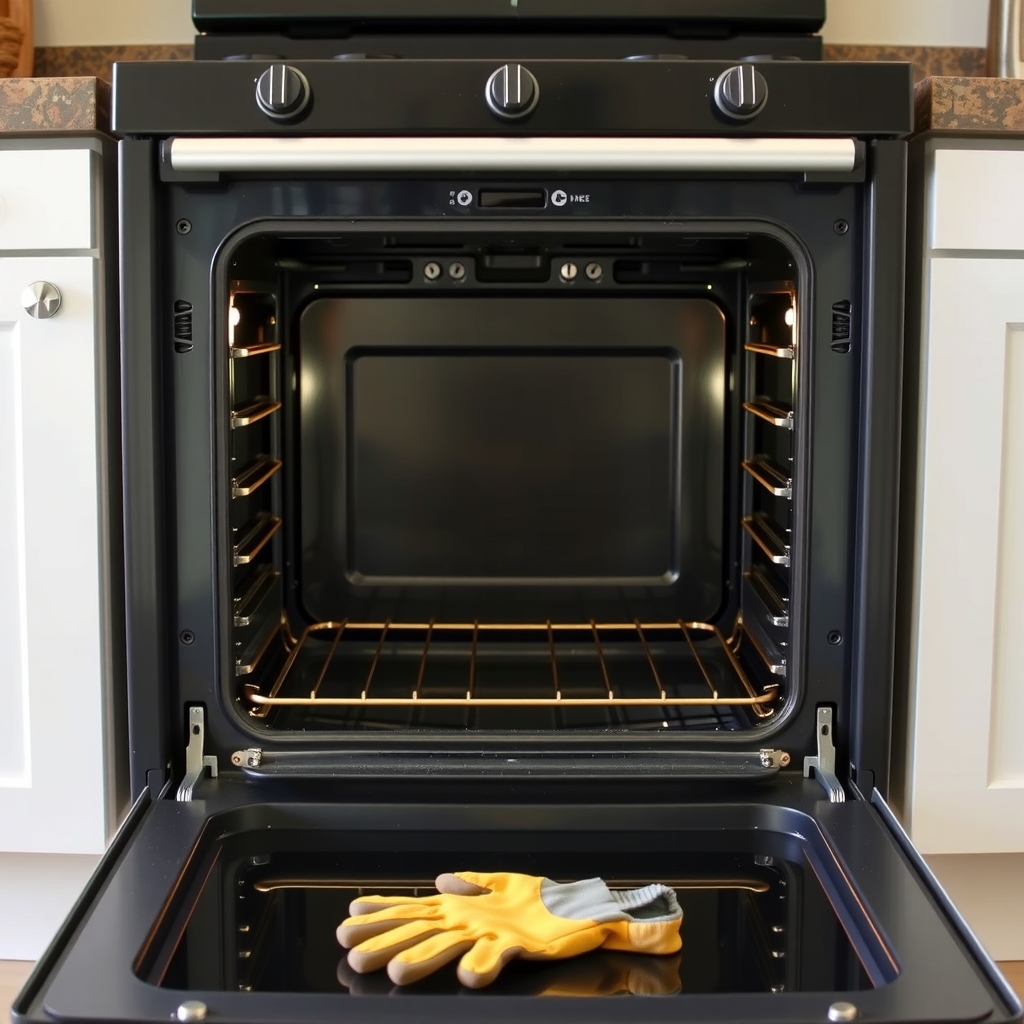
How to Fix an Oven Door Hinge: Spring and Hinge Replacement
Read the fix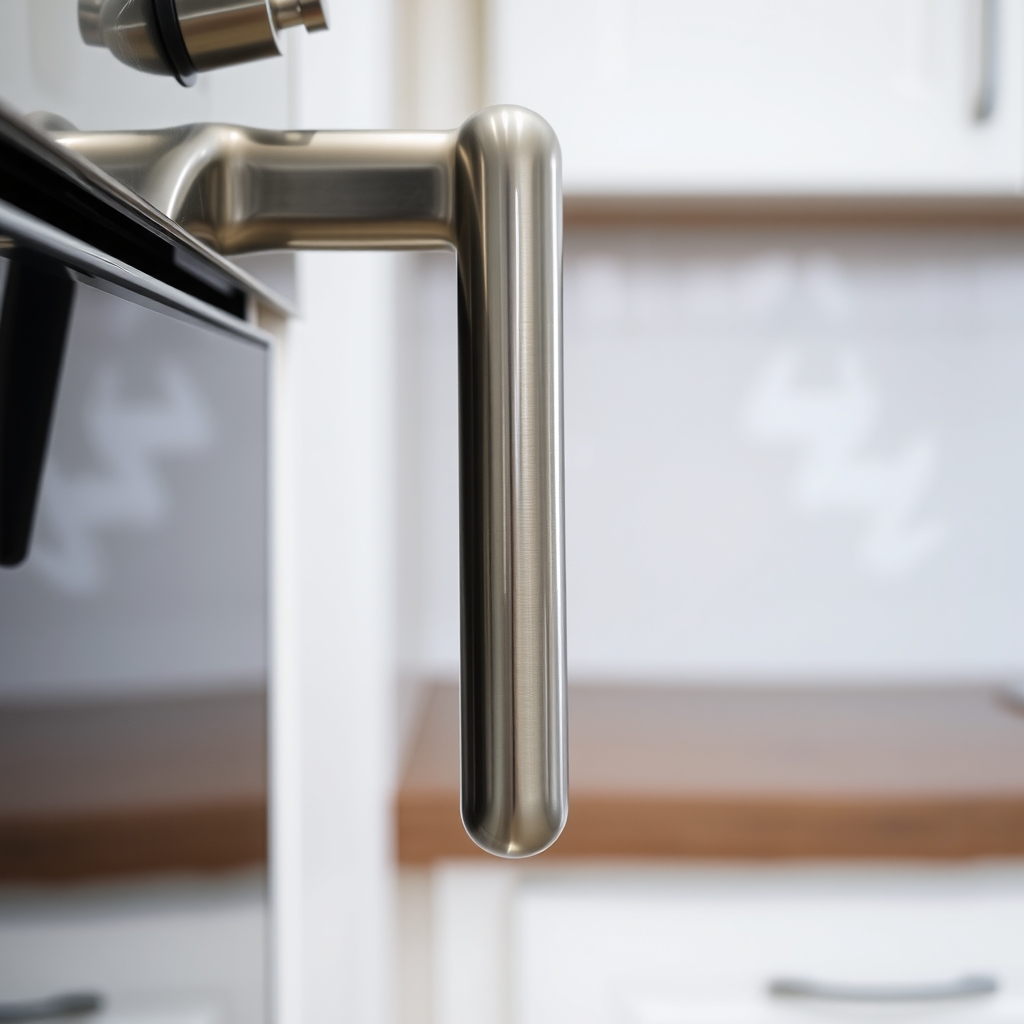 Free fix inside
Kitchen · Oven Parts
Oven Door Handle Loose or Broken? Replacement Handle Basics
Read the fix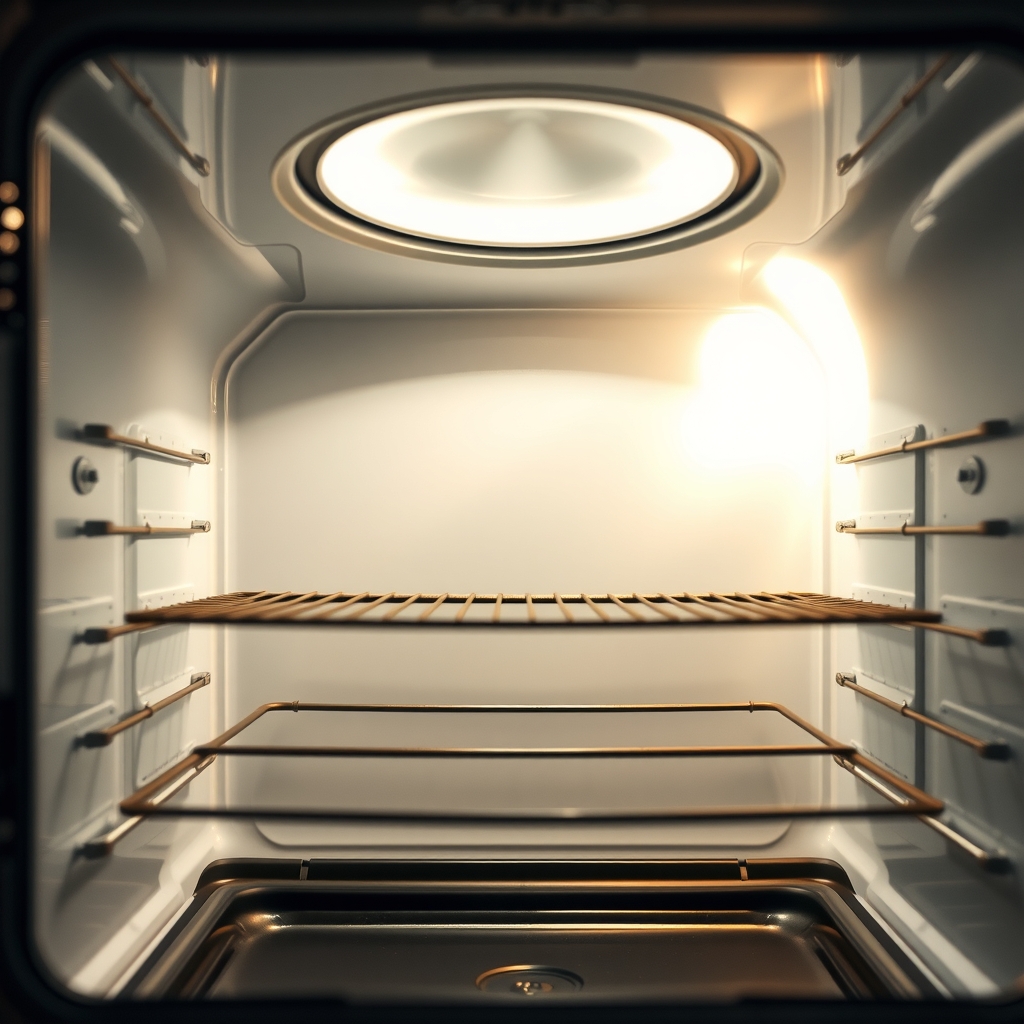 Free fix inside
Kitchen · Oven
Oven Light Out? Which Bulb to Buy and How to Swap It Safely
Read the fix Free fix inside
Kitchen · Oven
Oven Temperature Off? Test It With a Thermometer Before Any Repair
Read the fixAs an Amazon Associate I earn from qualifying purchases. Affiliate disclosure