How to Separate a Small Bedroom Without Making It Feel Smaller
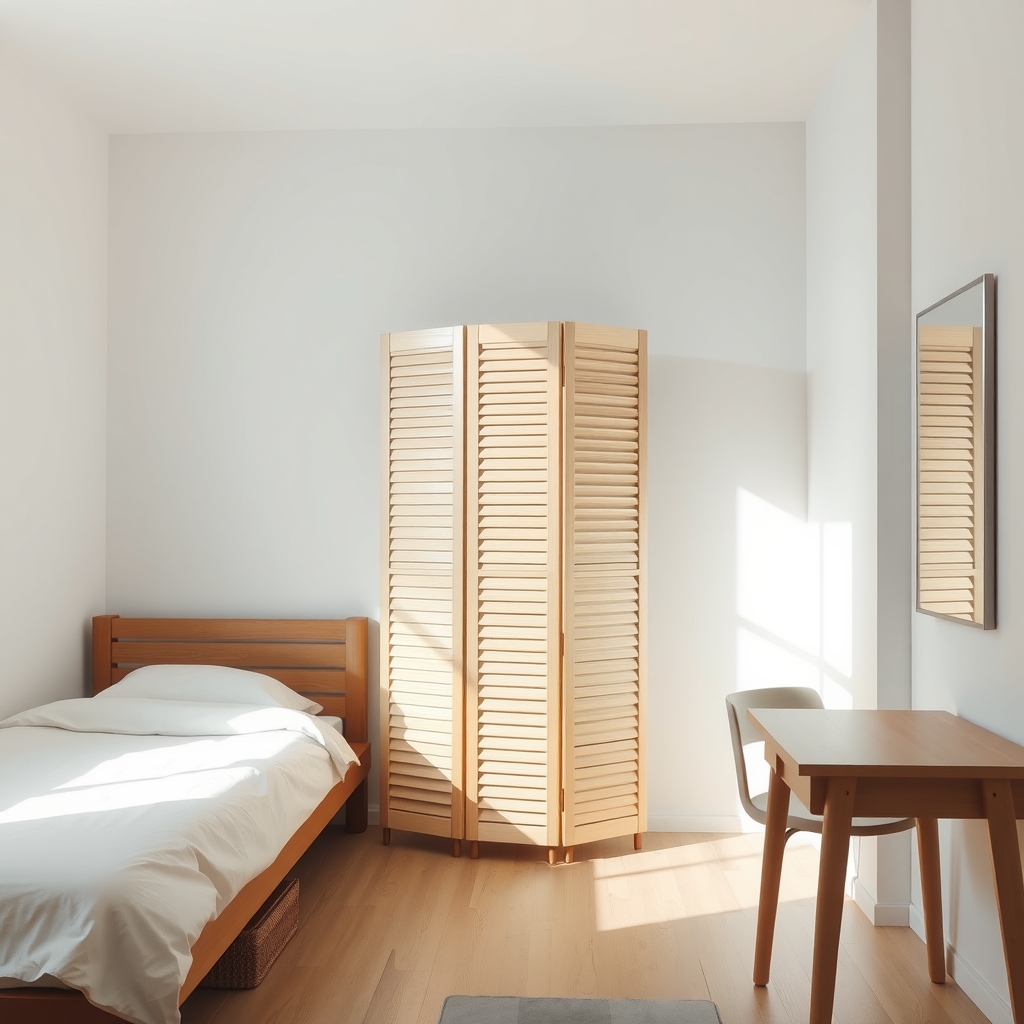
A solid wall turns a small room into two cramped ones. Zone it free first, then add a light folding screen that gives privacy and keeps the daylight.
By Jamilur Rahman Updated November 5, 2026 · 7 min read
- Time
- 30 min
- Cost
- $50-$150
- Difficulty
- Easy
In this guide
Quick answer
A divider makes a small room feel smaller when it is tall, solid and dark, because it blocks light and cuts the floor in half. Start with free zoning: a rug, a different lamp and furniture placed with purpose. If you still need real privacy, a folding screen with slatted or semi-sheer panels splits the room, lets daylight through and folds flat when you do not need it.
Free fix vs. permanent fix
Zone it with what you own
- Give each zone one job: sleep, work or dress
- Put a rug under each zone to mark its edge
- Use a separate lamp in each zone
- Turn a low, open bookcase sideways as a half-height divider
How long it lasts: As long as you keep the layout. It marks the zones, but it gives no privacy and no visual block.
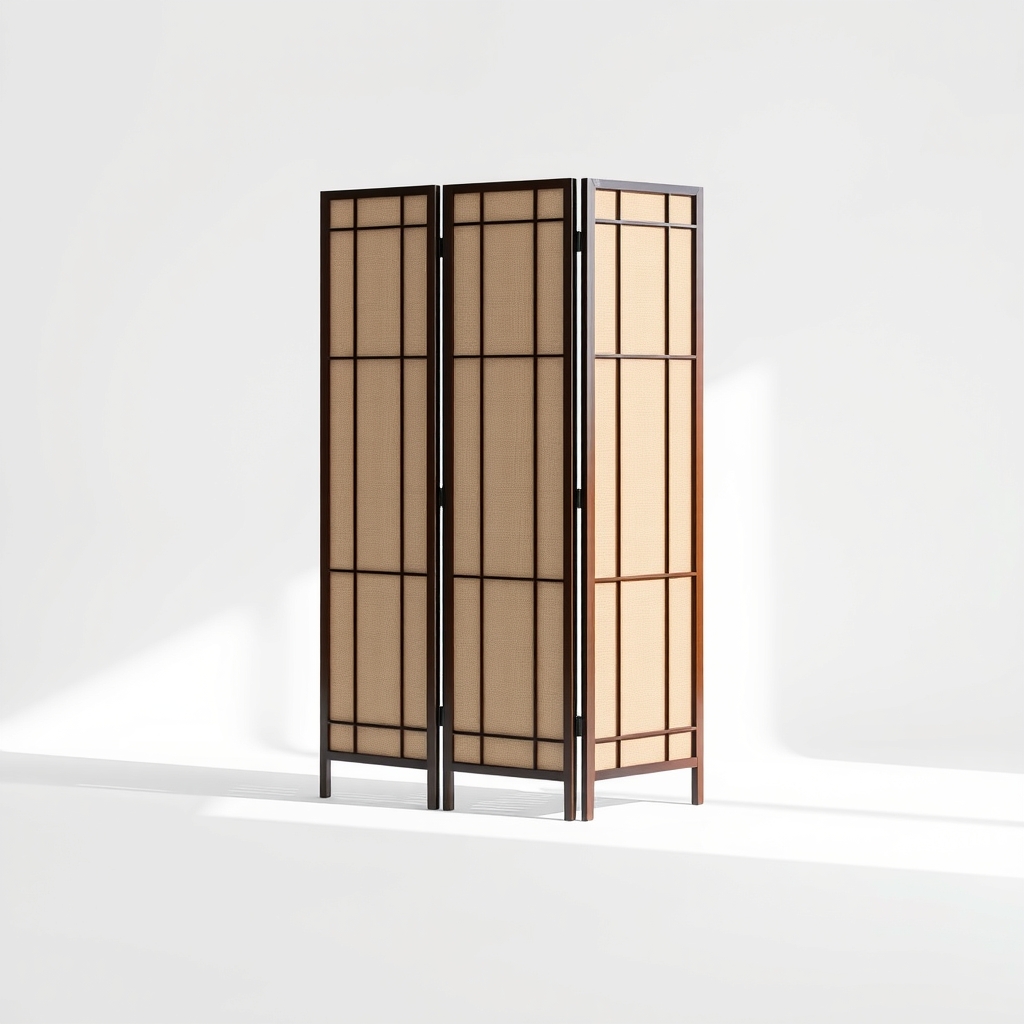
A folding room divider screen
Ceiling tracks and built-in walls need drilling and cannot be moved. A freestanding screen gives real privacy in a minute, needs no tools and can zigzag across the room. Slatted or semi-sheer panels let daylight keep moving, so the room still reads as one space.
What to get: Folding room divider screen, 3 or 4 panels
How long it lasts: Years. It stands, folds flat and moves to another room when your layout changes.
As an Amazon Associate I earn from qualifying purchases.
What you'll need
-
Painter's tape
Marks the divider's footprint on the floor
You have it -
Tape measure
For the gap width and the clear path to the door
You have it -
Bedsheet
Drape it over a rack for a day to test how much privacy you need
You have it - Our pick Illustration
Folding room divider screen
Slatted or semi-sheer panels keep the light moving
- Illustration
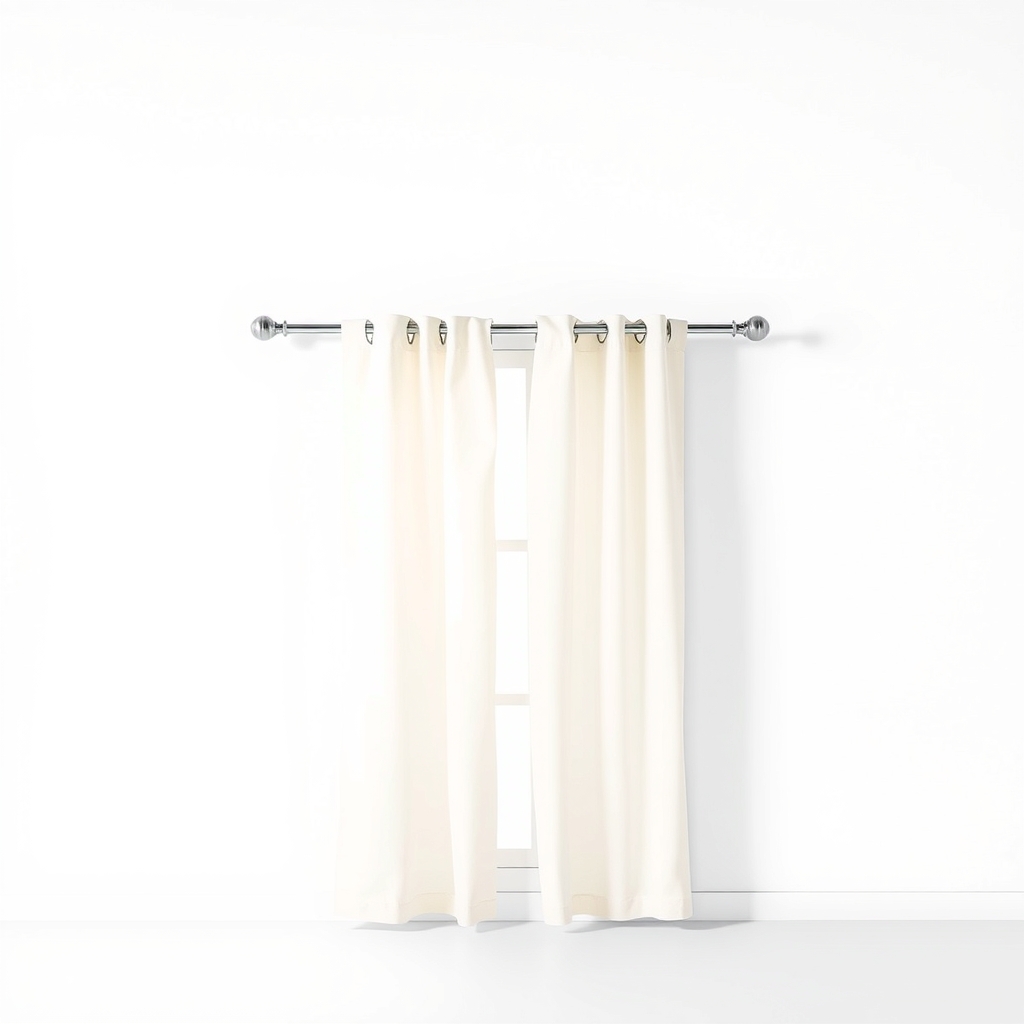
Tension rod and curtain panel
A soft option for an alcove or a narrow gap
Why it happens
The divider blocks the light
Small rooms depend on daylight crossing the whole floor. A solid or dark divider cuts that path, so one side goes dim and the whole room feels closed in.
A bulky divider eats floor space
A wardrobe or full bookcase takes 12 to 20 inches of depth. In a room 10 feet wide, that is a big slice of the walking space.
An even split makes two narrow rooms
Cutting the room down the middle leaves two thin strips. Zones of different sizes, tucked into corners, feel roomier.
No clear job for each zone
If sleeping, working and storing all spill across the room, a divider just hides the mess in the middle instead of fixing it.
Try this first (free)
Do these in order, starting with the simplest.
-
Decide what the divider must do
Write one line: hide the bed from a desk, block a hallway view, or give a roommate privacy. That tells you how tall and how solid it needs to be.
-
Tape the footprint on the floor
Tool used: Painter's tapeMark where the divider would stand, about 12 to 18 inches deep if it will zigzag. Walk the room for a day. Keep a clear path of about 30 inches to the door and to the bed.
-
Test the privacy with a sheet
Tool used: BedsheetDrape a bedsheet over a clothes rack or two chairs on the tape line. If the room feels closed in, you need something slatted or sheer. If you still see too much, you need something fuller.
-
Zone with a rug and a lamp
Put a rug under the bed zone and another under the desk zone, and give each its own light. Different floors and light read as different rooms without any wall.
-
Put the bed in the back corner
The bed zone works best in the corner farthest from the door. Keep the door side and the window side open so you can see across the room.
-
Add the folding screen on the tape line
Tool used: Folding room divider screenStand the screen in a gentle zigzag, since a straight line tips. Open it only as far as you need for privacy, and fold it back when you do not.
IllustrationCheck price on AmazonTool for this step
Folding room divider screen · Slatted or semi-sheer panels keep the light moving
When free fixes aren't enough
Rugs, lamps and furniture mark a zone, but they do not block a line of sight. If you share the room, work beside the bed, or want to hide the bed from the front door in a studio, you need something that stands at head height. A freestanding screen is the lightest way to do that: no drilling, no landlord approval and nothing permanent. It will not block much sound, and it will not make a tiny room bigger. It just stops the space from reading as one jumbled room.
Buy the fix
Still stuck after the free fixes? These are the products we would look at.
| Pick | Product | Fixes | Who it's for | Buy |
|---|---|---|---|---|
| Best pick | Folding room divider screen, 3 or 4 panels | a shared or multi-use room with no walls between its zones | Renters and anyone who wants privacy now, with no drilling and the option to fold it away. | Check price |
| Budget pick | Tension rod with a light curtain panel | privacy across an alcove or a narrow gap at the lowest cost | Anyone with two facing walls or an alcove, a tight budget and no problem with a soft divider. | Check price |
Folding room divider screen, 3 or 4 panels
Fixes: a shared or multi-use room with no walls between its zones
Look for: Slatted, lattice or semi-sheer panels, or a light color, so daylight still travels; Wide feet or hinges that let it zigzag without tipping; Light enough to move and fold by yourself; A height of roughly 5.5 to 6 feet to block the view from a bed or desk.
- Who it's for
- Renters and anyone who wants privacy now, with no drilling and the option to fold it away.
- Honest downside
- You need to block sound or light completely, or a young child could pull it over. A screen is not a wall.
Tension rod with a light curtain panel
Fixes: privacy across an alcove or a narrow gap at the lowest cost
Look for: A rod whose listed length range covers your gap; A rod rated for the weight of the curtain; A light, semi-sheer or breathable fabric.
- Who it's for
- Anyone with two facing walls or an alcove, a tight budget and no problem with a soft divider.
- Honest downside
- The gap is wider than the rod's range, or the walls are thin or heavily textured. Tension rods can slip and fall.
As an Amazon Associate I earn from qualifying purchases. We don't show prices because they change, so use the button to see today's price.
How we picked: How we picked: this page is based on small-space layout guides, fire-safety guidance on keeping fabric away from heaters, and what owners report in reviews of folding screens and curtain dividers. We do not test products by hand.
Pick the divider by what you need
- Privacy: fabric or solid panels, 5.5 to 6 feet tall.
- Daylight: slatted, lattice or semi-sheer panels in a light color.
- Moving it: a lightweight folding screen. Skip anything you cannot lift alone.
- Narrow gap: a curtain on a tension rod.
Layouts that work in tight rooms
- Studio: put the bed in the corner farthest from the door and screen only the side that faces it.
- Bed and desk: place the desk by the window and the screen between desk and bed, at a slight angle.
- Shared kids' room: keep both beds against walls, with a low shelf and a rug marking each side.
What to skip
Floor-to-ceiling shelves and dark solid panels
Full-height bookcases and dark, solid dividers take the most floor and the most light. If you want shelves in the middle, pick a low, open one and anchor it to the wall. A tall bookcase that is only standing on the floor can tip.
Frequently asked questions
How tall should a bedroom divider be?
Does a room divider block noise?
How do I split a small shared kids' room?
Is it safe to put a divider near a heater?
Related problems
 Free fix inside
Small Spaces & Storage · Bedroom Storage
Small Bedroom With No Closet? Wardrobe Options That Actually Fit
Read the fix Free fix inside
Small Spaces & Storage · Bedroom Storage
Bedroom Too Small for a Dresser? 5 Space-Smart Swaps
Read the fix Free fix inside
Small Spaces & Storage · Bedroom Storage
Small Bedroom With No Storage? Beds and Pieces With Drawers Built In
Read the fixAs an Amazon Associate I earn from qualifying purchases. Affiliate disclosure