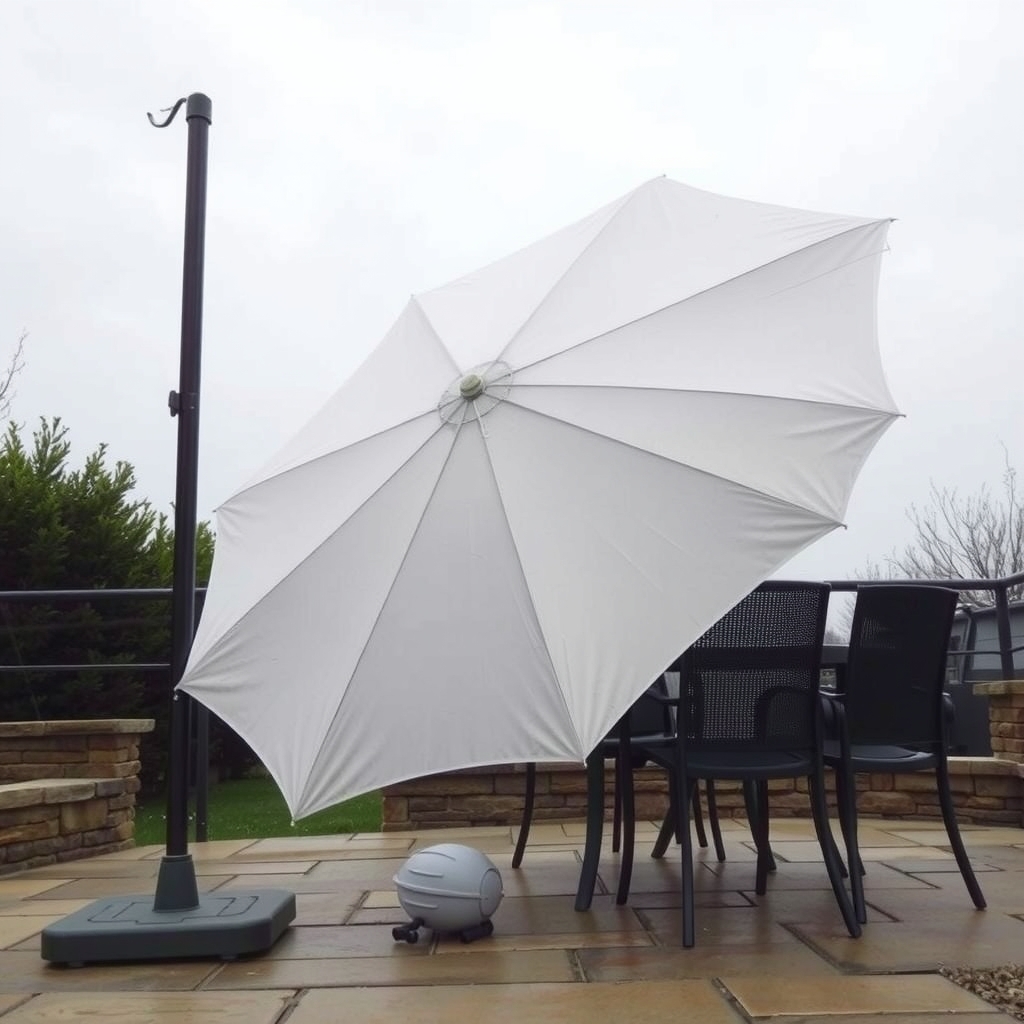
Patio Umbrella Keeps Blowing Over? The Base Weight You Need
A canopy catches wind like a sail, and a light base cannot hold it. Fix the wobble for free, then match a heavy base to your umbrella size.
By Jamilur Rahman Updated November 5, 2026 · 8 min read
- Time
- 20 min
- Cost
- $50-$150
- Difficulty
- Easy
In this guide
Quick answer
A patio umbrella blows over because the canopy acts like a sail and the base is too light for it. A loose pole in the base sleeve causes the leaning, tilting and spinning. Snug the pole with a shim, fill the base fully, and close the umbrella in wind. If it still goes over, you need a heavier base: roughly 50 pounds or more for a medium umbrella, and much more for an offset one.
Free fix vs. permanent fix
Snug the pole, fill the base, and close it in wind
- Wrap the pole with rubber or tape where it sits in the base, so it stops rocking
- Fill a hollow base completely with sand, which weighs more than water
- Set the base on level, solid ground, away from loose pavers
- Close and tie the umbrella whenever the wind picks up
How long it lasts: Fine in calm to light breezes. A strong gust can still lift a big canopy off a light base, so the habit of closing it matters.
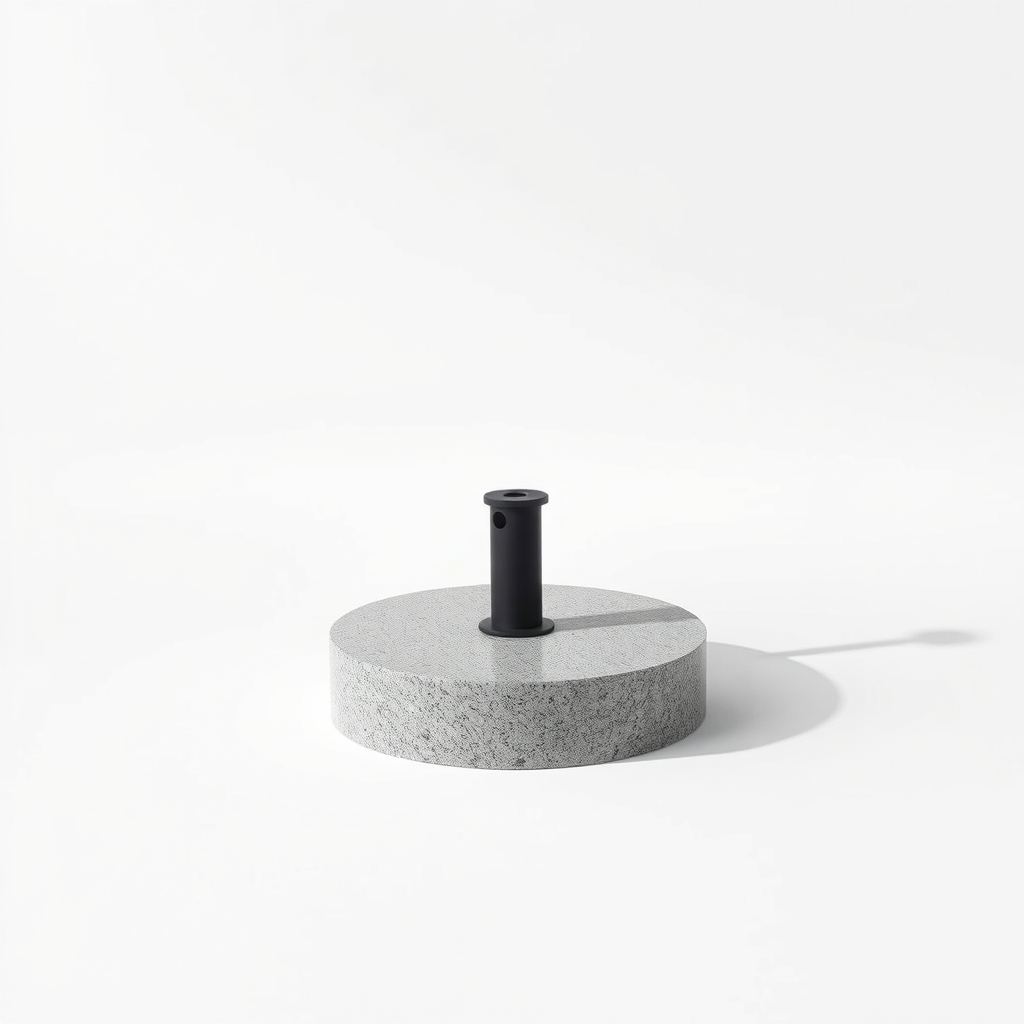
A heavy umbrella base matched to your canopy size
Wind pushes an open canopy sideways and tries to lift it, and the base is the only thing holding it down. A base of the right weight resists both the tipping and the lift. Shims and sand help a bit. A proper base is what holds the umbrella in a gust.
What to get: Heavy patio umbrella base (concrete, granite or cast iron)
How long it lasts: Years. Concrete, granite and cast iron do not leak, crack in the sun or lose weight.
As an Amazon Associate I earn from qualifying purchases.
What you'll need
-
Tape measure
Measure the pole's width and the canopy's diameter
You have it -
Rubber strip or electrical tape
A strip cut from an old bike inner tube also works, to snug the pole
Free - Illustration

Play sand
To fill a hollow base; heavier than the same volume of water
- Our pick Illustration
Heavy patio umbrella base
Matched to your canopy size and table setup; the lasting fix
- Illustration
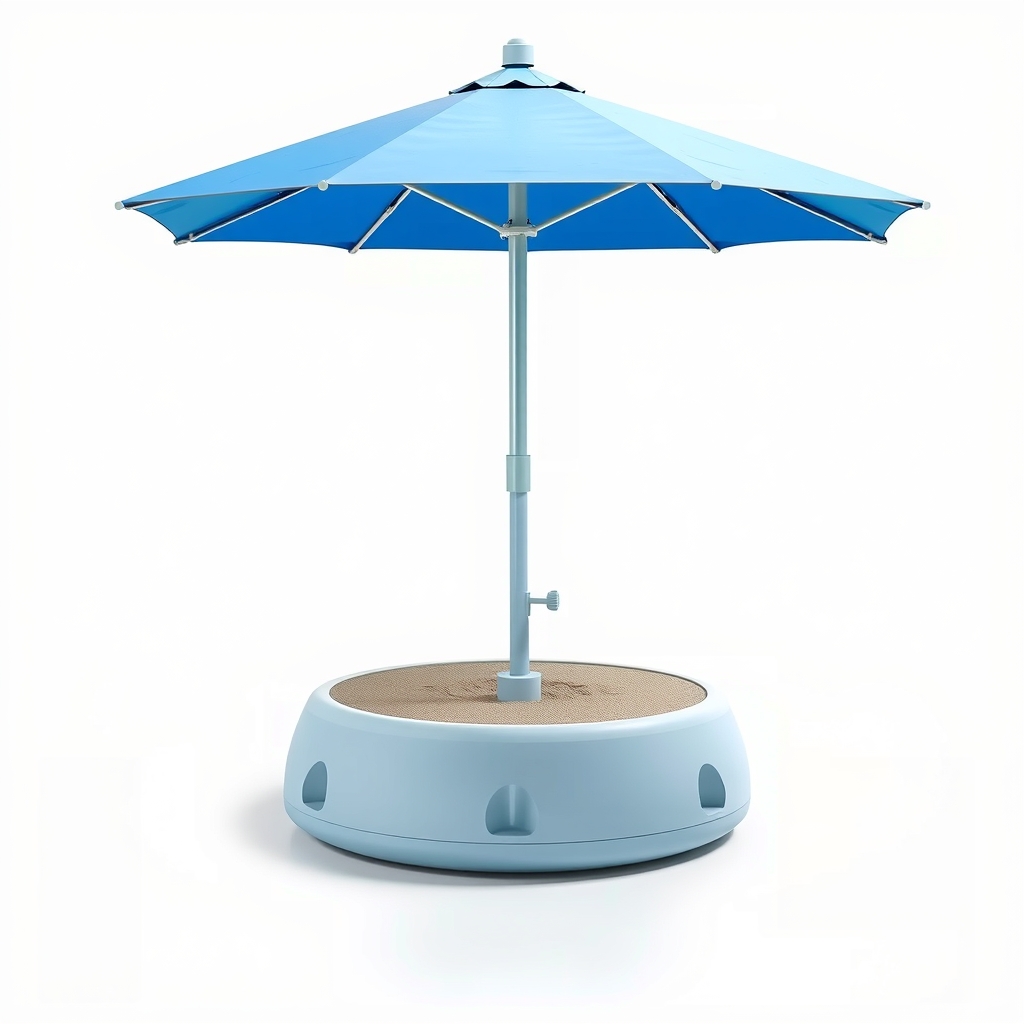
Fillable water and sand umbrella base
A lower-cost way to get weight, if you fill it fully
Why it happens
A base that is too light for the canopy
A big canopy catches a lot of wind. A small plastic or empty fillable base cannot resist it, and an offset umbrella needs far more weight than a center-pole one.
A loose pole in the base sleeve
If the pole is narrower than the sleeve, it can rock. That slack makes the umbrella lean, tilt and sway, and it can spin in a breeze.
A base that is not full or not level
A water or sand base only weighs what you put in it. A half-filled base, or one sitting on a slope or a loose paver, tips more easily.
Leaving it open in wind
Even a good base has limits. An open canopy in a strong gust is a lot of force, and umbrellas get launched from patios every summer.
Try this first (free)
Do these in order, starting with the simplest.
-
1. Find out what you have
Tool used: Tape measureMeasure the pole width, since most poles are around an inch and a half but not all. Note the canopy size and whether the pole goes through a table. Check the box or the maker's page for the recommended base weight.
-
2. Stop the pole from rocking
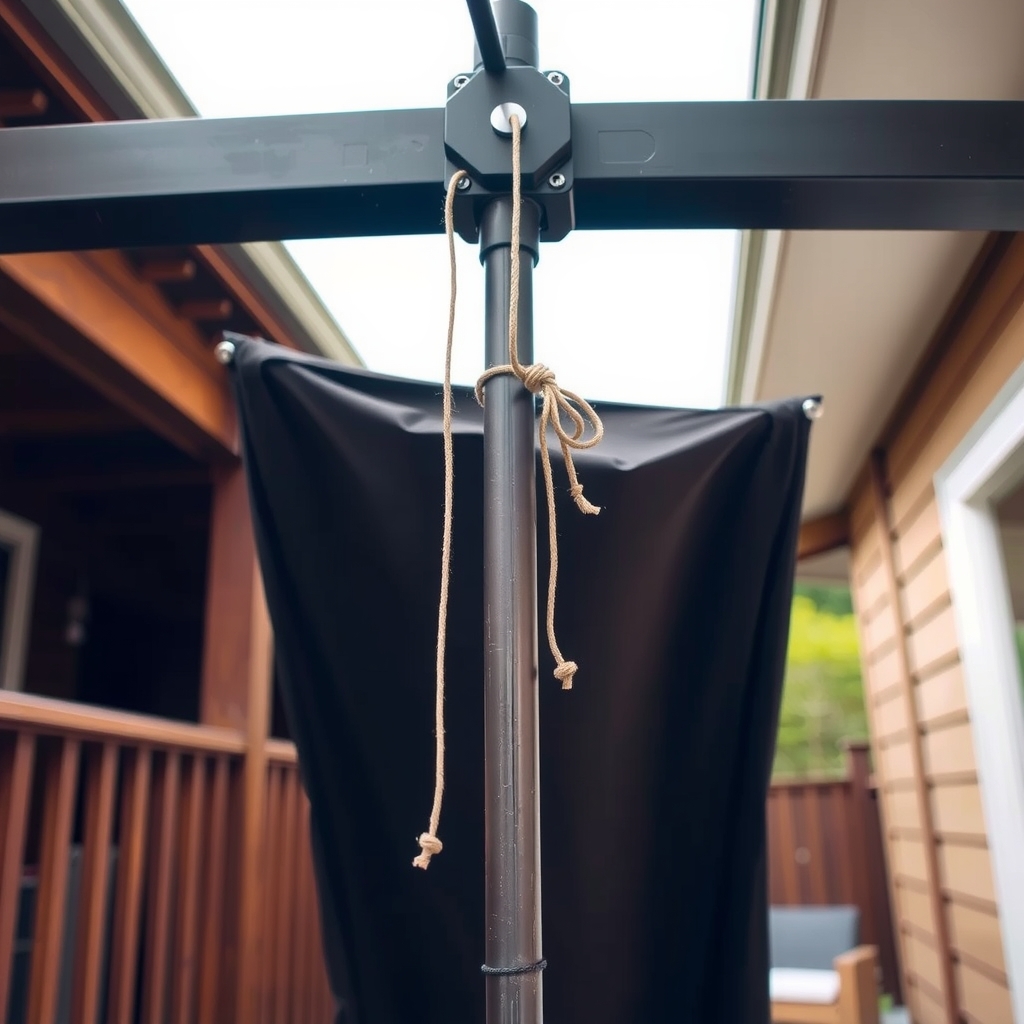
Tool used: Rubber strip or electrical tapeWrap a strip of rubber or a few turns of tape around the pole where it enters the base or table hole. The pole should fit snugly with no wobble. Tighten the base's knob or collar after.
-
3. Fill the base fully
Tool used: Play sandFill a hollow base to the top. Sand makes it heavier than water, and a bag or two of play sand does the job. Seal the cap so rain and sand stay in.
IllustrationCheck price on AmazonTool for this step
Play sand · To fill a hollow base; heavier than the same volume of water
-
4. Put it on solid, level ground
Move the base to a flat spot, away from the edge of a deck or a slope. A loose paver under it can rock. If you can, put the pole through a heavy table too.
-
5. Tilt, close and tie it in wind
Close the canopy when gusts pick up, and tie it shut. Never leave an open umbrella when you are away or overnight. Do not stand under one in a storm.
When free fixes aren't enough
If the umbrella still leans or lifts after the pole is snug and the base is full, the base is too light for the canopy. A sand-filled hollow base tops out at a modest weight, and offset umbrellas need much more. A heavy base is the part that holds it down. It will not make a big umbrella safe to leave open in a storm, so close it when the wind picks up.
Buy the fix
Still stuck after the free fixes? These are the products we would look at.
| Pick | Product | Fixes | Who it's for | Buy |
|---|---|---|---|---|
| Best pick | Heavy patio umbrella base (concrete, granite or cast iron) | an umbrella that tips, leans or blows over in a breeze | Anyone with a medium or large center-pole umbrella, or one that goes over often. | Check price |
| Budget pick | Fillable water and sand umbrella base | a light base, at a lower cost than a solid one | Small to medium umbrellas used with a table, in a sheltered spot. | Check price |
| Upgrade pick | 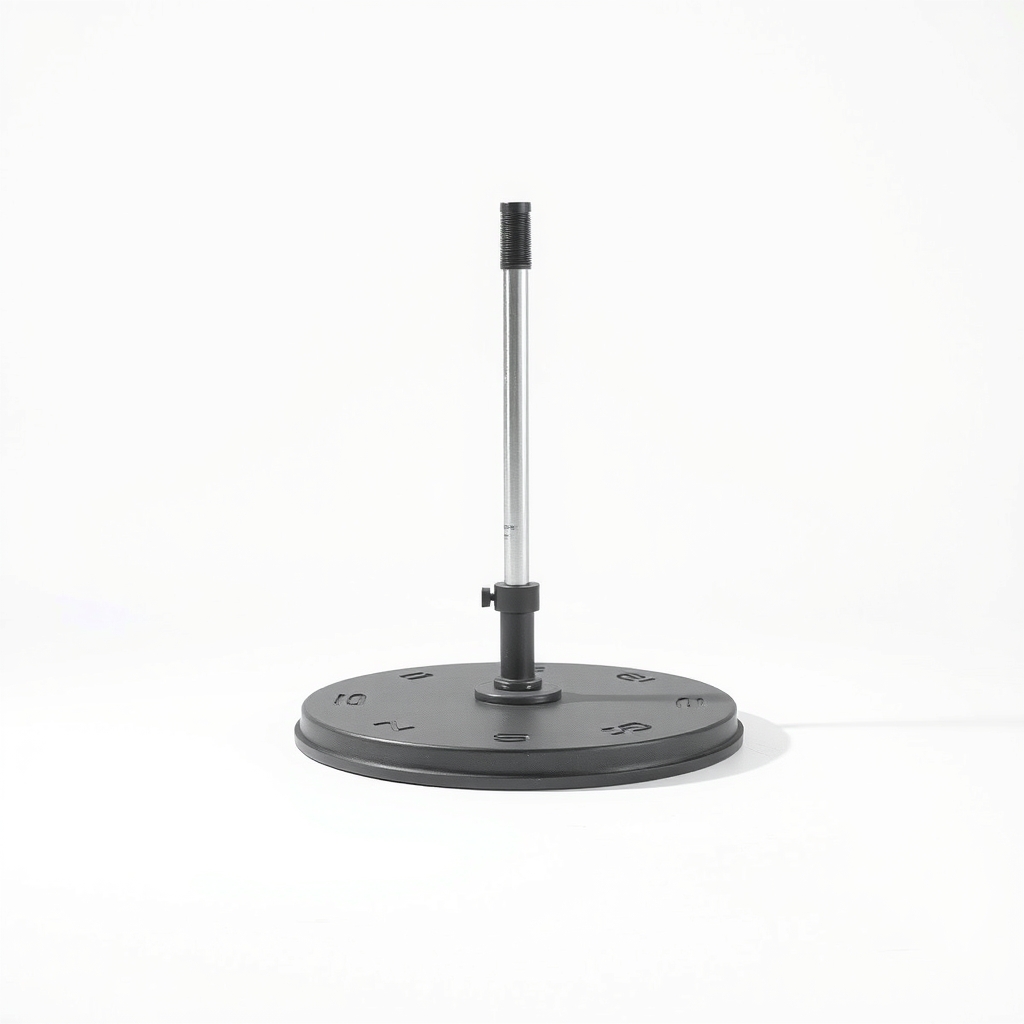 Heavy cantilever umbrella base or weight plates | an offset umbrella that tips because its canopy hangs off to one side | Owners of a cantilever (offset) umbrella, which needs far more weight than a center-pole model. | Check price |
Heavy patio umbrella base (concrete, granite or cast iron)
Fixes: an umbrella that tips, leans or blows over in a breeze
Look for: A listed weight that matches your canopy size, and check whether it is the filled or empty weight; A sleeve and tightening knob that fit your pole width; A solid material such as concrete, granite or cast iron, or a steel shell filled with sand; Rubber feet or a flat base that does not slide on the patio.
- Who it's for
- Anyone with a medium or large center-pole umbrella, or one that goes over often.
- Honest downside
- You cannot lift it. A 50 to 100 pound base is hard to move, so check the weight and consider wheels or a moving plan.
Fillable water and sand umbrella base
Fixes: a light base, at a lower cost than a solid one
Look for: A large fill capacity, with a wide screw cap; A thick, UV-resistant shell that does not crack in the sun; A sleeve that fits your pole, with a tightening knob.
- Who it's for
- Small to medium umbrellas used with a table, in a sheltered spot.
- Honest downside
- You have a large or offset umbrella, or an exposed patio. Even a full base may not be enough.
Heavy cantilever umbrella base or weight plates
Fixes: an offset umbrella that tips because its canopy hangs off to one side
Look for: A weight rating that matches the maker's guidance for an offset umbrella; Weight plates or a large cross base that can be filled; A fit that matches your umbrella's pole or stand.
- Who it's for
- Owners of a cantilever (offset) umbrella, which needs far more weight than a center-pole model.
- Honest downside
- You have a center-pole umbrella. A standard heavy base will do and costs less.
As an Amazon Associate I earn from qualifying purchases. We don't show prices because they change, so use the button to see today's price.
How we picked: How we picked: this page is based on umbrella maker and retailer sizing guides, base weight rules of thumb that vary by source, wind-safety advice, and the tipping problems owners report in reviews. We do not test products by hand.
A rough guide to base weight
- Small center-pole umbrella (6 to 7 feet), through a table: often a base of about 20 to 30 pounds is cited.
- Medium or large center-pole umbrella (9 to 11 feet): about 50 pounds or more, and more if the umbrella stands on its own with no table.
- Offset (cantilever) umbrella: a much heavier base, often cited at 100 pounds or more. Check the maker's number.
Sources disagree, and some listings give the filled weight and others the empty weight. Check which one you are reading.
Check your pole and table hole
A pole that is narrower than the base sleeve or the table hole rocks, and that rocking makes tilting and spinning worse. Measure the pole, then match the sleeve. A rubber ring or a wrap closes a small gap. Replace the part if the gap is large.
What to skip
Stacking rocks or pavers on a light base
Piles of stones on a small base slide off and can hit someone when the umbrella goes over. Also skip bungee tie-downs onto a table. Use one proper base, and close the canopy in strong wind.
Frequently asked questions
How heavy should a patio umbrella base be?
Why does my patio umbrella keep tilting or leaning?
How do I stop my umbrella from spinning in the wind?
Is a heavy base enough in a storm?
Related problems
As an Amazon Associate I earn from qualifying purchases. Affiliate disclosure