Humidifier Not Producing Mist? 5 Quick Fixes Before You Toss It
Most humidifiers that stop misting are clogged with mineral scale, low on water or set wrong. Check the basics and descale it before you buy a new one.
By Jamilur Rahman Updated November 5, 2026 · 6 min read
- Time
- 30 min
- Cost
- Under $20
- Difficulty
- Easy
In this guide
Quick answer
If your humidifier is not producing mist, the usual cause is mineral scale on the mist plate, heating element or wick, or a tank that is not seated right. Check the water, tank, cap and humidity setting, then descale it with white vinegar or a humidifier descaling solution and rinse well. A descaler is the neat way to keep hard water from stopping the mist again.
Free fix vs. permanent fix
Check the basics, then soak in vinegar
- Fill the tank, tighten the cap and seat the tank firmly on the base
- Raise the mist or humidity setting above the current room level
- Soak scaled parts in white vinegar and scrub gently
- Rinse until the vinegar smell is gone
How long it lasts: A few weeks to a few months, depending on how hard your water is. Scale builds again every time you fill the tank.
A humidifier descaling solution
Hard water leaves a crust on the mist plate and heater, and that crust is what stops the mist. A descaler made for humidifiers dissolves it faster than vinegar, with less smell, so cleaning becomes a short routine instead of a rescue.
What to get: Humidifier descaling solution
How long it lasts: Use it every month or two. With distilled water in the tank, you may need it far less often.
As an Amazon Associate I earn from qualifying purchases.
What you'll need
-
White vinegar
A free descaler. Check your manual first, since some makers advise against it
You have it -
Soft brush
Loosens scale from the mist plate without scratching it
You have it - Our pick Illustration
Humidifier descaling solution
Made to dissolve scale on humidifier parts and rinse away clean
- Illustration
Distilled water
Fewer minerals in the tank means less scale
- Illustration
Replacement wick filter
Only for evaporative models. Match the model number on your unit
Why it happens
Mineral scale
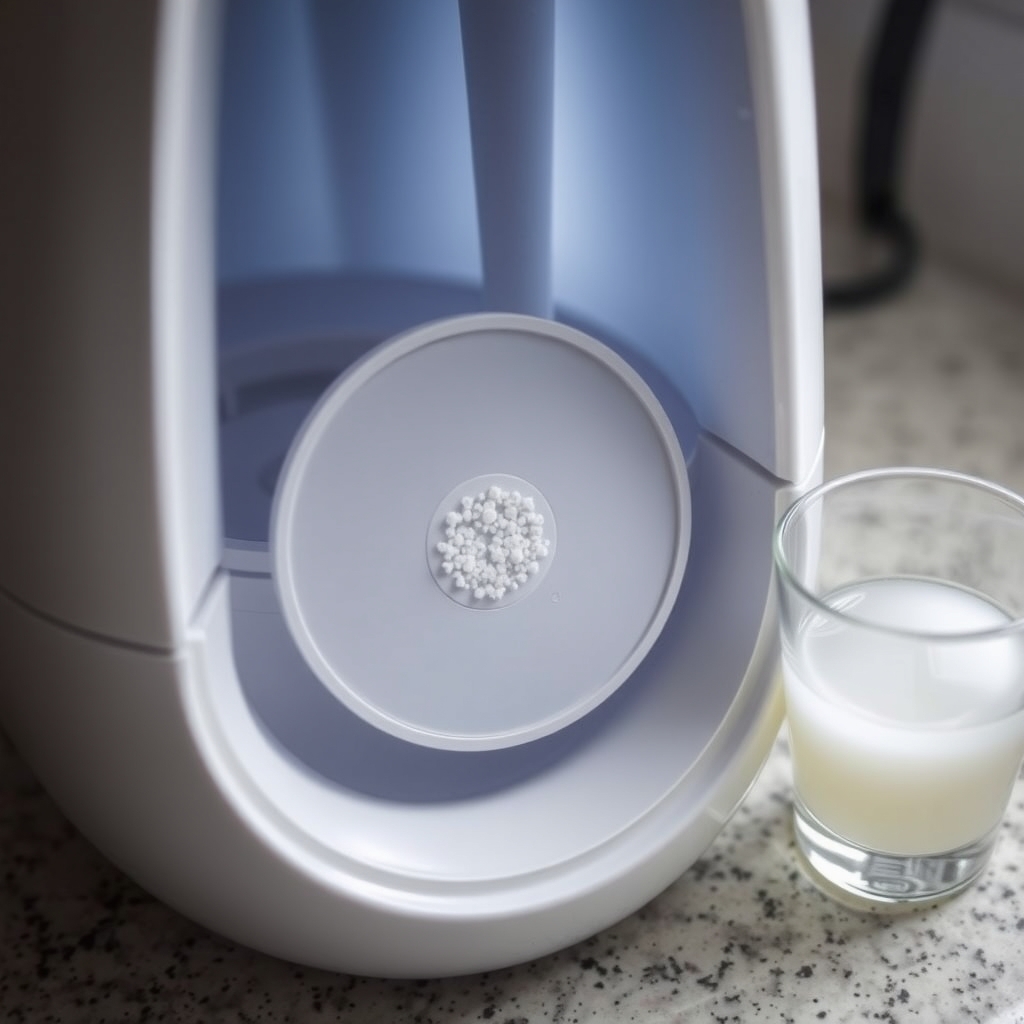
Tap water leaves a white or pink crust on the mist plate, heating element or wick. A coated plate cannot vibrate well, and a scaled heater cannot boil water, so the mist drops or stops.
A tank or cap that is not seated
Many humidifiers stop if the tank is not sitting right, the cap is loose, or the float sensor thinks the water is low.
The humidity setting was reached
A humidistat shuts off the mist when the room hits its target. In a damp room, the humidifier may be doing exactly what you told it to do.
A clogged or worn wick
On evaporative models, a hard, stiff, crusty wick passes little air or water, so output drops.
Mist you cannot see
In a warm or dry room, fine mist evaporates before you see it. Hold your hand over the outlet. If it feels damp, the unit is working.
Try this first (free)
Do these in order, starting with the simplest.
-
Check the water, tank, cap and power
Unplug it. Fill the tank with clean water, tighten the cap and set the tank firmly on the base so the float sensor sits right. Plug it in and set the mist to high.
-
Confirm it is really not misting
Raise the humidity setting, or switch to manual, and hold your hand above the outlet. Damp skin means mist is coming out, so the room may simply be at its target.
-
Descale the parts that touch water
Tool used: White vinegarUnplug the unit. Soak the tank and scaled parts in white vinegar for the time your manual suggests, usually 20 to 30 minutes. Scrub the mist plate or heater with a soft brush. Use a humidifier descaling solution if your manual calls for one. Never mix vinegar with bleach.
-
Swap a hard, crusty wick
Tool used: Replacement wick filterOn an evaporative model, rinse the wick. If it is stiff, discolored or crusty, replace it. Many are good for about one to three months.
IllustrationCheck price on AmazonTool for this step
Replacement wick filter · Only for evaporative models. Match the model number on your unit
-
Rinse, refill with distilled water and restart
Tool used: Distilled waterRinse every part until the vinegar smell is gone, since leftover vinegar can cause fumes. Refill with distilled water to slow the next buildup, and run the unit on high for a few minutes.
IllustrationCheck price on AmazonTool for this step
Distilled water · Fewer minerals in the tank means less scale
When free fixes aren't enough
Vinegar often works, but it has a strong smell, can take two soaks on heavy scale, and some manuals warn against it on certain parts. If the mist stops again within a few weeks, you have hard water and the scale is rebuilding fast. A descaling solution made for humidifiers clears heavy buildup faster and rinses cleaner, and many are citric-acid based. If the unit hums with no mist after descaling, the mist plate may be worn out. A humidifier costs little enough that replacing it is reasonable. If the cord is damaged or you smell burning, stop using it.
Buy the fix
Still stuck after the free fixes? These are the products we would look at.
Humidifier descaling solution
Fixes: mineral scale that blocks the mist
Look for: Labeled for humidifiers, and for your type (ultrasonic, warm-mist or evaporative); A citric-acid or manufacturer-approved formula; Low odor and rinses away with plain water.
- Who it's for
- Anyone with hard water, or anyone tired of the vinegar smell.
- Honest downside
- Vinegar already clears the scale for you, or your manual forbids acidic cleaners. A cracked or worn mist plate also needs a replacement, not a descaler.
As an Amazon Associate I earn from qualifying purchases. We don't show prices because they change, so use the button to see today's price.
How we picked: How we picked: this page is based on humidifier manuals and cleaning guidance, and what owners report in reviews of descaling solutions and replacement wicks. We do not test products by hand.
Which type of humidifier do you have?
Ultrasonic models use a small vibrating plate, so scale on the plate and a stuck float are the main culprits. Evaporative models blow air through a wet wick, so a crusty wick is the main suspect. Warm-mist models boil water with a heating element, so scale on the heater matters most. Check your manual to see which one you own.
Keep it from stopping again
Empty the tank and rinse it every day or two, refill with distilled or demineralized water, and descale every month or two. Let the parts dry when you store the unit for the season.
What to skip
Essential oils, additives and bleach in the tank
Most manuals say not to add oils or chemicals to the tank unless the unit is built for them. They can clog or crack parts and leave residue. Skip bleach too, and never mix it with vinegar, since the fumes are dangerous.
Frequently asked questions
Why is my humidifier not working, misting or steaming?
How do I fix a humidifier with no mist after cleaning?
How do I fix humidifier low mist, or a humidifier that is not spraying?
How do I fix a humidifier that stopped working completely, and when should I replace it?
Related problems
 Free fix inside
Air & Temperature · Humidifier
White Dust From Your Humidifier? The Water Fix That Stops It
Read the fix Free fix inside
Air & Temperature · Humidifier
Humidifier Smells Musty? Deep-Clean It and Keep Mold Out
Read the fix Free fix inside
Air & Temperature · Humidifier Leak
Humidifier Leaking? Check the Tank Cap and Gasket First
Read the fix Free fix inside
Air & Temperature · Humidifier
Noisy Humidifier? Quiet It Down or Pick a Quieter One
Read the fixAs an Amazon Associate I earn from qualifying purchases. Affiliate disclosure